
Quick Answer: What Do Exosomes Do in Skincare?
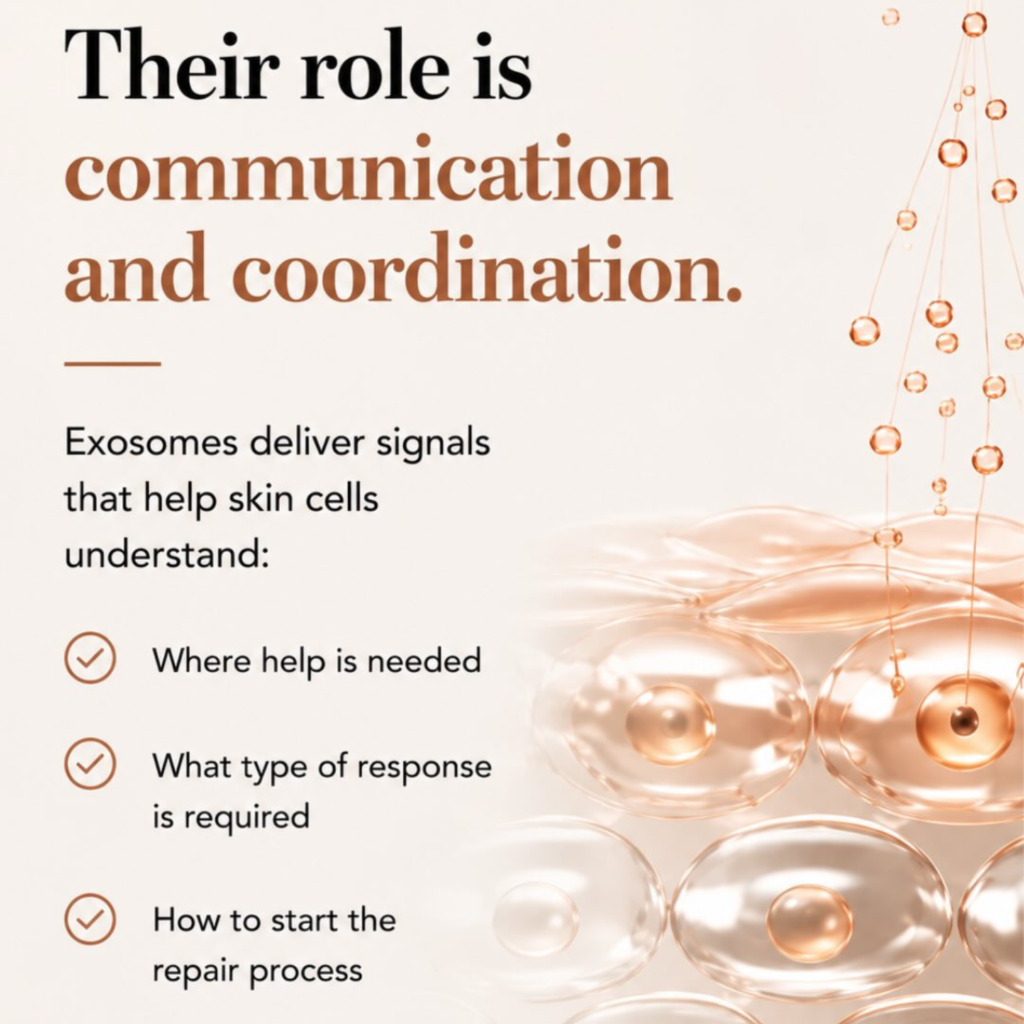
- What they are: Exosomes are tiny bubbles that your skin cells use to send little “notes” to each other. In skincare, think of them as microscopic delivery packages.
- What the research hints at: Early studies on real people are hopeful — smoother skin, calmer redness, softer lines. But most of that happens when exosomes are used right after a clinic treatment like laser or microneedling, not from a serum alone.
- Where the proof is thin: For a serum you just smooth onto normal skin at home, the strong human proof isn’t there yet. And a lot of the best studies were paid for by the companies selling the ingredient.
- Serum is not an injection: A leave-on exosome serum is very different from an injected exosome treatment. The scary FDA warning you may have read about is about injections, not face serums.
- Who it’s for: Curious skincare fans who already use PDRN or peptides and want to try the next step — with calm, realistic hopes.
- The one thing to check: The word “exosome” barely tells you anything by itself. Look at the whole formula, where the ingredient comes from, and whether it suits your skin.

Why Exosome Skincare Is Trending in K-Beauty
If you shop K-beauty, you’ve seen it happen. A year ago, the shelves were all about PDRN, K-beauty’s salmon-DNA repair ingredient. Now, right next to the pink PDRN serums and the tingly spicule creams, there’s a new word on almost every “booster” bottle: exosome.
Scroll a Korean beauty shop online — or walk an Olive Young aisle in Seoul — and you’ll spot exosomes in shots, pads, masks, and pore ampoules. Usually they’re mixed with PDRN, peptides, or cica on the same label.
The sales pitch sounds like science fiction: an ingredient that “talks to your cells” and tells your skin to fix itself. It’s a lovely story. But what does it actually mean once it’s inside a serum you can buy?

This guide keeps things simple. We’ll explain what exosomes really are, what the newest research does and doesn’t show, why a serum is not the same as a clinic treatment, why K-beauty jumped on this so fast, and five real products worth a look — with their honest downsides. No hype, no scary jargon.
What Are Exosomes, Really?
Exosomes are tiny packages that your cells send to each other. Picture a mail service inside your body. One cell wraps up a little bundle — some proteins, some fats, some genetic instructions — inside a bubble, and sends it out. A nearby cell “opens” it and reads the message. Those bubbles are exosomes.
Here’s the part that matters when you shop. Exosomes are one type of a bigger family called extracellular vesicles. That’s a long name, but it just means “little bubbles that cells release.”
What makes a true exosome special is where it’s made — deep inside the cell, in a specific way. The trouble is, it’s very hard to prove a bubble was made that exact way. So in 2023, the main group of scientists in this field basically said: if you can’t prove it, don’t call it an “exosome” — just call it a “vesicle” (a bubble).
Most companies can’t prove it. So when a label says “exosome,” the honest translation is usually “a batch of tiny cell bubbles.” They might carry helpful stuff — but the word alone doesn’t tell you what’s inside, where it came from, or whether it still works once it’s sitting in a bottle on a shelf. Keep that in mind for the rest of this guide.
Exosomes vs. Vesicles, Liposomes and Plant “Exosomes”
Four words get mixed up in marketing all the time. Here’s each one in plain language.
An extracellular vesicle is the big umbrella word for any bubble a cell lets out. It’s the most accurate word for most “exosome” products — but it’s broad, so it doesn’t tell you much about quality on its own.
An exosome is one specific kind of small bubble, made deep inside the cell in a particular way. It’s the one marketed as a “cell-messaging” repair ingredient. The catch: brands can rarely prove a finished product truly contains these and not just other bubbles.
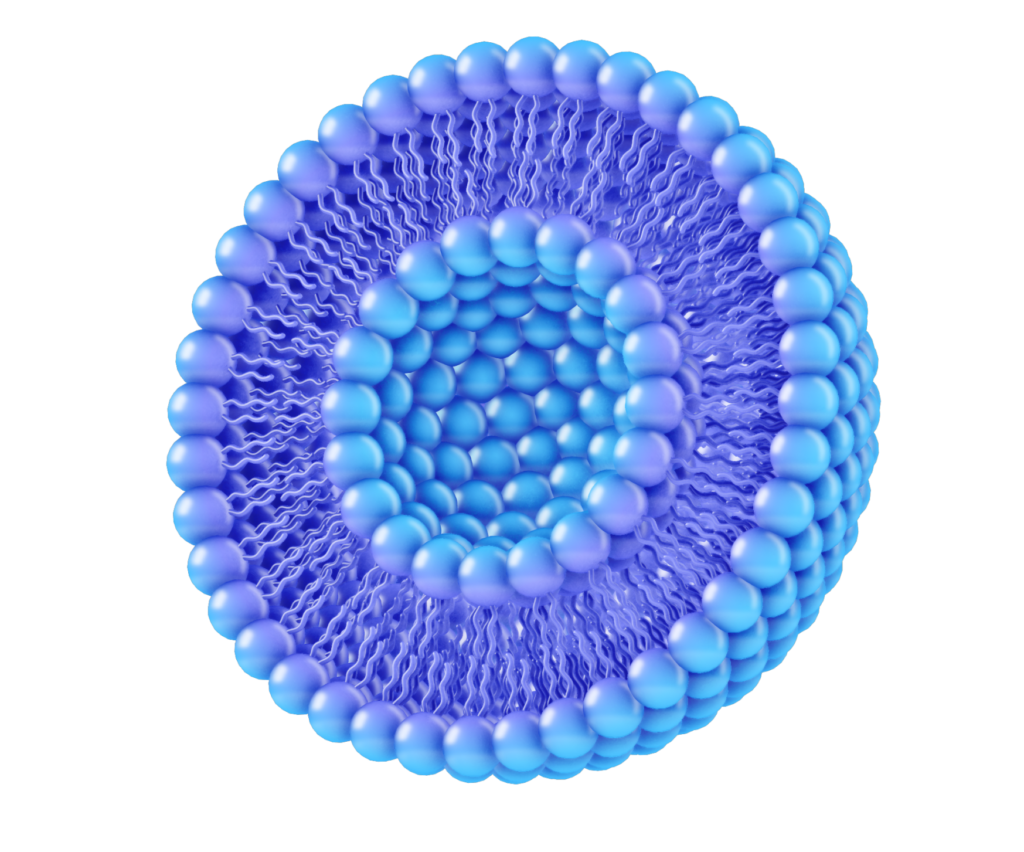
A liposome is different — it’s a bubble built in a lab, not by a cell. It’s basically a delivery capsule used to carry other ingredients (like retinol or vitamin C) into the skin. It has no natural “message” of its own; it’s just a helpful container.
A plant “exosome” (you’ll see names like “rose stem cell exosome” or “phyto exosome”) is a bubble that comes from plant cells. And this is important: a plant “exosome” is not the same as a human one.
Plant bubbles are bigger, built differently, and carry plant material — so they can’t send human-cell messages the way human bubbles can. They may still be soothing or full of antioxidants, but they shouldn’t be sold as if they were the same thing. If a label doesn’t say where the exosome comes from, treat the word as a description, not a promise.
What Could Exosomes Do for Skin?
Here’s what exosomes are being studied for — with an honest note on how strong the proof is. To be fair, we keep lab-dish and animal results separate from results on real people.
For skin recovery after a treatment, the proof is hopeful but early. The most consistent result in people is faster, calmer healing when exosomes are used right after a clinic procedure like laser or microneedling.
For calming redness, it’s also hopeful but early. Some after-treatment studies show less redness — but again, that’s on freshly treated skin, not necessarily from a daily serum.

For firmness and collagen, it’s mostly early lab work, with a few small human hints. Some tiny studies even measured a bit more collagen — but on very few people.
For hydration and a stronger skin barrier, it’s mostly lab work so far. It sounds reasonable and gets claimed a lot, but the human proof for a serum alone is weak.
For texture and the look of wrinkles, it’s hopeful but early. Reviews report visible improvement, but the studies are all over the place in how they were run.
For dark spots and marks, it’s hopeful but early too. Some small studies show spots fading — usually alongside microneedling.
Notice the pattern: almost every encouraging result comes with a little asterisk that says “used with a treatment” or “small study.” That’s not a reason to write exosomes off. It’s a reason to keep your hopes realistic.
What the Latest Research Actually Shows
The good news: 2026 brought several big “review of reviews” studies that pool many trials together, and they lean cautiously positive. One review of 39 human trials found wrinkles improved by about 20% on average. Another, focused on microneedling plus exosomes, found real gains in firmness and fading of dark spots.
The single best-designed study is still one from 2020. It tested human exosomes on 25 people, applied after a laser treatment for acne scars, with each person getting exosomes on one side of the face and a plain gel on the other. The exosome side healed better (scars down about 33% vs. 20%), with less redness. That’s a solid setup — but it was paid for by the company that supplies the exosomes.
And that’s the pattern across the whole field. Before you trust any exosome result, keep these limits in mind — nearly all of them show up again and again:
The studies are usually small — often a dozen people, sometimes just three. They’re short, running weeks to a few months, rarely longer. They use different sources of exosomes (human, rose, milk, and more), all called “exosome,” so they’re hard to compare.

They’re often done with microneedling or laser, not on plain skin — which makes the results look better than a serum alone would. There’s little long-term safety data for everyday use. The products also contain other active ingredients (like PDRN or peptides) that may be doing some of the work. And many are paid for by the brand or supplier.
So here’s the honest bottom line: exosome skincare is genuinely interesting, and early human results look promising — but the proof is stronger for use alongside a clinic treatment than for a plain serum on normal skin. That’s just where the science sits in 2026. It’s actually the same “can a big ingredient even get through the skin?” question that surrounds topical PDRN’s absorption debate — worth a read if you want the deeper version.
Why K-Beauty Is Moving So Fast on Exosomes
Korea didn’t stumble into exosomes — it was ready for them. A few things lined up.
First, Korea has a clinic-to-shelf pipeline. Korean skin clinics were doing regenerative treatments (including exosome and PDRN procedures) years before the West. Turning those into at-home versions is the natural next step — the same path PDRN took from clinic to cream.
Second, the PDRN wave came first. Once PDRN went mainstream in K-beauty, “regenerative” became a whole category, not just one ingredient. Exosomes fit right in — often in the same bottle.
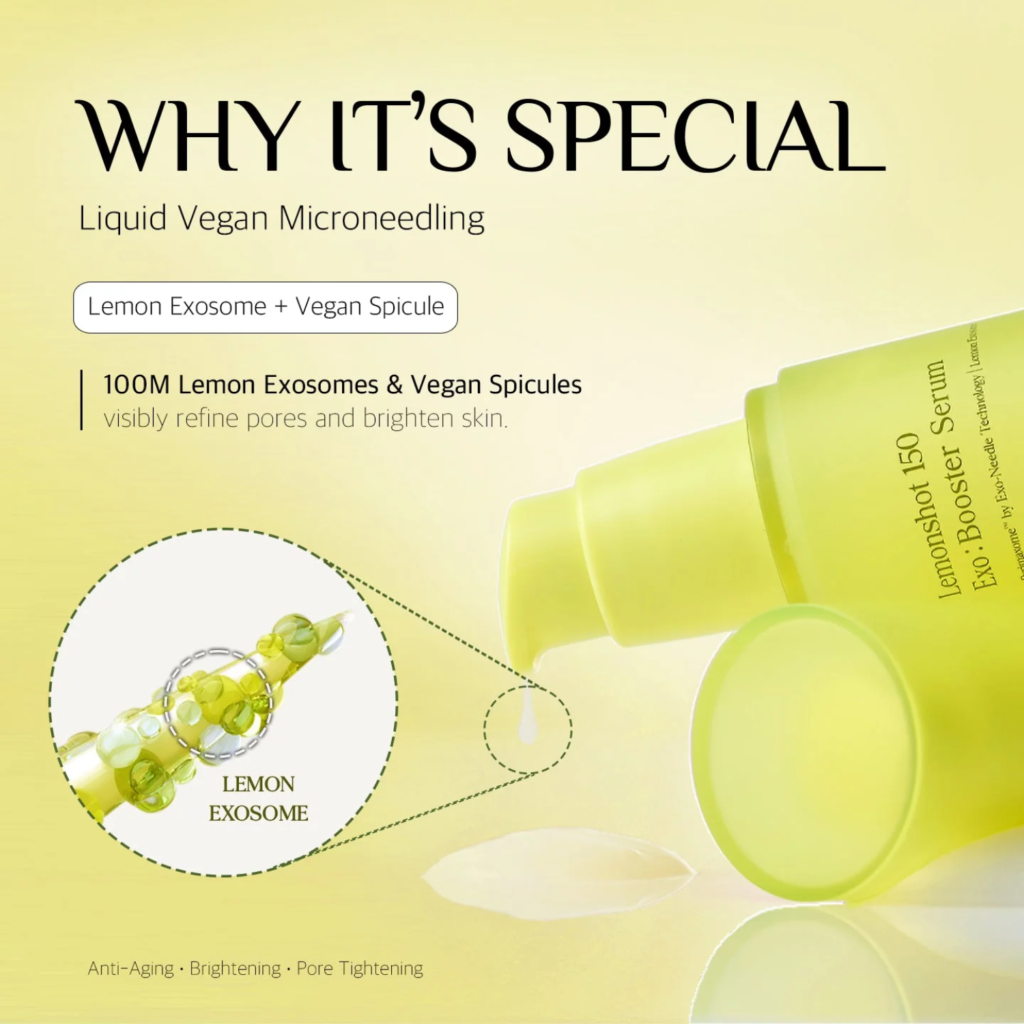
Third, delivery tech grew up. Spicule technology (those tingly little marine-sponge “micro-needles” in brands like Mary&May) gave brands an at-home way to talk about pushing ingredients deeper, which pairs neatly with the exosome story.

Fourth, “slow aging” is the mood right now. The same interest behind the K-beauty NAD+ trend makes cell-level, repair-sounding ingredients an easy sell.
Fifth, Korea’s factories can turn a trendy ingredient into a real product fast. And finally, TikTok and global K-beauty shops spread a Seoul launch around the world in weeks.
The result is a booming category. Just remember: getting a product to market quickly is not the same as having strong proof.
Exosomes vs. PDRN
These two show up together so often that people assume they’re the same. They’re not — and knowing the difference helps you shop.
What they are: an exosome ingredient is a tiny cell bubble that carries biological “messages” (though, as we said, it’s often really just a batch of small bubbles). PDRN is different — it’s made of DNA pieces, usually from salmon, used as raw repair material.
Their skincare story: the exosome idea is that it “signals” your cells toward repair and calm. The PDRN idea is that it “supplies” building blocks and helps soothe and hydrate. One sends a message; one hands over materials.
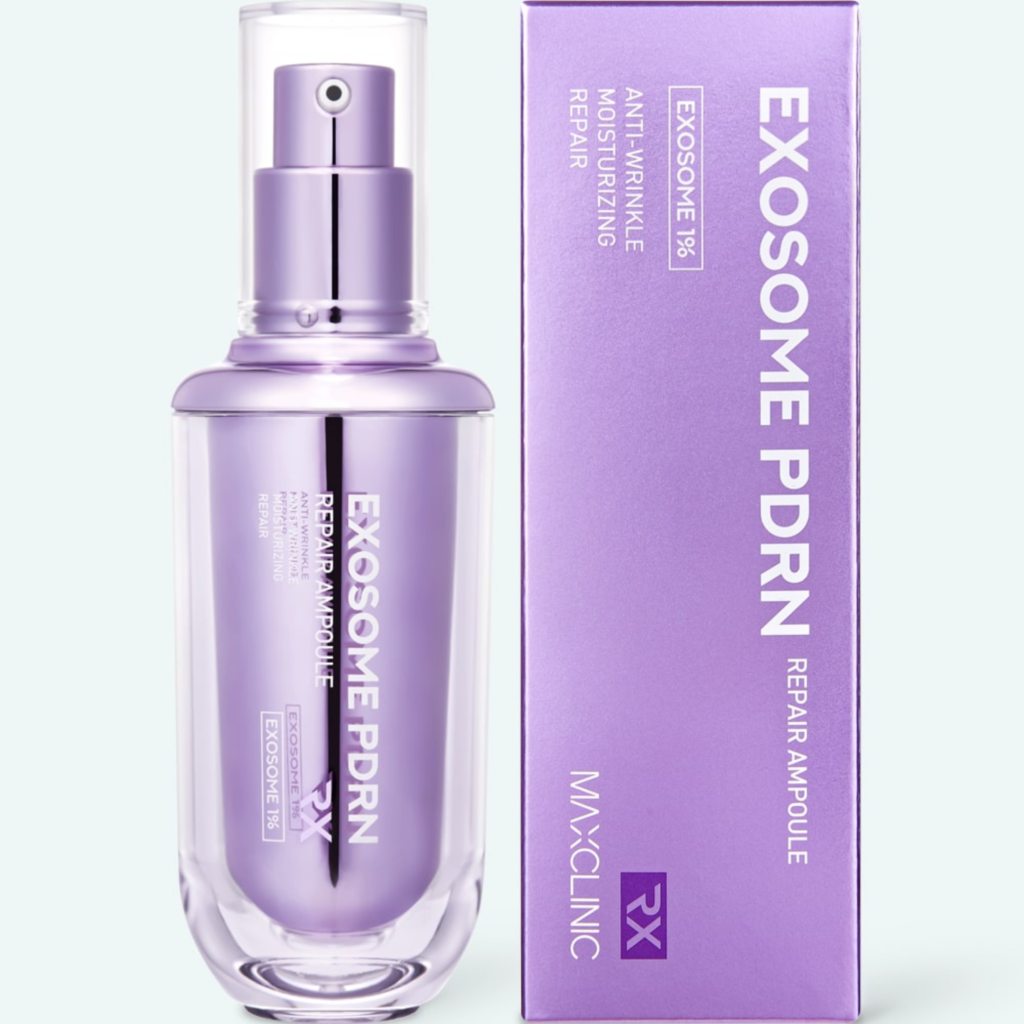
How strong the proof is: exosomes are promising but early, and strongest right after a treatment. PDRN is more established in clinics, though whether it absorbs well from a cream is still debated.
How they’re sold: exosomes usually come in ampoules, pads, and masks, mixed with PDRN, cica, or peptides. PDRN usually comes in serums and creams, often with cica and sometimes spicules.
Their main weak spot: with exosomes, the “exosome” is rarely proven in the finished product. With PDRN, it’s a big molecule, so getting it through the skin is contested.
They’re often combined precisely because their stories fit together — one “signals,” one “supplies.” Whether both survive intact in a real serum is exactly the open question. So don’t read “exosome + PDRN” on a label as double the proof. Read it as double the marketing that still needs checking.
The Korean Brands Building the Exosome Category
Six brands, six different approaches — and one honest reality check that runs through all of them. Outside of medical/clinic specialists, most everyday “exosome” products don’t actually contain proven human exosomes. Read the ingredient list and the “exosome” is usually a friendly-bacteria (Lactobacillus) bubble or a plant extract wearing the exosome name.
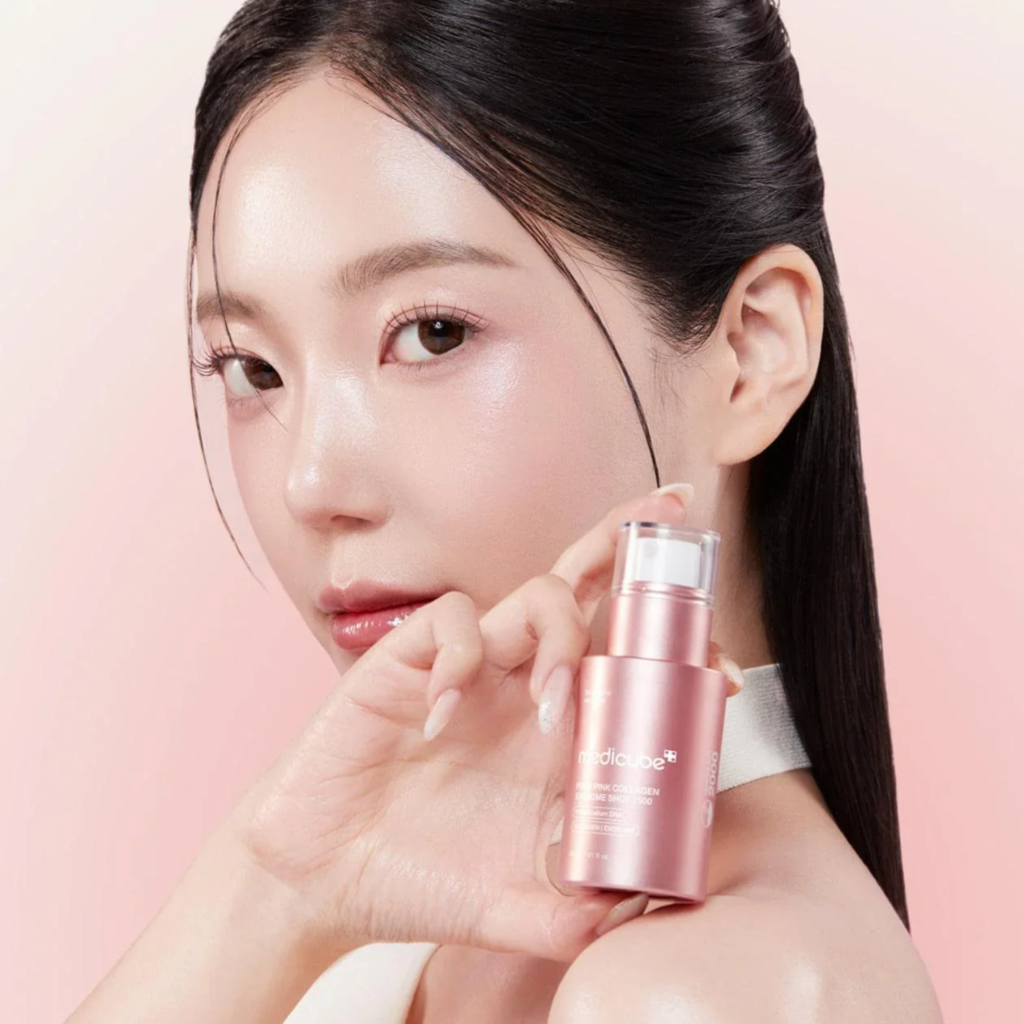
Medicube is the mass-market leader. It added exosome products — the “Exosome Shot” ampoules, pads, and PDRN collagen serums — around an easy “skin booster” idea and its spicule delivery. Its “exosome” is a Lactobacillus-derived bubble, and it doesn’t publish details on the particles.
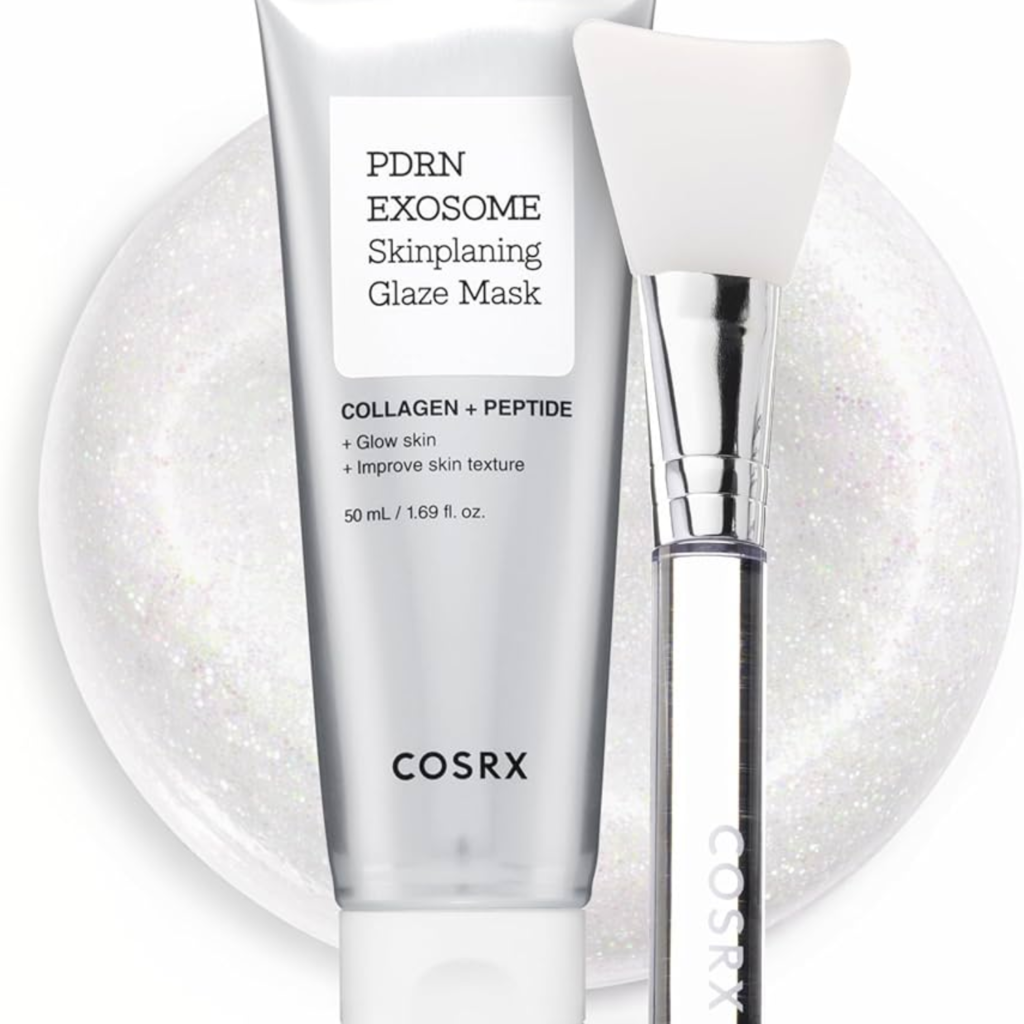
COSRX put exosomes into glow products like its PDRN Exosome mask, mixed with niacinamide, a gentle acid, and peptides. Its exosome is also a Lactobacillus bubble — gentle, glow-focused, with a fairly open ingredient list.
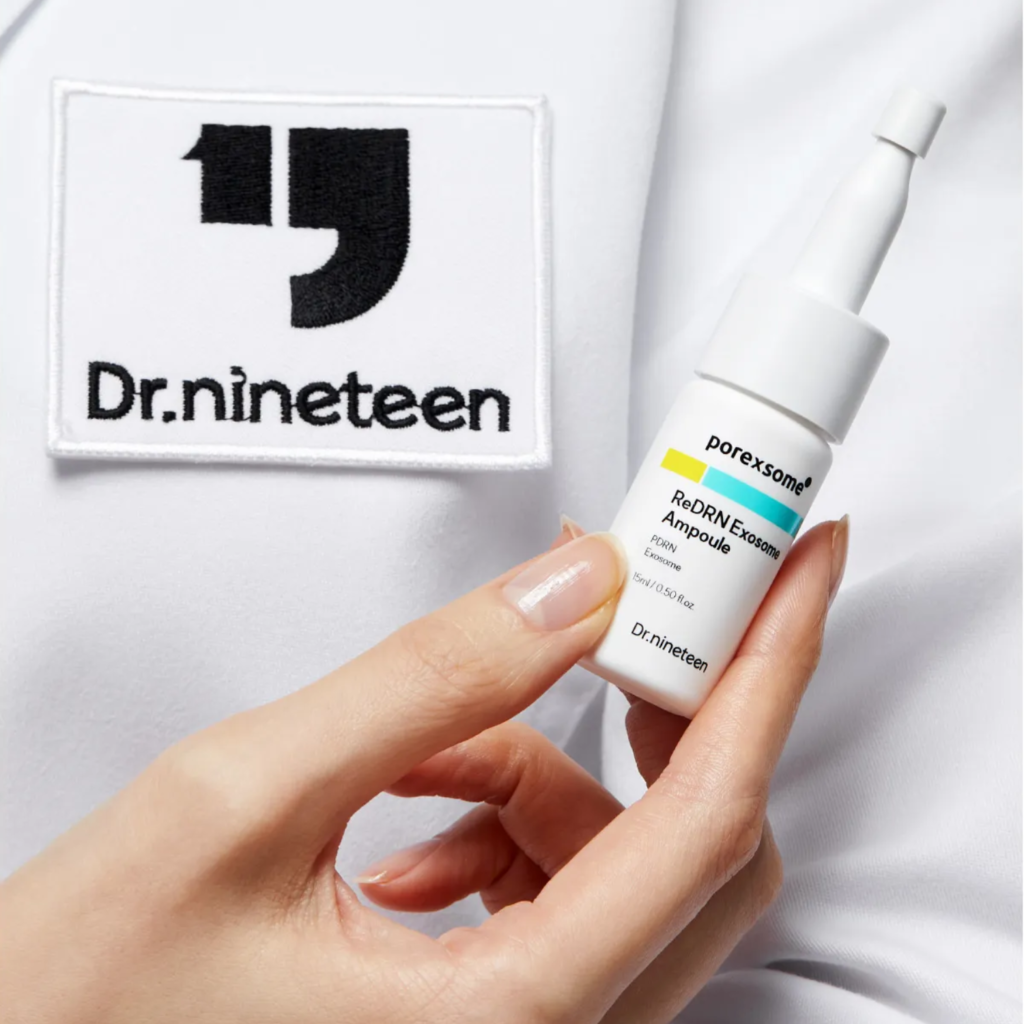
Dr.nineteen (Dr.19) takes a pores-and-firmness angle: its PoreXsome ampoule stacks a high-claim PDRN, plus retinol, plus an exosome. It doesn’t say where the exosome comes from, and the retinol makes it the least beginner-friendly here.
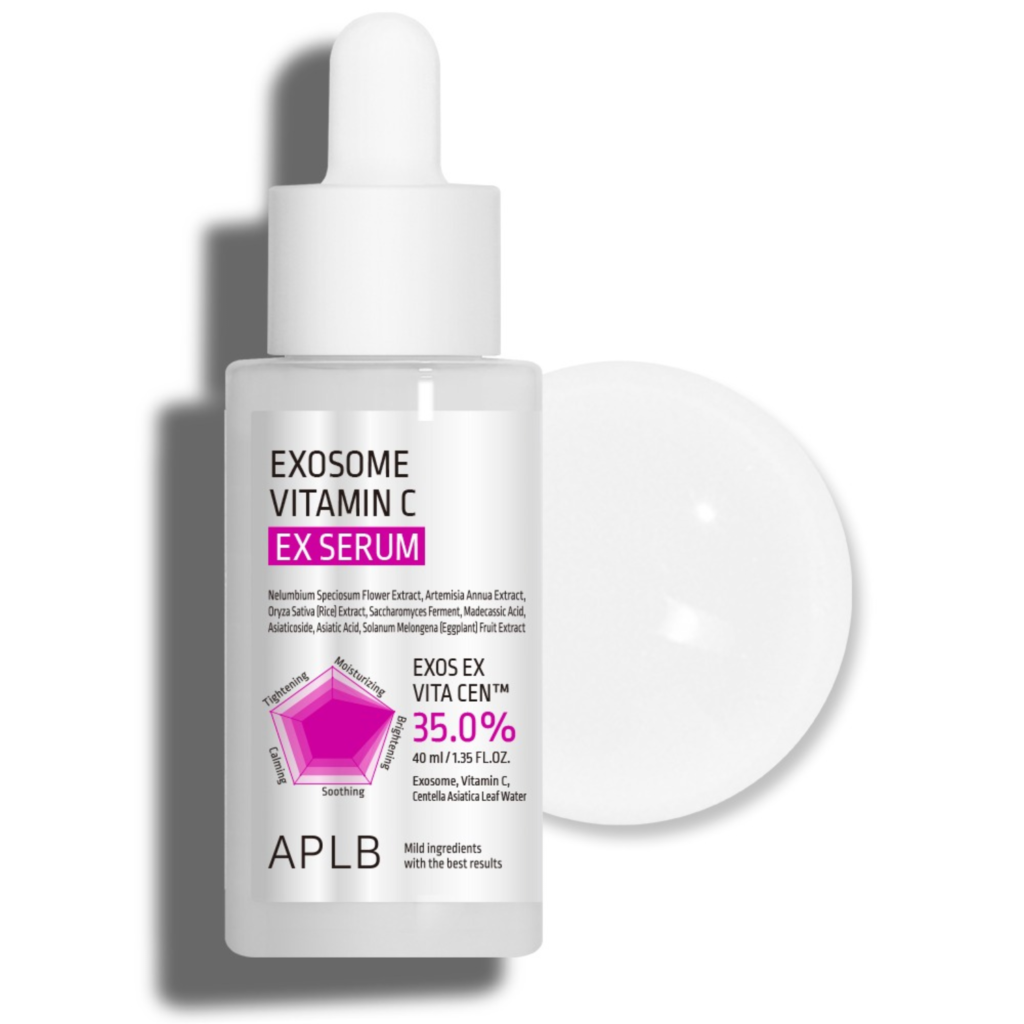
APLB offers an affordable “exosome plus one hero ingredient” range — Vitamin C, collagen, retinol, or niacinamide versions. It doesn’t specify the exosome source, so treat it as “exosome-labeled.”
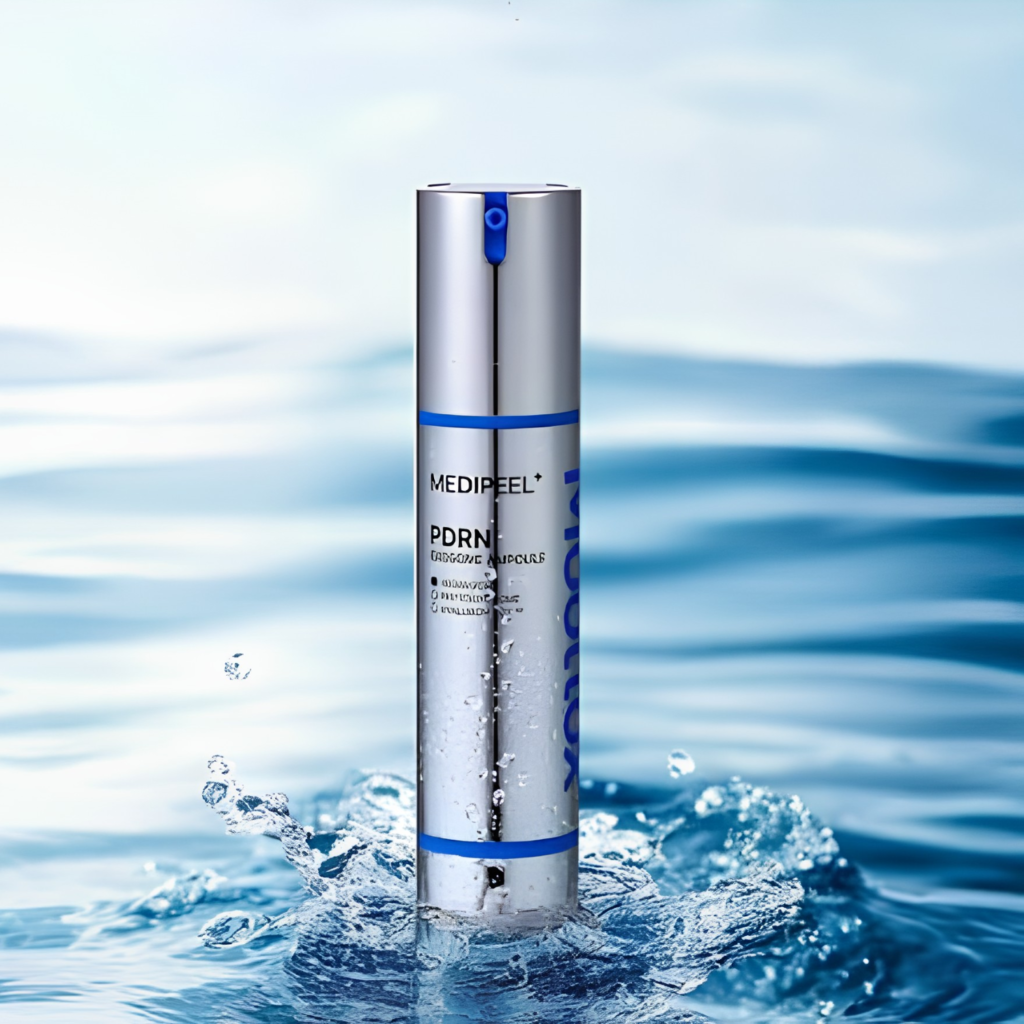
MEDI-PEEL is refreshingly upfront: its “Phyto Exosome” line calls itself plant-based right in the name. In practice that means apple and lotus plant extract with a big peptide mix — plant material, not a human exosome.
VT Cosmetics stretched its cica (soothing) identity into exosomes with Cica Exosome and PDRN Cica Exosome lines. There’s no obvious exosome entry in the ingredient list, so it’s most likely a ferment-derived bubble.
The honest summary: only medical/clinic specialists clearly use real human exosomes. Every brand above added an exosome product to a lineup it already had — which is fine, as long as you read “exosome” as part of the formula story, not a guarantee.
5 Best Exosome Skincare Products
A quick note on “best”: this is an editor’s shortlist, not a ranking of what works most. We picked products that are actually listed and in stock on Stylevana (checked August 3, 2026), that cover different needs and skill levels, and whose full formulas make sense — not just whatever had the biggest discount. Price and availability may change depending on region and promotion, so we don’t quote fixed prices; check the current price on the product page.
1. Medicube One Day Exosome Shot Pore Ampoule 7500
Best for: first-timers who want an easy, low-drama glow. Skin type: all, including sensitive and acne-prone. Feel: light, watery ampoule.
This is the friendliest way to try the trend. The “exosome” here is a friendly-bacteria bubble (the 7500 is the claimed amount), backed by niacinamide, panthenol, a mild exfoliating acid, and plant extracts aimed at pores and everyday smoothness.
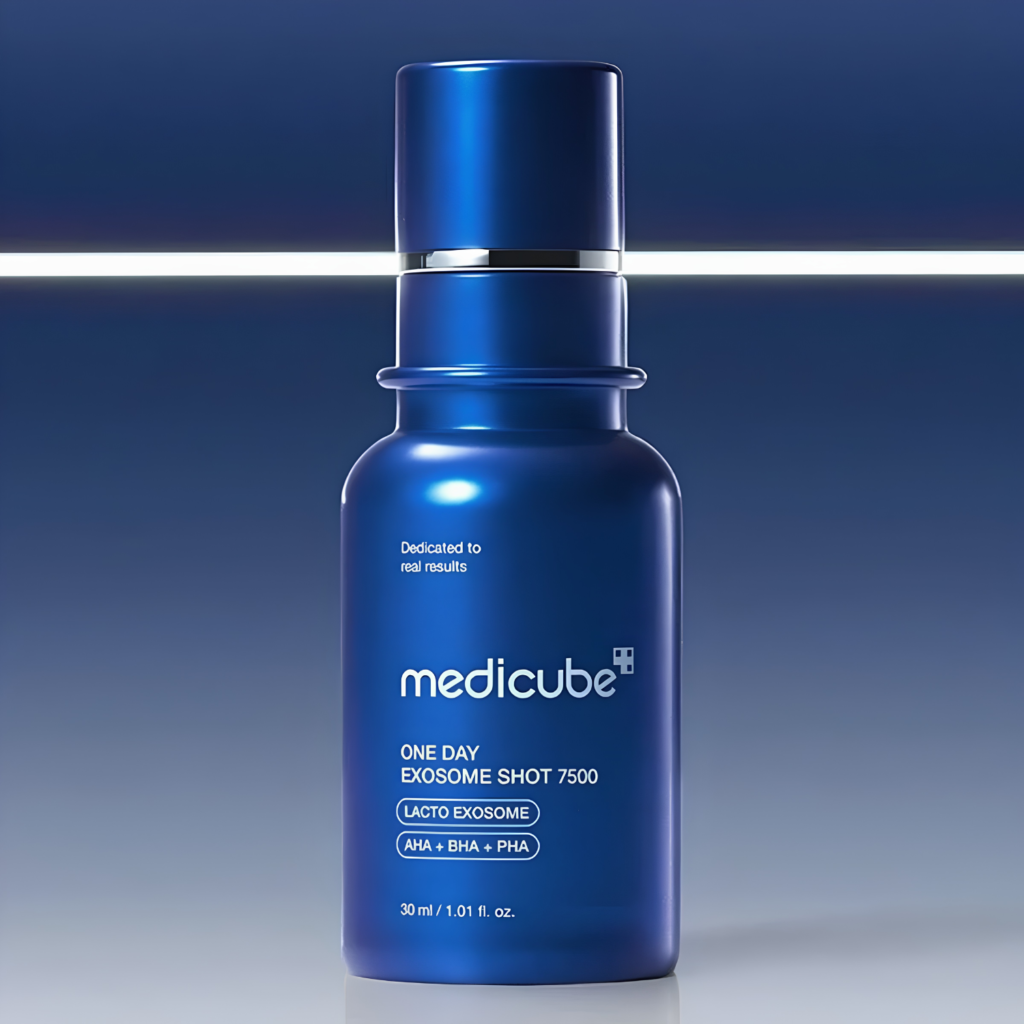
How to use: after toner, press a few drops over your face morning or night, then moisturize — tap it in, don’t rub.
Why it made the list: it’s genuinely easy to add to a routine, gets along with most other products, and doesn’t need any tolerance-building.
The honest limit: don’t expect dramatic “regeneration” — this is a smooth-and-glow product, and the exosome is a bacteria-based one, not a proven human exosome.
Sensitive skin: usually fine; patch-test anyway.
Medicube One Day Exosome Shot Pore Ampoule 7500
2. Medicube Exosome Cica Calming Pad
Best for: redness-prone skin that wants calming plus a light exosome step. Skin type: sensitive, reactive, combination. Feel: soaked toner pads.
If serums feel like too much, pads are gentler — swipe, done. These add the exosome bubble to cica (Centella), the classic K-beauty calming ingredient, making them a nice “recovery night” step or an easy morning prep. How to use: after cleansing, gently wipe one pad over your face (skip it on nights your skin feels fragile), then moisturize.
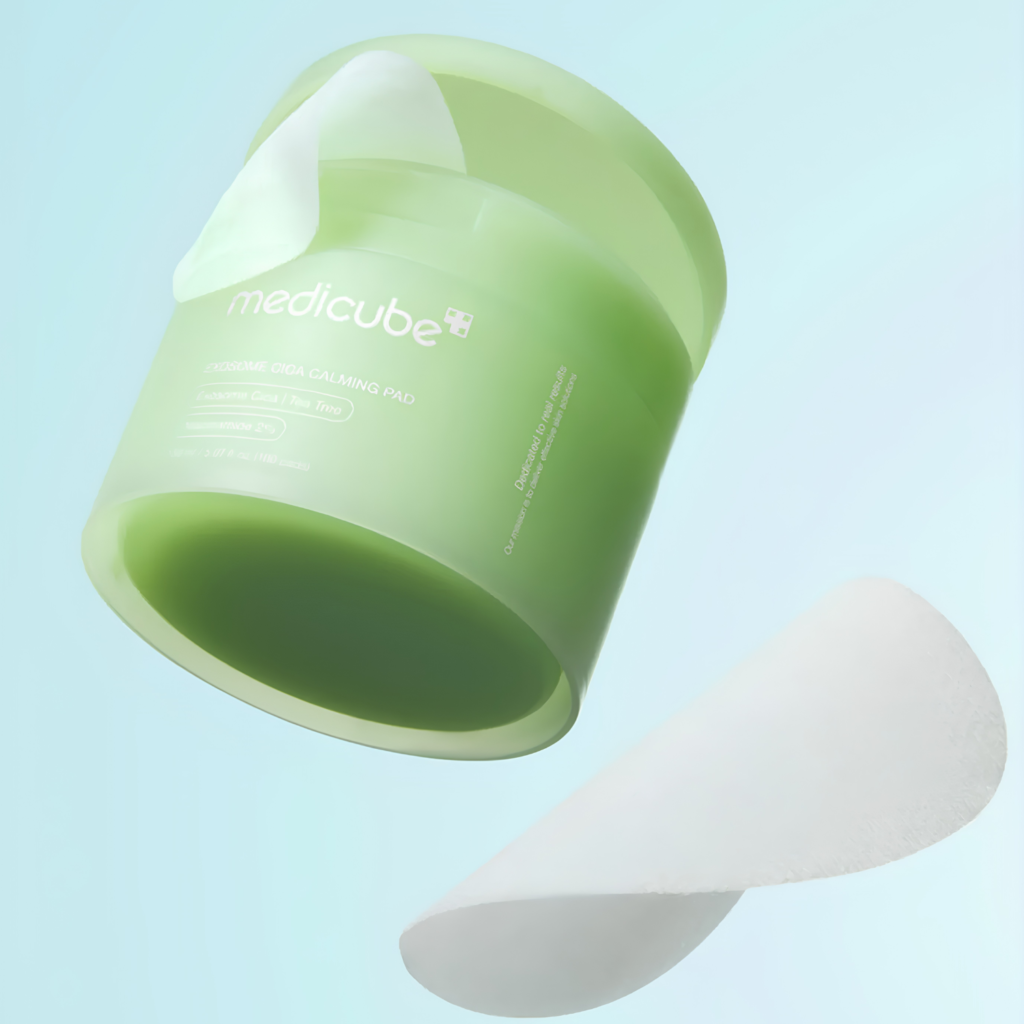
Why it made the list: it gives you the exosome step in the lowest-effort way possible, and cica is a well-loved calming ingredient.
The honest limit: pads feel lovely, but any “exosome” benefit here is small and unproven in a wipe-off format.
Sensitive skin: one of the gentlest picks here.
Medicube Exosome Cica Calming Pad
3. COSRX PDRN Exosome Skinplaning Glaze Mask
Best for: dullness and rough texture; a weekly glow boost. Skin type: most, including drier and normal skin. Feel: glossy overnight mask.
This is the “glass skin in a jar” pick. It mixes the exosome bubble with niacinamide, a gentle acid, collagen, and a peptide, plus a PDRN story — a smoothing, glow-first blend rather than a heavy-duty treatment.
How to use: as your last step 2–3 nights a week, smooth a glossy layer over clean skin and leave it on overnight; rinse in the morning if it feels sticky.
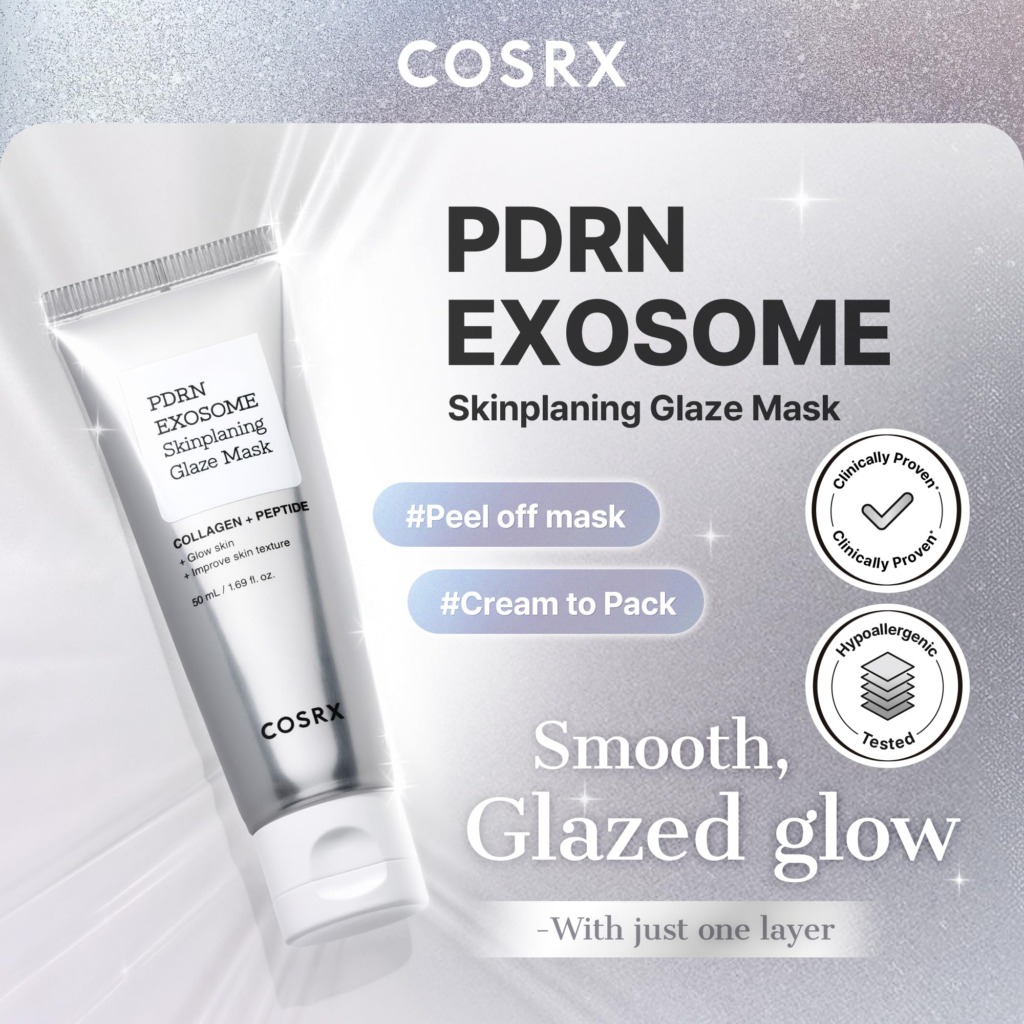
Why it made the list: it’s a low-risk way to try the PDRN-plus-exosome combo, and the supporting ingredients make sense for glow.
The honest limit: a lot of the glow probably comes from the moisturizing ingredients and the mild acid, not the exosome itself.
Sensitive skin: usually gentle, but the acid can be mildly active — start once a week.
COSRX PDRN Exosome Skinplaning Glaze Mask
4. Dr.nineteen PoreXsome ReDRN Exosome Ampoule
Best for: experienced users targeting pores, firmness, and texture at once. Skin type: normal to tough; not for easily irritated skin. Feel: strong, concentrated ampoule (comes as a two-pack).
This is the “level up” pick — and the one to treat with care. It stacks a high-claim PDRN, an exosome (source not stated), and real retinol for a firming, pore-refining push.
How to use: at night only, after toner, on nights you’re not using other strong ingredients; always follow with moisturizer and wear sunscreen the next day.
Why it made the list: for skin that’s already used to retinol, it’s a true multitasker that bundles three of K-beauty’s buzziest repair stories.
The honest limit: with retinol plus a high-claim PDRN, more ingredients doesn’t automatically mean more results — and it does raise the chance of irritation.
Sensitive skin: go slow, patch-test, and skip it if you’re pregnant or react to retinol — a gentler bakuchiol option is a better starting point.
Dr.nineteen PoreXsome ReDRN Exosome Ampoule
5. APLB Exosome Vitamin C EX Serum
Best for: dullness and uneven tone, with an exosome twist.
Skin type: normal, combination, tougher skin.
Feel: fluid serum.
The brightening pick rounds out the set. It’s built around pure vitamin C, with a little exfoliating acid, Centella, hyaluronic acid, and panthenol — a real brightening formula that also carries an exosome-labeled ingredient (source not stated).
How to use: in the morning after toner, apply before moisturizer, then always finish with sunscreen — vitamin C and daylight only get along when you wear SPF.
Why it made the list: the vitamin C base is a legit brightening workhorse, and the exosome adds the on-trend layer without silly filler.
The honest limit: the brightening here is the vitamin C’s doing — credit the C, not the exosome.
Sensitive skin: may be too tingly for reactive skin; start every other day and soften it with moisturizer.
APLB Exosome Vitamin C EX Serum
How to Use Exosome Skincare in a Real Routine
Exosome products are usually a serum, ampoule, or mask step — so they go on after your watery layers and before moisturizer. Adjust for the format (pads replace a toner step; overnight masks go last).
In the morning, start with a gentle cleanser, then a hydrating toner, then your exosome serum or ampoule (or a brightening exosome vitamin C serum), then moisturizer, and finish with SPF 30–50+. The sunscreen is non-negotiable, especially if there’s vitamin C or retinol in the mix.
In the evening, cleanse, then use a toner or essence (an exosome cica pad can go here), then your exosome treatment — an ampoule, or an overnight glaze mask as the very last step — then a barrier-supporting moisturizer.
Plays nicely with: PDRN, peptides, ceramides, panthenol, cica, hyaluronic acid, and niacinamide. These are calm, friendly partners.
Use more carefully alongside: retinol, exfoliating acids (AHA/BHA), strong vitamin C, spicule products, and at-home microneedling tools. Don’t pile several of these on the same night.
And don’t use a microneedling roller to “push the exosomes in deeper” — that turns a simple cosmetic into a mini-procedure you can’t really control at home. Spicule products especially are not daily serums; start 2–3 nights a week and let your skin set the pace.
Who Should Try It — and Who Should Be Careful
Consider trying it if you want to work on texture and firmness and enjoy trying newer ingredients; if you already use PDRN or peptides and want a logical next step; if you build “slow aging” routines that also protect your skin barrier; or if you understand the science is early and keep your expectations grounded.
Be careful — or skip it — if you have very sensitive, reactive, or damaged skin; if you’ve reacted badly to spicule products before; if you already use several retinols or acids; if the product doesn’t say where its ingredients come from; if you’re tempted to buy injectable or “medical” exosome products online (that’s a clinic conversation, not a shopping-cart button); or if you’re pregnant or breastfeeding and looking at a product that also contains retinol.
Honest Limitations
Please read this part before you spend money.
The word “exosome” doesn’t tell you if a product is good — it’s a category name, not a quality stamp. Sources and manufacturing vary a lot: human, bacteria-based, and plant “exosomes” are not the same material.
A big number on the label (like “7500” or “750,000 ppm”) is marketing, not proof that it works. Whether the ingredient is still active in a finished, shelf-stable product is usually not disclosed.
You often can’t tell the exosome’s effect apart from the rest of the formula — a spicule’s smoothing or PDRN’s soothing may be doing the visible work. The other ingredients (PDRN, peptides, niacinamide, collagen) all shape the results.

There’s very little long-term research on everyday cosmetic use. And expensive doesn’t mean better — there’s no reliable link between price and proof here.
None of this means exosomes are a scam. It just means you should buy the whole formula, not the buzzword.
FAQ
What are exosomes in skincare?
Exosomes are tiny bubbles that cells naturally release to send messages — proteins, fats, and genetic material — to other cells. In skincare, they’re sold as a “cell-signaling” ingredient that may help with repair and calming.
Scientifically they’re a type of tiny cell bubble, and because it’s hard to prove a product truly contains real exosomes, most would be more honestly called “small cell-bubble” preparations. The idea is promising, but on a label the word tells you the story, not how strong or pure the ingredient is.
Do exosomes actually work when you put them on your skin?
Early research on people is encouraging but limited, and the best results come from using exosomes after clinic treatments like laser or microneedling — not from a serum on normal skin.
For everyday leave-on products, the strong human proof isn’t there yet, and many studies are small or paid for by the brand. It’s fair to say exosome skincare may help with smoothness, calmness, and glow, and that more independent research on real people is needed before anyone can promise big results.
Are exosomes the same as PDRN? No. PDRN is made of DNA pieces (usually from salmon) that act as repair material and help soothe skin. Exosomes are tiny cell bubbles that carry biological “messages.”
They’re often combined in K-beauty products because their stories fit together — one “supplies,” one “signals” — but they’re different ingredients with different proof. Seeing both on a label isn’t double the evidence; it’s two ingredients that each still need checking in a finished product.
Are plant-based exosomes real exosomes?
Not really. Plant-based bubbles (like “rose stem cell” or “phyto” exosomes) are better described as plant bubbles that are similar to exosomes. They’re bigger than human ones, built differently, and carry plant material — so they can’t send human-cell messages the way human bubbles can.
They may still be soothing or full of antioxidants, but they shouldn’t be sold as equal to human exosomes. If the source isn’t stated, treat the word as a description, not a promise.
Are exosome skincare products safe?
For normal cosmetic use, exosome-labeled serums and pads are generally well tolerated, like other K-beauty ingredients — patch-test and start slow.
The FDA warning you may have seen is about injectable, unapproved exosome treatments sold for medical problems, not about face serums. That said, “it’s a cosmetic” doesn’t automatically prove long-term safety or results either. Be most careful with products that also contain retinol or acids, and never buy injectable exosome products online.

Can I use exosome skincare every day?
Usually yes for gentle ones — a basic exosome ampoule, pad, or hydrating serum can normally be used daily, morning or night. The exceptions are products that mix exosomes with stronger ingredients.
Anything with retinol, strong acids, or spicules should start at 2–3 times a week, not daily. As always, let your skin lead: if you see redness, stinging, or peeling, use it less often and focus on repairing your skin barrier.
Can I use exosomes with retinol?
Often yes, but space them out instead of piling everything on at once. A gentle standalone exosome product can go with a retinol routine — but if a single product already contains retinol (like some firming pore ampoules), don’t add more retinol on top.
Introduce one strong ingredient at a time, use retinol at night, always wear sunscreen the next day, and skip retinol products if you’re pregnant. If retinol irritates you, a gentler bakuchiol option is a good place to start.
Can I use exosome products with vitamin C?
Yes — and some exosome serums are actually built around vitamin C for brightening. If you’re using separate products, a vitamin C serum in the morning plus an exosome step is a fine combination; just watch for stinging, since pure vitamin C plus acids can be irritating. Introduce them a few days apart so you learn how your skin reacts, soften them with moisturizer if needed, and never skip sunscreen when you use vitamin C in the morning.
Are exosome spicule serums okay for sensitive skin?
Be careful here. Spicules are microscopic needles that make your skin tingle as they work, and reactive or irritated skin may not handle them well. If your skin is sensitive, start with a gentle, spicule-free exosome product — a cica pad or a basic ampoule — before trying anything with spicules. If you do try one, use it 2–3 nights a week at most, patch-test first, and stop if the tingling turns into lasting stinging or redness.
How long does exosome skincare take to show results?
Set realistic timing. For hydration and a smoother, calmer look, some people notice small changes in a couple of weeks. For texture, tone, and firmness, real change usually takes longer — think 8–12 weeks of steady use, the same patience any repair-type ingredient needs.
And remember that most positive studies were done alongside treatments or over short periods, so at-home serum-only results are likely gentler. Consistency, sunscreen, and a healthy skin barrier matter more than any single bottle.

Are exosomes better than peptides or growth factors?
There’s no good proof that exosomes beat well-established options like peptides — and some dermatologists say topical exosomes haven’t yet shown they outperform retinol or peptides.
All three sit in the “helpful and promising” group, not the “proven miracle” group. Instead of ranking them, it’s smarter to choose based on what your skin needs and can handle, and to value a sensible overall formula over any single trendy ingredient. Exosomes are a reasonable add-on, not a replacement for the basics.
How can I tell if an exosome product is trustworthy?
Look past the word “exosome.” Check whether the brand says where the ingredient comes from (human, bacteria, or plant), whether the rest of the formula makes sense for your goal, and whether the claims sound measured instead of magical.
Be suspicious of huge numbers used as “proof,” of “reverses aging” language, and of prices that seem to buy hype rather than a thoughtful formula. A trustworthy product reads like a good serum that happens to include an exosome — not a miracle built entirely around one buzzword.
Are there any FDA-approved exosome skincare products?
No — there are currently no FDA-approved exosome products of any kind. But that fact gets misused. Cosmetics generally don’t need FDA approval to prove they work in the first place, so “no FDA-approved exosome serum” is true of most cosmetic ingredients.
The FDA’s actual warning is about injectable, unapproved exosome treatments sold for medical use, where serious problems have happened. For a face serum, the takeaway isn’t “it’s banned” — it’s “judge it like any cosmetic, by its formula and how your skin responds.”

Can exosome cosmetics replace a dermatologist’s treatments?
No. At-home exosome products and in-clinic exosome procedures are different worlds — different strengths, different delivery, different oversight. The most impressive exosome results in research came from professional treatments (often with laser or microneedling), not from a serum used alone at home. Think of a topical exosome product as a helpful part of your daily routine, not a substitute for a dermatologist’s advice or in-office care. For a specific concern like scarring or melasma, a professional is still the right call.
Related Reading
- PDRN Skincare Guide: K-Beauty’s Salmon DNA Explained
- The PDRN Lie? Why Salmon DNA Serums Can’t Absorb
- NAD+ Skincare in K-Beauty
- Bakuchiol vs Retinol
- Mary&May Review: Spicule PDRN Creams
Final Word
Exosomes are one of the most genuinely interesting ideas in skincare right now, and the early research on real people points in a hopeful direction. But “interesting and hopeful” is not the same as “proven for your bathroom shelf.” The strongest proof still comes from clinic treatments, not daily serums, and the marketing is moving faster than the science.
So shop the smart way. The word “exosome” on a label matters far less than the whole formula — where the ingredient comes from, what else is in the bottle, and whether it suits your skin.
If you’re new, start with a gentle serum, mask, or pad instead of a loaded multi-ingredient ampoule. Add spicule or retinol products slowly, one at a time. And above all, keep the boring basics first: daily sunscreen and a healthy skin barrier will do more for your skin than any single trendy ingredient.
Exosomes are worth watching, and for many people worth trying — with clear eyes and calm expectations.
This exosome skincare guide reviews cosmetic claims by ingredient type, delivery concept, available research, product positioning, and comparison with PDRN and other K-beauty actives. It is not medical advice and does not replace consultation with a dermatologist or licensed medical professional.