If you’ve spent any time in Korean dermatology clinics or browsed the higher end of K-beauty, you’ve seen PDRN. It’s in Rejuran injections that K-celebrities credit for their glass skin, it’s the headline active in every “third-generation” ampoule launched since 2023, and it’s quietly become one of the most influential ingredients in modern K-beauty.
But what does PDRN actually do? Does the topical version in your serum work the same way as the injection? And is the new “vegan PDRN” you’re seeing on labels real science or marketing repackaging?
This is Yogi Korea’s full ingredient guide on PDRN: What it is, how it works, what brands to actually trust, and how to fit it into your routine without wasting money.
What is PDRN, really?
PDRN stands for Polydeoxyribonucleotide. Despite the intimidating name, it’s a fairly simple concept: it’s a chain of DNA fragments, typically 50–1500 base pairs long, extracted and purified from biological sources.
The first source, and still the most studied, is salmon sperm cells, specifically from rainbow trout and Pacific salmon. These cells have DNA that’s surprisingly compatible with human skin DNA: roughly 99% structural similarity. That compatibility is why PDRN doesn’t trigger immune rejection when applied to or injected into human tissue.
PDRN was first developed as a wound-healing medication in Italy in the 1990s (under the brand name Placentex), used for diabetic ulcers, burns, and surgical scars. Korean dermatologists picked it up in the early 2010s and reformulated it for aesthetic use — first as Rejuran (Pharma Research), an injectable for skin rejuvenation, and later as a topical active in cosmetic skincare.
Quick Answer: What does PDRN Do For Skin?
This is the part most K-beauty marketing skips, but it matters.
PDRN doesn’t work like hyaluronic acid (sit on the surface and hydrate) or retinol (force cell turnover). It works by acting as a signaling molecule.
When PDRN reaches skin cells, it binds to a specific receptor called A2A (Adenosine 2A) receptor. This receptor is part of your skin’s natural repair and inflammation control system. When PDRN activates it, three things happen:
- Fibroblast activity increases — these are the cells that produce collagen and elastin
- Anti-inflammatory cascade triggers — calming redness, swelling, and post-treatment irritation
- Angiogenesis (microcirculation) improves — bringing oxygen and nutrients to the skin
In clinical studies (mostly Korean and Italian, peer-reviewed):
- Collagen synthesis increased by 36–50% over 8 weeks
- Skin hydration improved 20–40% with consistent topical use
- Erythema (redness) reduction of 30%+ in sensitive/post-procedure skin
- Elasticity scores improved in subjects aged 35–60
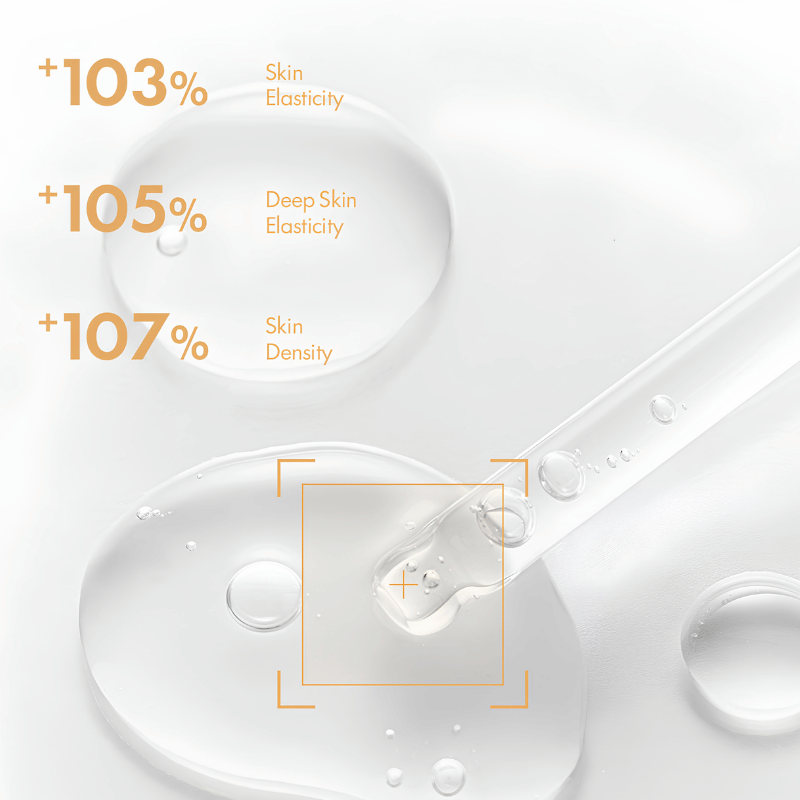
⚠️ Important caveat: These results are mostly from injectable PDRN at clinic concentrations. Topical PDRN — what you get in a serum or ampoule — works on the same mechanism but at a fraction of the intensity. Realistic expectations: smoother texture, better hydration, less reactivity. Not the same dramatic lift as a Rejuran injection.
Animal PDRN vs Vegan PDRN — what’s the difference?
This is where K-beauty has innovated in the last 2 years, and where most ingredient guides get it wrong.
Animal (Salmon) PDRN
- Source: salmon or trout sperm DNA, purified through ultrafiltration
- Concentration: usually 0.5–2% in topical formulas, much higher in injectables
- Pros: most clinical research is on this version, highest potency per molecule
- Cons: not vegan, ethical concerns for some consumers, slight scent issue in pure form
Vegan PDRN (Plant-based PDRN)
- Source: extracted from seaweed (kelp, brown algae), rice bran, or other plant DNA
- Korean brands often label it as: Vegan PDRN, Plant PDRN, Green DNA, Bio-PDRN, or Rice PDRN depending on the source
- Concentration: typically 20,000–560,000 ppm (2–56%) in topical products
- Pros: vegan-certified, cruelty-free, often paired with other plant actives (Centella, kombucha, rice extract)
- Cons: structural difference means roughly 1/100th the per-molecule potency of salmon PDRN
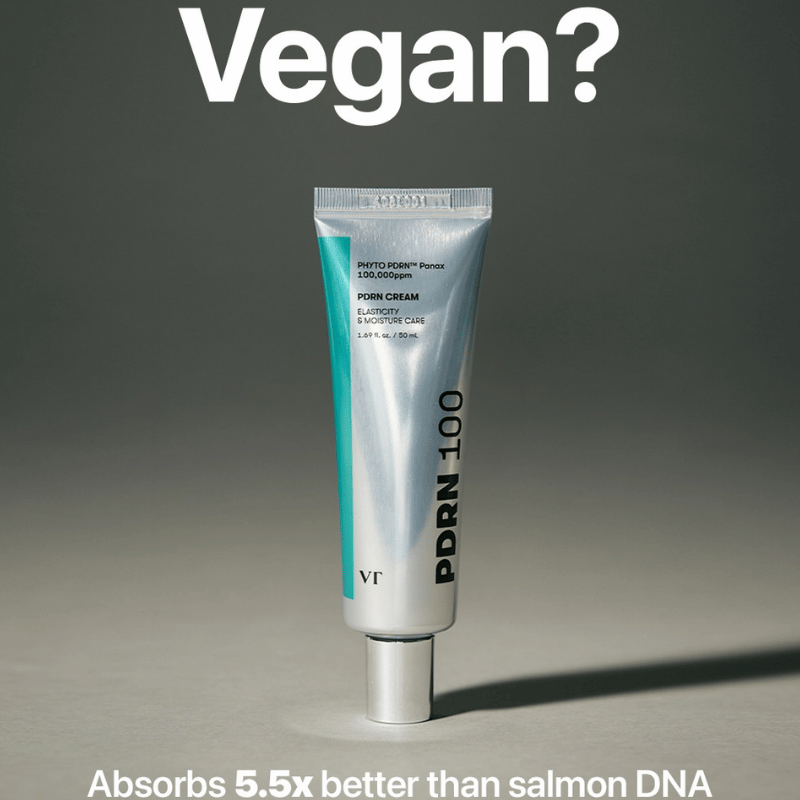
The key insight: K-beauty brands compensate for the lower potency by using much higher concentrations. A salmon PDRN serum might use 1% (10,000 ppm); a vegan PDRN serum might use 20,000–50,000 ppm of the plant-derived equivalent. The end-user experience on the skin is often comparable for hydration and calming, though salmon PDRN still wins for measurable collagen synthesis.
Why Korean dermatology popularized PDRN first
PDRN’s rise as a “K-beauty ingredient” isn’t accidental. Korea pushed it to mainstream for three structural reasons:
1. Aesthetic medicine culture
Korea has one of the highest per-capita aesthetic clinic densities in the world. When Rejuran (PDRN injectable) launched in 2014, it spread through Gangnam clinics within months. By 2018, “Rejuran healer” was a household term in Korean beauty media.

2. Topical translation race
Once injectable PDRN proved its skin benefits clinically, Korean cosmetic chemists raced to encapsulate PDRN for topical delivery. Liposome systems, transdermal carriers, and PDRN-amino acid complexes all originated in Korean labs.
3. Sensitive skin demographic
Korean consumers — heavy users of acids, retinol, and aesthetic procedures — develop barrier-compromised, reactive skin at a higher rate than Western consumers. PDRN’s anti-inflammatory + regenerative profile fits this need precisely.
Best K-beauty brands using PDRN (animal and vegan)
The K-beauty PDRN market has matured fast. Below are three brands that I’d actually trust in 2026 — each takes a different angle on the ingredient, from pure delivery serums to hybrid formulations that bridge skincare and makeup.
1. Arencia PDRN Booster Shot
Best for: high-concentration PDRN delivery without irritation.
Arencia built its reputation on time-crafted Korean artisanal skincare — the brand’s patented Pojae-72H Liposome™ uses Korea’s traditional Pojae refining method combined with modern liposome delivery to push actives deeper into the skin.
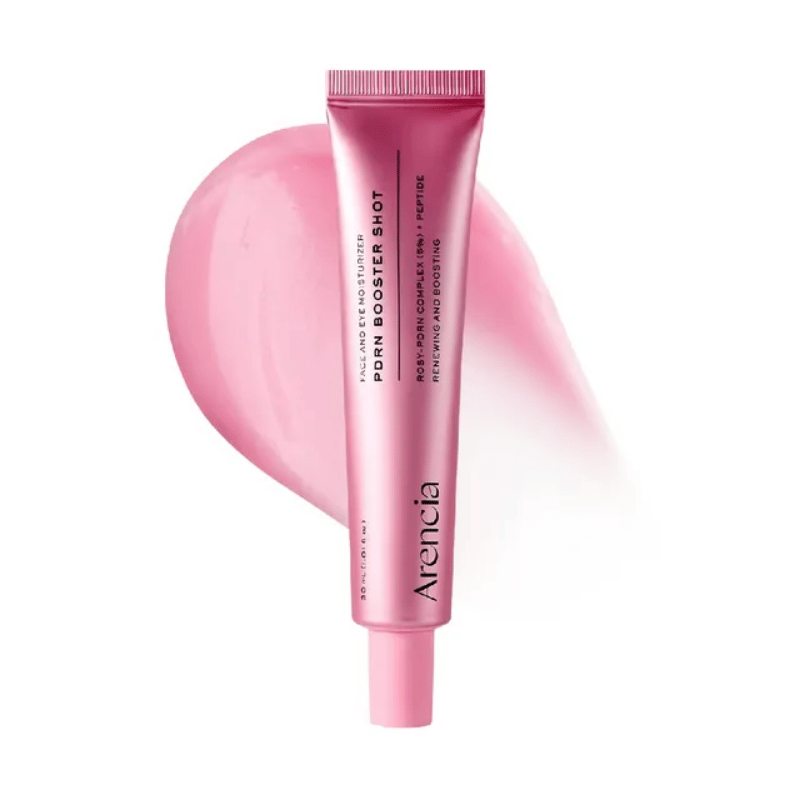
The Booster Shot translates that delivery system into a PDRN-focused serum. The texture is lighter than a typical ampoule, closer to a watery essence, which lets it absorb fast before the rest of your routine. Pair it with a ceramide moisturizer on top to lock in the active.
Arencia is currently sold across 100+ countries through Sephora, Tjmaxx, Watsons (HK/TW/MY), and Rossmann (Europe), and the brand recently broke into Olive Young Pick at the platform’s fastest selection pace ever.
2. Mary&May Spicule Collagen PDRN Cream
Best for: Skin that wants the regenerative push of PDRN combined with active microcirculation.
This is the most innovative formulation of the three. Mary&May pairs PDRN with spicules — microscopic silica needle particles derived from freshwater sponges that gently exfoliate at the surface while creating microchannels that allow active ingredients to penetrate more effectively.
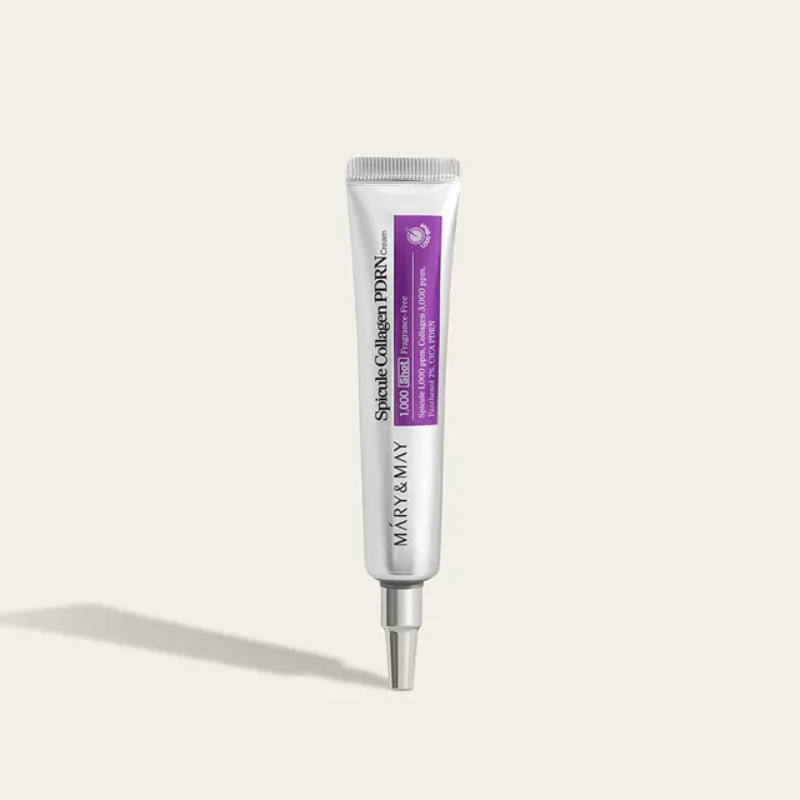
The cream also layers in vegan collagen + 6 peptide complex, so you’re hitting three regenerative mechanisms simultaneously: PDRN (signaling), peptides (collagen production), and spicules (delivery enhancement).
Texture is rich but breaks down to a watery feel on application. Use 2–3 nights a week — not every night, because the spicule action is enough on its own. Always follow with SPF in the morning since spicule treatment leaves skin slightly more reactive to UV for 24–48 hours.
Mary&May is one of the few K-beauty brands with 6 Peptide Complex Serum + this Spicule Cream forming a credible peptide+PDRN combo at an accessible price point.
Mary&May Spicule Collagen PDRN Cream
3. mixsoon PDRN Collagen Tinted Moisturizer
Best for: Anyone who wants PDRN’s benefits during the day, in a one-step makeup + skincare hybrid.
mixsoon is the pure ingredient-oriented brand from Jeju Island that became famous for its Bean Essence — the K-beauty essence ranked #1 on Olive Young, Naver, and Glowpick. The brand’s manufacturing discipline (own Centella Asiatica farm, 72-hour low-temperature extraction) translates here into one of the cleanest tinted moisturizers in K-beauty.
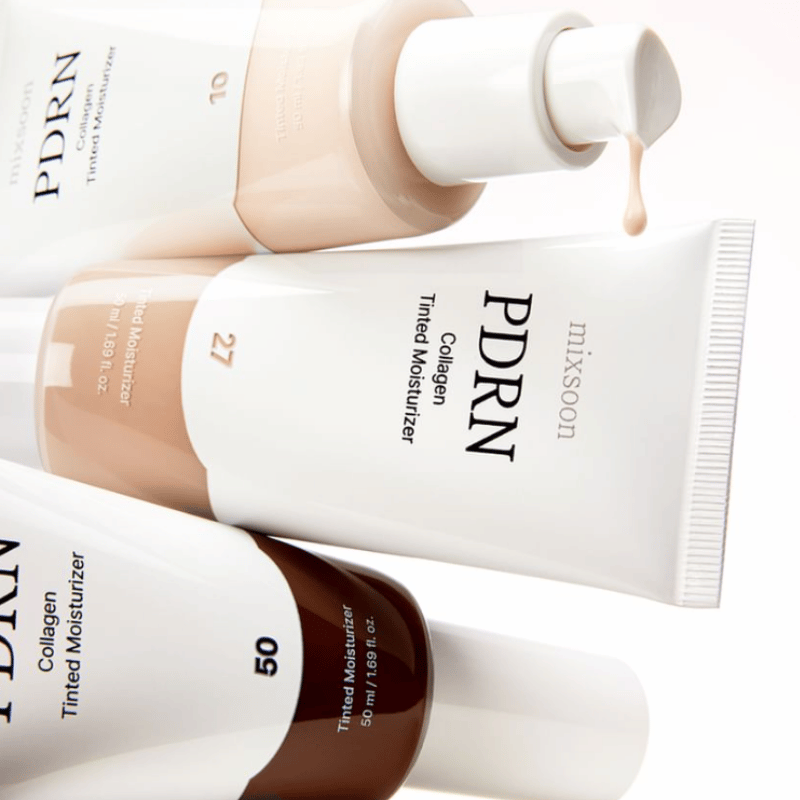
The Tinted Moisturizer combines PDRN + Collagen + a sheer skin-tint pigment. It’s less coverage than a BB cream, more nutrition than a typical tinted moisturizer — closer to a “skin-blurring serum with a hint of color.”
What makes it work as a PDRN delivery vehicle is the long wear time (you’re wearing this 8+ hours), which gives the active extended contact time with the skin barrier. For readers who keep skipping the daily PDRN serum step, this folds it into your makeup routine instead.
mixsoon’s celebrity reach is real — ENHYPEN at Coachella 2025, Cardi B on TikTok/IG, Selena Gomez’s 2025 Emmy MUA shoutout. The brand has expanded to 79+ countries with strong North America, Europe, and LATAM growth.
Mixsoon PDRN Collagen Tinted Moisturizer
How to use PDRN in your routine (without wasting it)
PDRN is not a beginner active. It works best when your routine is otherwise dialed in, and when applied correctly.
Application order
- Cleanser
- Toner / Essence (hydration prep)
- PDRN serum or ampoule ← here, on damp skin
- (Optional) Other actives — niacinamide is compatible, retinol on alternate nights
- Moisturizer
- SPF (morning)
PDRN goes after toner but before heavier moisturizer. Apply to slightly damp skin to maximize absorption.
Frequency
- Daily, AM and PM for vegan PDRN products (lower potency, well-tolerated)
- Once daily, PM only for high-concentration salmon PDRN serums (more potent, give skin recovery time)
What pairs well
- Hyaluronic acid + ceramides — perfect synergy, PDRN repairs while HA/ceramides hydrate
- Niacinamide (10% or less) — anti-inflammatory effects compound
- Peptides — collagen-stimulating effects compound
- Centella (CICA) — both calm inflammation; great for sensitive skin
What to avoid combining
- High-percentage acids (AHA/BHA above 5%) — strip the very barrier PDRN is trying to repair
- High-percentage retinol same night — too much stimulation; alternate nights instead
- Vitamin C (L-ascorbic acid) at the same time — pH conflict; use one AM, other PM
Realistic timeline for results
| Weeks | What to expect |
|---|---|
| 1–2 | Better hydration, less reactivity, smoother feel |
| 3–4 | Visible texture improvement, redness reduction |
| 6–8 | Elasticity changes, fine line softening (especially around eyes) |
| 12+ | Sustained collagen support, slowed visible aging |
PDRN is a slow active. Unlike retinol (visible turnover in 4 weeks) or vitamin C (brightness in 2 weeks), PDRN’s benefits are cumulative and structural. Most users report that they “didn’t notice when it started working” until they skipped a few days and saw their skin look slightly off.
Who should — and shouldn’t — use PDRN
Yes, if:
- You’re 30+ and worried about elasticity, fine lines, or thinning skin
- Your skin barrier is reactive after years of acids, retinol, or treatments
- You’re recovering from a procedure (laser, microneedling, peels)
- You’ve tried high-end peptide serums without much benefit
- You want a gentler alternative to retinol for collagen support
No, if:
- You’re in your early 20s with normal, resilient skin and just want hydration (use a basic ceramide moisturizer instead — same hydration benefit, $40 cheaper)
- You’re allergic to fish/seafood (avoid salmon PDRN; vegan PDRN is fine)
- You’re pregnant or breastfeeding (PDRN’s safety profile is good but not extensively studied in pregnancy)
- You’re looking for instant, visible results — PDRN is a long game
FAQ
Is PDRN safe?
Yes. Both injectable and topical PDRN have extensive safety data from Korean and European clinical trials. Salmon-derived PDRN is non-immunogenic (doesn’t trigger immune rejection) due to ~99% structural similarity with human DNA. Vegan PDRN has an even cleaner safety profile.
Is vegan PDRN as effective as salmon PDRN?
Not quite. Per molecule, salmon PDRN is about 100× more potent. But Korean brands compensate with much higher concentrations of vegan PDRN (often 20,000+ ppm), and the topical end-result for hydration and calming is comparable. For deep collagen stimulation, salmon PDRN still has the edge.
Can I use PDRN with retinol?
Yes, but not in the same routine application. Use retinol on alternate nights, with PDRN on retinol-off nights to support barrier recovery. This combination is one of the most effective anti-aging routines for 35+ skin without overstressing the barrier.
Does PDRN whiten skin?
Not directly. PDRN doesn’t inhibit melanin production (unlike niacinamide or tranexamic acid). But by reducing inflammation and improving barrier function, it can indirectly reduce post-inflammatory pigmentation and improve overall skin clarity.
Why is PDRN so expensive?
Pharmaceutical-grade salmon PDRN extraction requires ultrafiltration and pharmaceutical purity standards. The raw material costs are high. Topical cosmetic PDRN is more affordable because the purity standards are lower than injectables, but it’s still pricier than basic hydration ingredients.
Can I get the same benefit from a Rejuran injection?
If your budget allows, yes — injectable PDRN is significantly more effective than topical because it bypasses the skin barrier entirely. But topical PDRN serums are useful for maintenance between injections or as a starter for those not ready for procedures.
What’s the difference between PDRN and PN (Polynucleotides)?
PN is essentially a higher molecular weight version of PDRN. Both come from similar sources and work via the same A2A receptor mechanism. In K-beauty marketing, the terms are often used interchangeably, though PDRN has more clinical research behind it.
Is PDRN good for acne-prone skin?
Yes, especially for acne scarring and post-inflammatory marks. PDRN’s collagen-stimulating and anti-inflammatory action helps fade scarring faster. Avoid using it during active breakouts on inflamed pustules — focus on the surrounding healed areas.
Related reading on Yogi Korea
- Bakuchiol vs Retinol and Recommended K-beauty Products
- Olive Young 101: A Foreigner’s Guide to Korea’s Biggest Beauty Store
- Mixsoon Review: The Single-Ingredient K-Beauty Brand Behind Bean Essence (And Why ENHYPEN, Cardi B, and Selena Gomez Are Wearing It
- NAD+ Skincare in K-Beauty: Benefits, NAD vs NMN & Best Brands
Final word
PDRN is one of the few K-beauty ingredients that lives up to its reputation, but only when you understand what it can and can’t do. It’s not magic, it’s not a substitute for retinol or peptides, and it doesn’t replace SPF.
What it does, well, is restore the regenerative signaling that aging and over-treatment dampen — quietly, cumulatively, and without the irritation of stronger actives.
This guide evaluates PDRN skincare by ingredient type, product positioning, formula claims, and how the ingredient is used in Korean dermatology and K-beauty product routines. It does not replace medical advice or injectable treatment guidance.