NAD+ (Nicotinamide Adenine Dinucleotide) is a coenzyme every living cell uses to make energy and run DNA-repair pathways. Levels drop sharply with age — the longevity science behind that decline is what pushed NAD+ into beauty.
In 2026, K-beauty brands are racing to formulate topical NAD+ and its precursors (NMN, NR, niacinamide) into serums, ampoules, and “longevity creams” — a category that barely existed two years ago.
NAD+ itself is a large, unstable molecule that doesn’t easily penetrate skin. Most Korean formulas use stabilized precursors (NMN, NR, niacinamide) plus delivery tech to get the benefits without the stability problems.
The realistic skin benefits — based on current peer-reviewed research — are around mitochondrial support, sirtuin activation, and oxidative-stress reduction. Expect smoother texture, calmer tone, and slower visible aging — not overnight transformation.
Best for: anyone in their late 20s and up building a long-term anti-aging routine, especially those who’ve outgrown basic vitamin C and want a next-step ingredient that isn’t retinol.
Walk into any Olive Young in Seoul this season and you’ll see it: the word “longevity” appearing on shelf talkers next to ingredients most shoppers can’t pronounce yet. NAD+ is the one being whispered about. It started in biohacker forums and David Sinclair interviews. It moved through IV-drip clinics and supplement shelves. And now, in 2026, it’s arrived at K-beauty, quietly, in tiny amber bottles, marketed less as a skincare ingredient and more as a cellular intervention.The question is whether NAD+ in a serum actually does anything or whether K-beauty is doing what K-beauty does best, which is dressing up established chemistry (hello, niacinamide) in newer, sexier language.
What NAD+ Actually Is (Without the Hype)
NAD+ which is short for Nicotinamide Adenine Dinucleotide, is one of the most fundamental molecules in human biology. Every cell in your body uses it. It’s a coenzyme that shuttles electrons in the mitochondria (your cellular power plants), helps regulate sirtuins (a family of proteins linked to longevity), and supports PARP enzymes that repair damaged DNA.In simpler terms: NAD+ is the molecule that decides how efficiently your cells generate energy, defend themselves, and recover from daily damage.The catch is what happens over time. Research consistently shows NAD+ levels decline with age by some measurements, a 60-year-old has roughly half the NAD+ of a 20-year-old. That decline correlates with reduced mitochondrial function, slower DNA repair, and accelerated visible aging in skin: thinner dermis, slower wound healing, more pigmentation, less bounce.The longevity world responded with IV drips, oral supplements, and patches aimed at raising systemic NAD+. K-beauty asked a different question: what if you applied it directly to the skin?
Is NAD+ Good For Skin?
If we zoom in on skin specifically, NAD+ matters for three reasons:
1. Mitochondrial energy in keratinocytes and fibroblasts. Your skin cells need ATP to do everything – turn over, produce collagen, defend against UV. Mitochondrial decline in aging skin means slower repair and visibly slower recovery from damage. NAD+ is the input that keeps that engine running.2. Sirtuin activation. Sirtuins (SIRT1, SIRT3, SIRT6 especially) are enzymes that depend on NAD+ to function. They regulate inflammation, stress response, and circadian repair cycles in skin. Low NAD+ → quiet sirtuins → more inflammatory aging.3. DNA repair via PARP. Every day your skin takes UV hits, pollution hits, and oxidative damage. PARP enzymes patch DNA breaks, and they’re hungry for NAD+. When NAD+ drops, repair slows, and damage accumulates as pigmentation, fine lines, and elastosis.This is the science the marketing leans on. It’s mostly real. The question is whether topical application can move the needle on intracellular NAD+ — and that’s where the conversation gets more nuanced.https://www.youtube.com/watch?v=H84bHp0j1IA
Why K-Beauty Got to NAD+ First (Sort Of)
Western brands have NAD+ supplements. Korean brands have NAD+ serums on Olive Young shelves. The reason is structural.K-beauty’s competitive edge has always been ingredient-first formulation at speed. When PDRN moved from clinics to creams, Korean indie brands had it on shelves in months. When bakuchiol went mainstream, Korean labs were already on iteration two. NAD+ is following the same arc.There’s also a cultural readiness. Korean consumers, especially the 30+ “anti-aging serious” demographic, already buy expensive ampoules for single-ingredient claims. They’re trained to read INCI lists. They’ll spend USD 50~60 on a 30ml bottle if the science narrative is clean. That’s the perfect launchpad for an ingredient like NAD+, which needs explaining.
The Korean Brands Quietly Building the NAD+ Category
The NAD+ space in K-beauty is still forming, but five Korean brands have already planted clear flags in 2026. Each comes at the molecule from a different angle; derma-clinical, indie-fermented, mass-prestige, sensitive-skin, and clean-minimal and together they sketch the shape of where the category is heading.
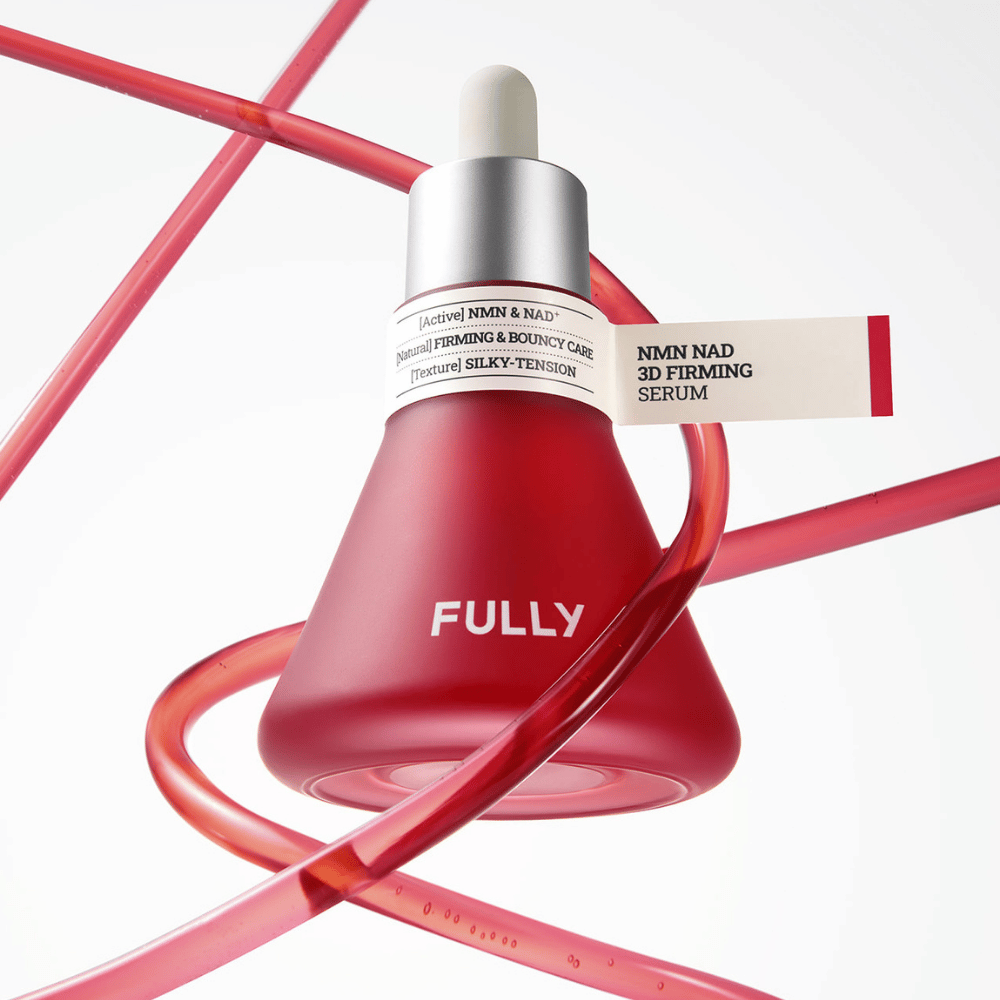
Fully — The Longevity-First Indie
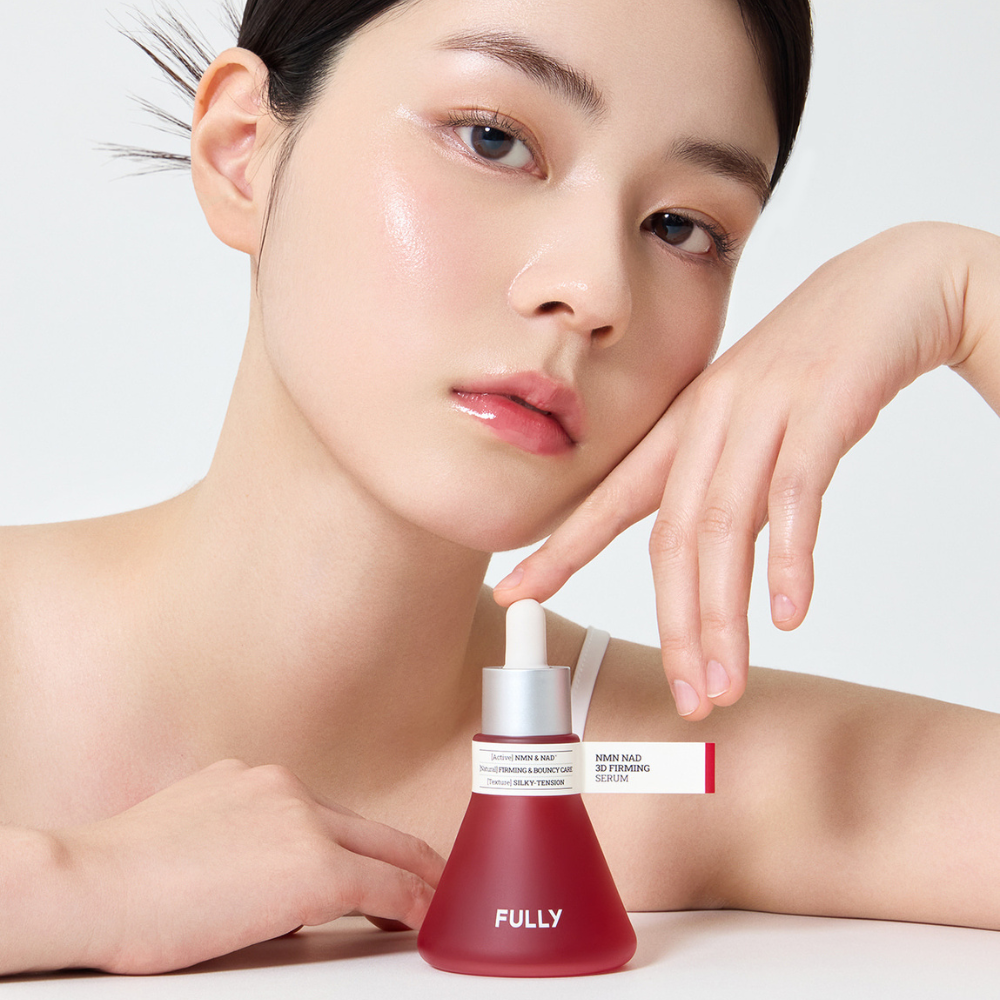
Fully is one of the youngest brands on this list and one of the most uncompromising about positioning. It launched as a longevity skincare house rather than as a general K-beauty brand, which means NAD+ isn’t a hero SKU added to an existing line, it’s the founding ingredient story.Look for stabilized NMN paired with sirtuin-supportive botanicals and a deliberately short ingredient list. The brand reads more biotech than beauty: amber glass, scientific labels, very little marketing fluff. If you want to buy into the NAD+ category rather than a single product, Fully is the cleanest entry point.FULLY – NMN NAD 3D Firming Serum
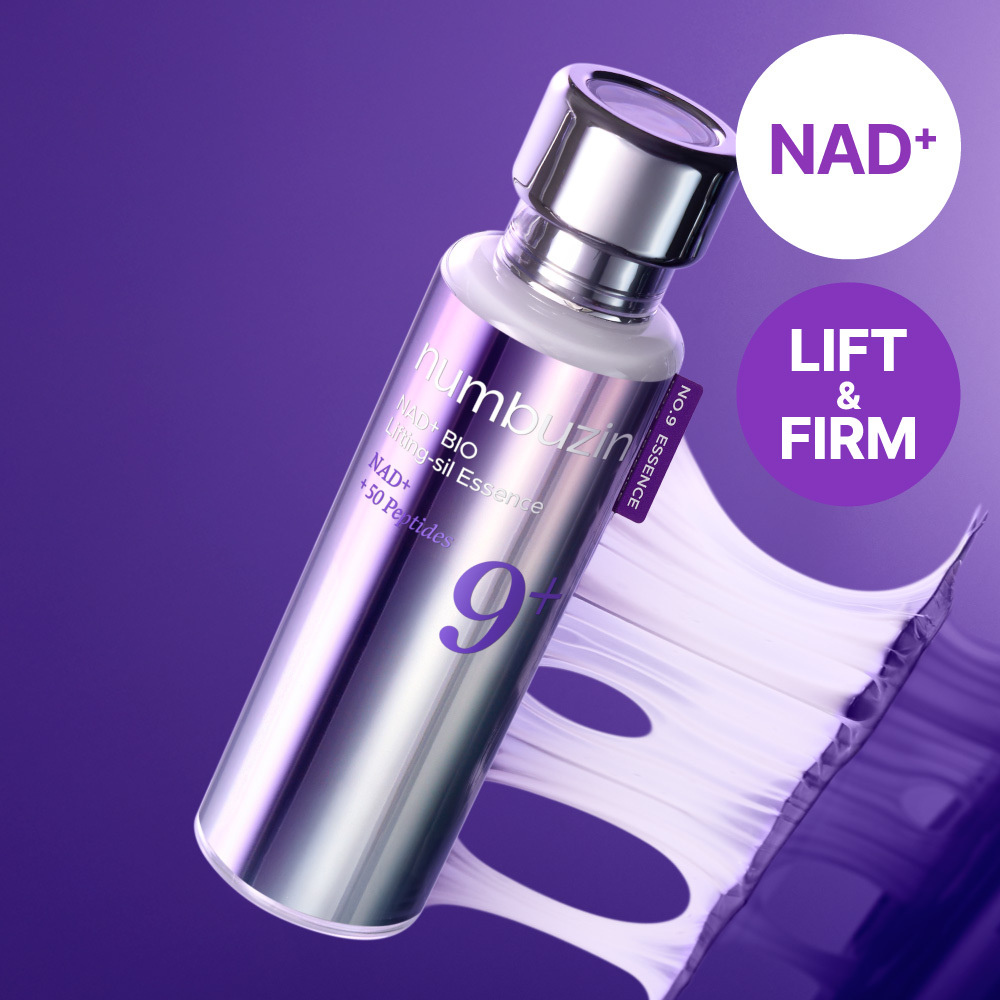
Numbuzin — Fermented Niacinamide, Done Properly
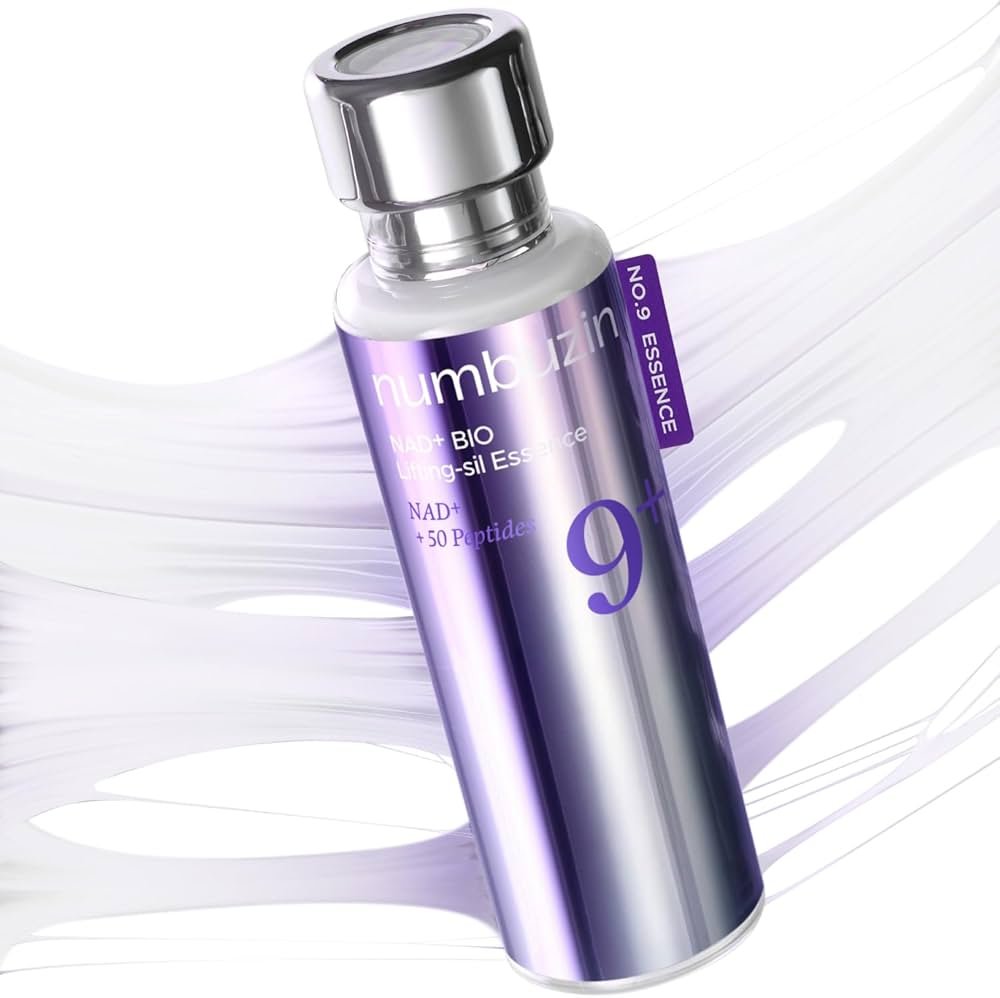
Numbuzin built its reputation on numbered, ingredient-focused serums (the “No.x” naming system that turned the brand into an Olive Young bestseller). Their angle on NAD+ comes through fermented niacinamide and NMN complexes, leaning on Numbuzin’s existing fermentation-tech strengths rather than chasing exotic actives.The benefit: the formulations are well-tolerated, layer easily with other K-beauty staples, and tend to sit at a more accessible price point. If you’ve already been using a Numbuzin No.3 or No.5 serum, their NAD+-adjacent line slots into the same routine logic. A solid mid-market pick.Numbuzin – No.9 NAD+ BIO Lifting-sil Essence – 50ml
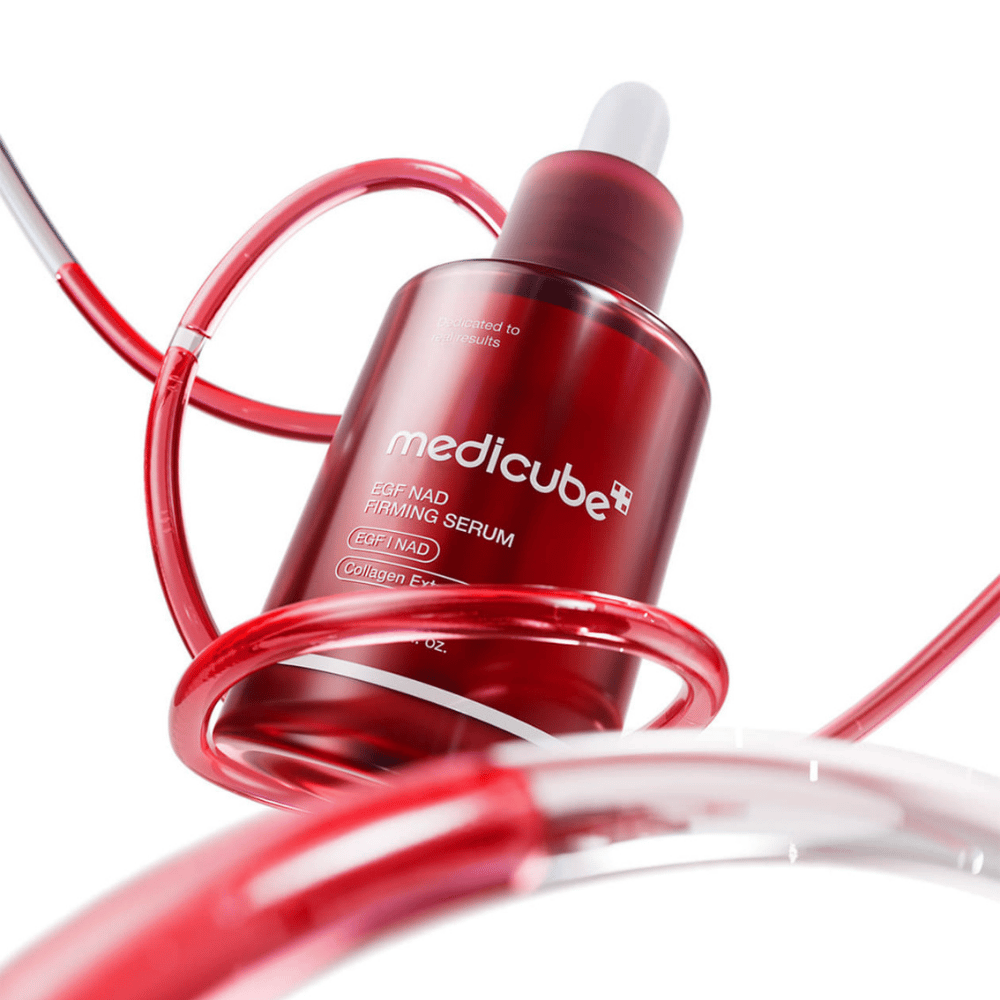
Medicube — Derma-Cosmetic Concentrations
Medicube comes from the derma-cosmetic side; clinic-adjacent, device-friendly, formulations engineered to hold up under microcurrent and LED routines. Their NAD+ approach reflects that: higher active concentrations, more aggressive delivery systems, and often paired with their own collagen and peptide complexes.This is the brand to look at if you’re already using the Medicube Booster Pro or AGE-R devices and want a serum that complements them. Expect a sharper price point than Numbuzin, and a more “clinical” sensorial finish — less slip, more efficacy framing.Medicube – EGF NAD Firming Serum – 30ml
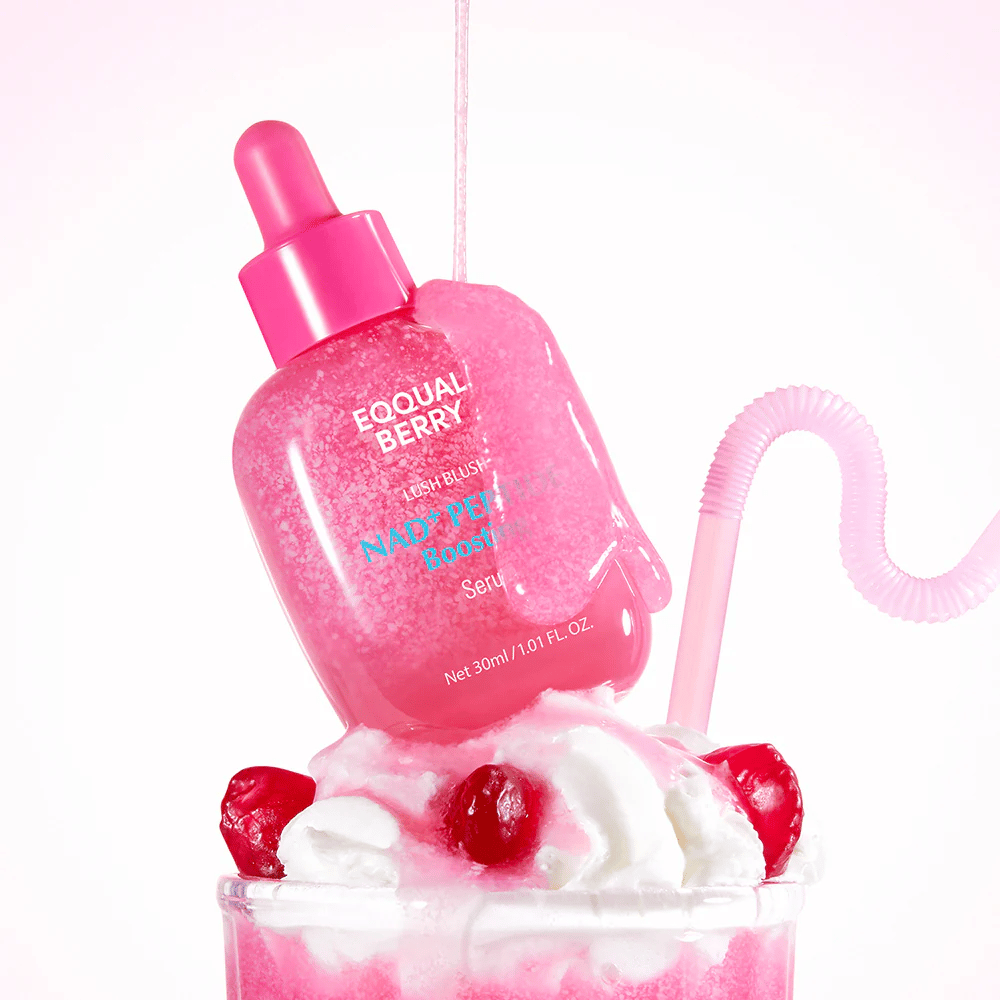
Eqqualberry — Sensitive Skin’s Entry Into Longevity
Eqqualberry has spent years building a reputation around sensitive and reactive skin — a notoriously tricky audience for new actives. Their NAD+ formulations reflect that DNA: lower-irritation precursors (niacinamide-led, NMN-supported), buffered with ceramides and panthenol, and almost always paired with barrier-repair claims.If retinol made your skin angry and you’re nervous about jumping into a new active, Eqqualberry is the safest landing. The trade-off is slower visible results, but for the right skin type that’s a feature, not a bug.EQQUALBERRY – NAD+ Peptide Boosting Serum – 30ml
How to Use NAD+ in Your Routine
NAD+ (or NMN/NR) serums slot in like a treatment ampoule, between toner and moisturizer, on clean skin, ideally at night when DNA-repair pathways are most active.A realistic introduction looks like this:
Week 1–2: Apply every other night. Pair with a basic peptide moisturizer. No retinoid that week.
Week 3–4: Move to nightly if skin tolerates it. You may notice slightly faster recovery after sleep — slightly less morning puffiness, smoother texture.
Month 2–3: This is where real changes (if any) start showing — tone evenness, subtle bounce, faster healing from blemishes.
Month 4+: The longevity payoff is cumulative, not dramatic. Think of it as compounding interest for your mitochondria.
Don’t stack NAD+ with strong retinol or acid actives in the same routine, give it its own night. And as always with K-beauty: SPF in the morning is non-negotiable. NAD+ supports repair; sunscreen prevents the damage you’d need to repair in the first place.
Who Should Try NAD+ And Who Should Skip It
Try it if you:
Are in your late 20s through 50s and want a next-step anti-aging ingredient beyond vitamin C and basic niacinamide
Don’t tolerate retinol well (sensitivity, rosacea-adjacent skin)
Are already committed to long-term routine consistency — NAD+ rewards patience, not impatience
Care about mechanism in your skincare and want something with credible science behind the marketing
Skip it (or wait) if you:
Are under 25 with no specific aging concerns — basic niacinamide does most of what you need at a fraction of the cost
Are pregnant or breastfeeding (consult a dermatologist; the topical safety data is still thin)
Have very reactive skin and haven’t built tolerance to basic actives yet
Need a single hero product to fix a specific issue. NAD+ is supporting infrastructure, not a spot treatment
Honest Limitations and Open Questions
A few things the marketing won’t volunteer:Topical-to-intracellular transfer is debated. Whether NMN applied to skin meaningfully raises intracellular NAD+ in dermal fibroblasts is still an open scientific question. The evidence is suggestive, not conclusive. Encapsulation and delivery tech matter enormously.Stability is hard. NAD+ and NMN both degrade. Air-tight pumps, amber bottles, and use-within-3-months recommendations are signs a brand takes formulation seriously. Clear jars with NAD+ claims are a yellow flag.Price-per-benefit isn’t always favorable. A good niacinamide serum at 5% delivers a meaningful share of the NAD+-supporting biology at one-fifth the cost. If budget is tight, niacinamide is the smart entry point. NAD+ direct serums are an upgrade, not a replacement.Oral vs topical isn’t either/or in research, but it might be in your wallet. Oral NMN supplements have stronger systemic data; topical has localized skin claims. They address different problems.
FAQ
Q: Is NAD+ skincare the same as niacinamide?A: Not exactly. Niacinamide is a precursor several biochemical steps upstream of NAD+. Niacinamide supports NAD+ synthesis indirectly. NAD+ serums (when they actually contain NAD+ or NMN) work closer to the endpoint. Both are useful — they’re complementary, not redundant.Q: Can I use NAD+ with retinol?A: Yes, but not in the same routine on the same night. Alternate them — NAD+ one night, retinol the next. Stacking them increases irritation risk without proportional benefit.Q: How long until I see results?A: Subtle texture and tone changes in 6–8 weeks. Cumulative anti-aging effects unfold over 3–6 months. NAD+ is not a “wow in two weeks” ingredient.Q: What is the difference between NAD and NMN? A: NMN (Nicotinamide Mononucleotide) is a direct precursor, one enzymatic step away from NAD+. In skincare, most products labeled “NAD+” actually contain NMN because it’s more stable. Functionally similar end result; technically not the same molecule.Q: Are Korean NAD+ serums safe for sensitive skin?A: Generally yes — NMN and niacinamide are well-tolerated. The most common irritation comes from other ingredients in the formulation (alcohol, fragrance, strong actives) rather than NAD+ itself. Patch-test for 48 hours.Q: Can men use NAD+ skincare?A: Absolutely. Mitochondrial decline doesn’t discriminate. The mechanism is identical regardless of gender.Q: Is NAD+ skincare proven to work?A: The underlying biology is real and well-studied; the question is whether the topical concentration in any given product is meaningful. Look for brands that publish concentration percentages and use stabilized delivery systems.Q: How does NAD+ compare to PDRN or exosomes?A: Different mechanisms. PDRN focuses on tissue regeneration via adenosine receptors. Exosomes deliver signaling molecules. NAD+ supports the cellular energy and repair infrastructure those processes need. They stack well in a routine, addressing different layers.Q: Is it worth buying NAD+ skincare in Korea vs my home country?A: For now, yes — Korean brands are launching faster, formulating cleaner, and pricing more competitively than most Western equivalents. Olive Young global shipping or MUSINSA Beauty for newer indie launches are the smart routes.Q: Will NAD+ skincare replace retinol?A: No. They do different jobs. Retinol accelerates cell turnover. NAD+ supports cellular function and repair. Most thoughtful routines in 2026 use both, not the same night, not as substitutes.
NAD+ is not a miracle ingredient. It’s the next layer of the K-beauty story, the move from “what’s the new hot active” to “what infrastructure does my skin need to age well over decades.” That’s a more mature conversation than the industry has had before, and Korea is typically first to dress it up in a beautiful bottle.If you treat NAD+ as a supporting ingredient in a thoughtful routine, you’ll get its real value: a slow, compounding investment in how your skin handles time. If you treat it as a quick fix, you’ll be disappointed. Choose the long game.We’ll keep tracking specific launches as the category settles. Korean brands tend to ship the second-generation versions within 12 months, and that’s usually when the formulations become genuinely worth your money.