If you walked through Myeongdong anytime in the late 2000s, you couldn’t miss it: the warm yellow storefront, the smell of black sugar and honey, and a slogan so good it became a Korean cultural catchphrase — “Don’t eat it, give it to your skin” (먹지 마세요, 피부에 양보하세요).
That was SKINFOOD (스킨푸드) at its peak: the brand that invented the “food cosmetic” category, then nearly disappeared when the road-shop era collapsed. Here’s the part most international K-beauty fans missed and it came back. Quietly, profitably, and in 2025 it was acquired by the same company that owns Beauty of Joseon. The brand your older cousin loved is now being rebuilt by the people behind K-beauty’s biggest global success story.
So what happened, and what’s actually worth buying today? Let’s dig in.
What Is SKINFOOD?
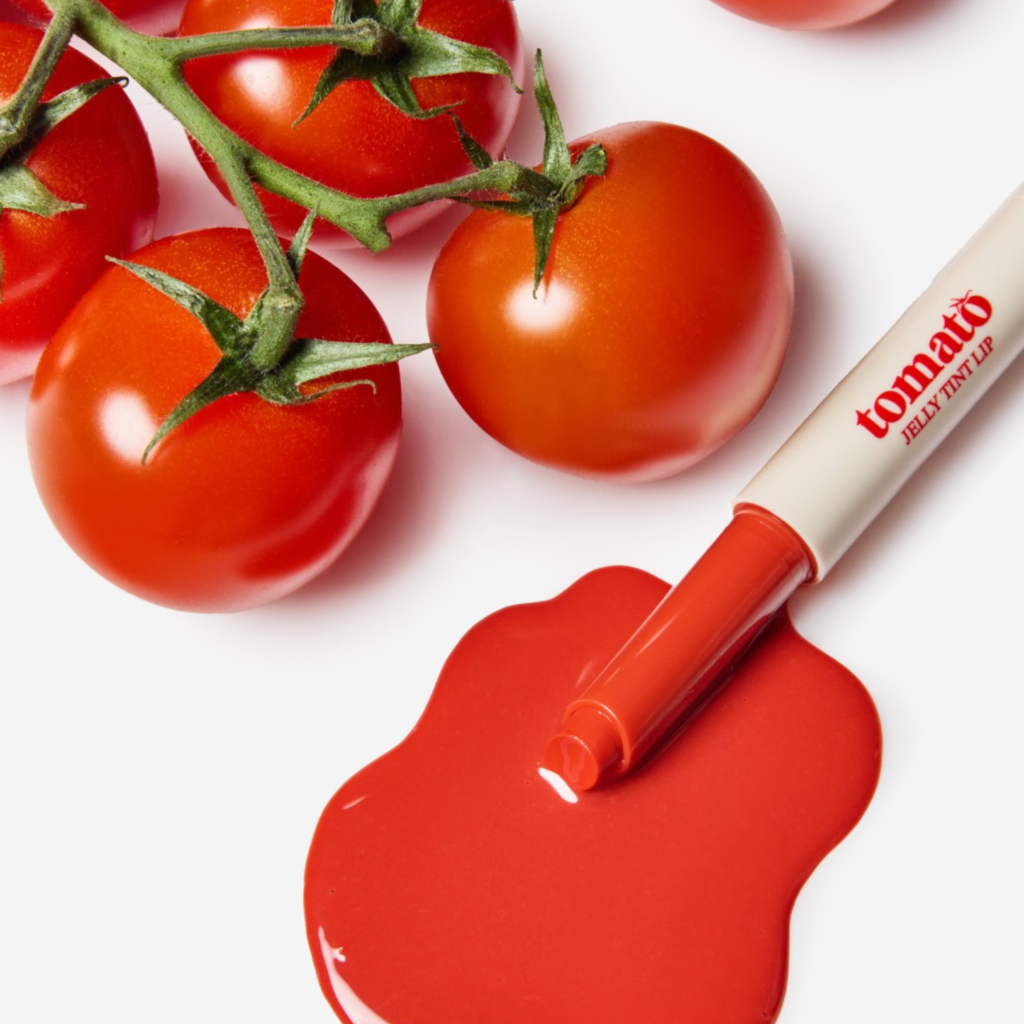
SKINFOOD is a South Korean skincare brand built on one delicious idea: “good food for your body is also good for your skin.” It’s the original pioneer of the food-cosmetic concept in Korea — real ingredients you’d recognize from a kitchen (black sugar, carrots, honey, tomatoes) turned into skincare.
The brand opened its first flagship store in Myeongdong in 2004, but its roots go much deeper: the logo carries the year 1957, when its manufacturing arm, Peerless Laboratories, was founded. That’s nearly 70 years of formulation know-how behind the cute food packaging — and it showed early. Within three years of launch, SKINFOOD passed 100 billion KRW in domestic revenue, and its Black Sugar Mask Wash Off sold over a million units by 2007.
The Rise, the Fall, and the Comeback
Every first-generation K-beauty road shop has a version of this story, but SKINFOOD’s has the best third act.
The rise. Through the 2000s and early 2010s, SKINFOOD storefronts spread across Korea and into Taiwan, Malaysia, Singapore, and Thailand from 2005, Japan in 2009, a US office in LA by 2011. Road-shop K-beauty was booming, and SKINFOOD was one of its faces.
The fall. Then commerce moved online, tourists changed their shopping habits, and the single-brand road-shop model cracked (the same retail shift that later made Daiso Korea’s beauty aisle the new treasure hunt). SKINFOOD entered court-led rehabilitation in 2018, the first domino in what became an industry-wide road-shop crisis.
The comeback. Private equity firm PineTree Partners bought the brand in 2019 for 60 billion KRW and did something refreshingly boring: instead of splashy marketing, they renewed products, improved formulas, and talked to customers.
It worked. In 2022, SKINFOOD posted its first surplus in nine years. Sales grew from 58.9 billion KRW in 2023 (8.9B operating profit) to 78.1 billion in 2024 (10.5B operating profit) and 80.9 billion in 2025. Not bad for a brand many Koreans had filed under “nostalgia.”
The Goodai Global Era: Why This Comeback Just Got Bigger
Here’s the 2025–2026 twist that makes SKINFOOD worth watching again. In May 2025, a consortium of Goodai Global and private equity firm Deoham Partners was selected as preferred bidder for SKINFOOD, signing the deal in July 2025 at a price around 150 billion KRW — two and a half times what PineTree paid in 2019.
If Goodai Global doesn’t ring a bell, its brands will: this is the company behind Beauty of Joseon’s global explosion, plus TIRTIR and a fast-growing portfolio that pushed its revenue toward 1.5 trillion KRW (More than USD 100M) in 2025 — industry watchers call the strategy “building a Korean L’Oréal.”
The playbook is clear: take a brand with real formulation heritage and a distinctive identity, then run it through the global distribution machine that made Beauty of Joseon a worldwide bestseller.
The rebuild is already moving. A new management structure kicked in and Goodai Global brought in Han Won-kyung, former Chief Brand Officer of Manyo, with L’Oréal Korea and Amorepacific on her resume, as SKINFOOD’s vice president to lead the rebranding.

Expect sharper online channels, SNS-first marketing, and a serious global push riding Goodai’s distribution network.
Still a Values Brand: Upcycling and Ugly Vegetables
What’s kept SKINFOOD likable through all of this is that the food concept isn’t just packaging. The brand upcycles “imperfect” produce, vegetables too cosmetically flawed for supermarket shelves but nutritionally identical, into skincare ingredients, cutting food waste at the farm level.
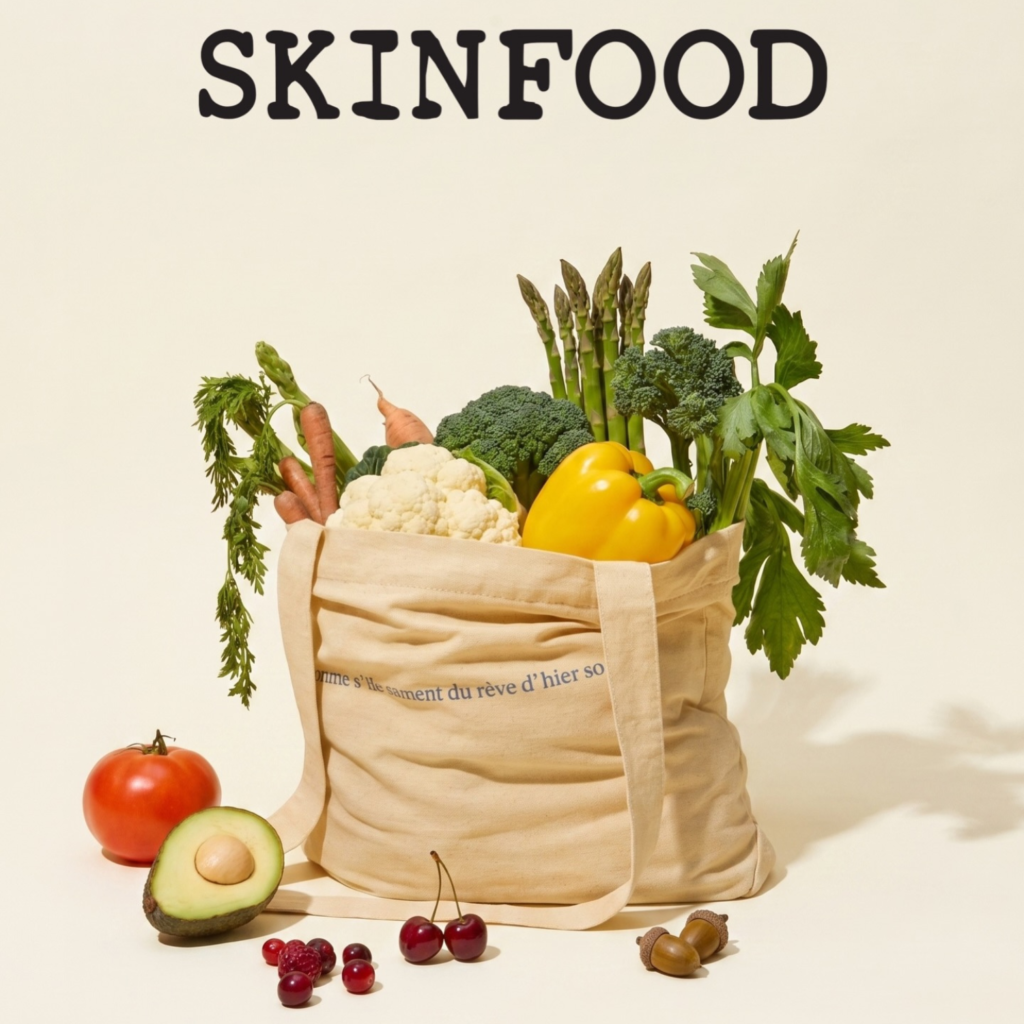
Packaging has been shifting to paper, soy ink, coating-free boxes, and tape-less shipping. And between 2020 and 2023 the brand ran over 23 donation campaigns (supporting burn patients and frost-hit yuja farmers, among others), with cumulative donations reaching 3.4 billion KRW over six years.
If you like your K-beauty with a conscience, the way mixsoon does minimalist vegan, SKINFOOD is the heritage-brand version of that instinct.
How Big Is SKINFOOD in Korea Right Now?
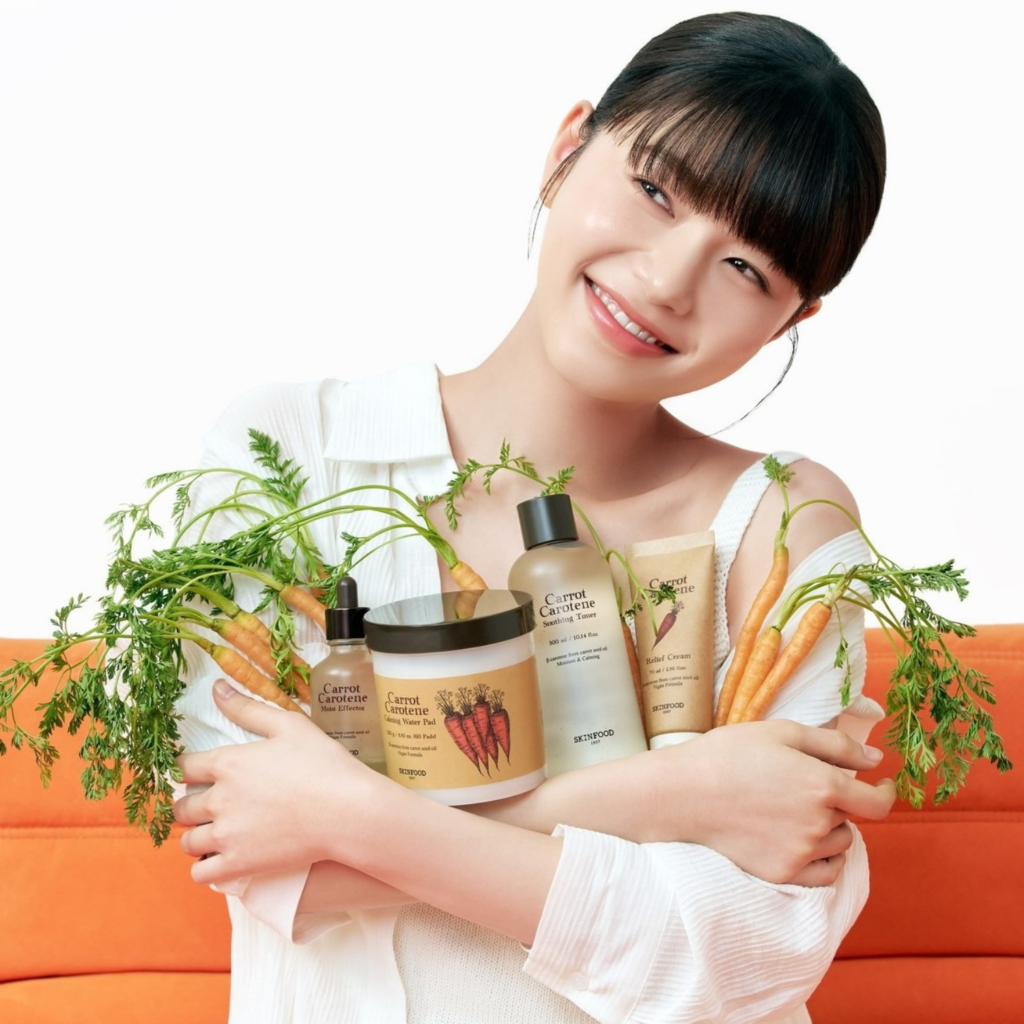
Bigger than its “nostalgia brand” reputation suggests. The comeback’s engine, the Carrot Carotene Calming Water Pad, passed 10 million cumulative units sold as of August 2025 — that’s roughly one pack for every five people in Korea.
In 2021 it pulled off a rare triple crown: an Olive Young Awards pick, #1 in Hwahae’s sheet mask/pack category (voted by 10 million app users), and #1 toner pad at the Glowpick Awards.
It has stayed a fixture of the pad category at Olive Young ever since — where the brand recently launched a Carrot PDRN moisture pad as an exclusive, plugging its carrot franchise straight into the PDRN trend.
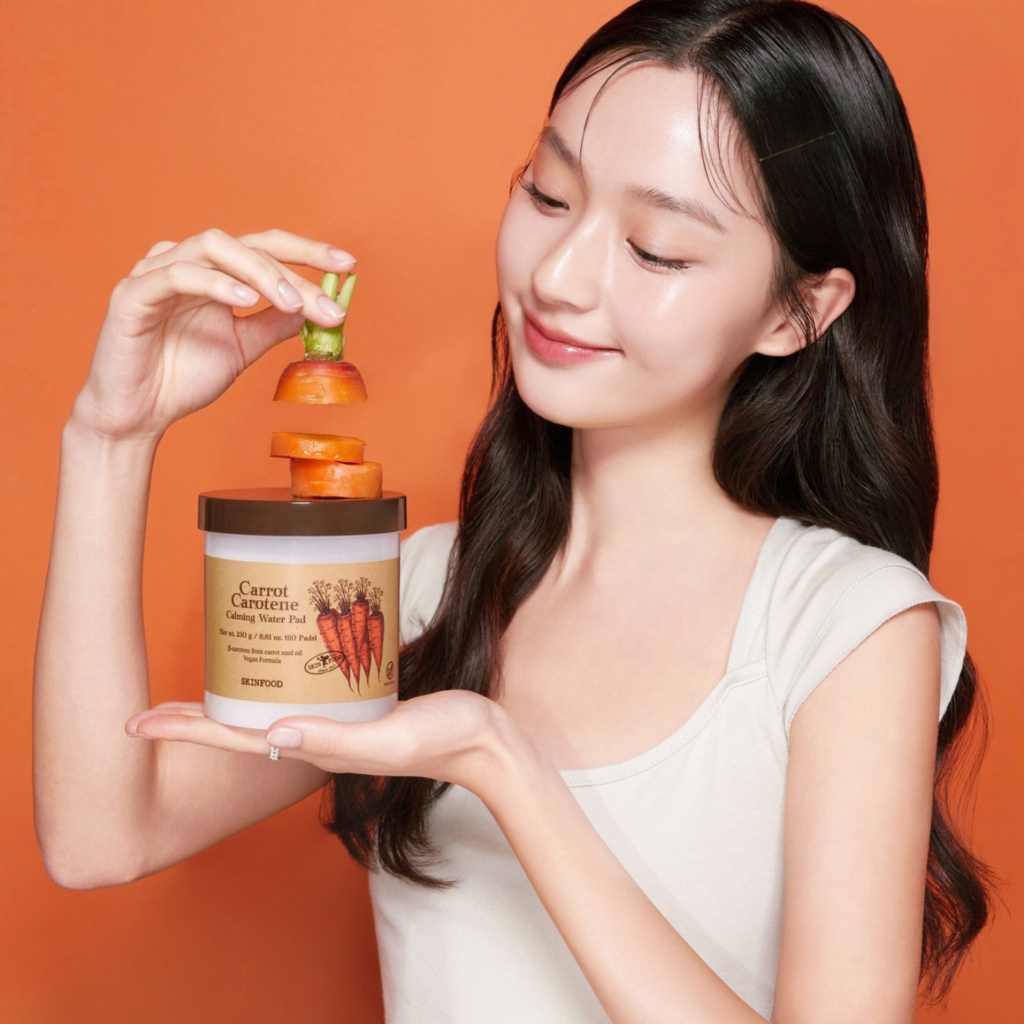
The carrot’s success also spawned a whole garden: water parsley (minari) pads for oily skin, potato pads, lemongrass pads. When one SKU revives a 20-year-old brand, you franchise the vegetable.
The 5 Best SKINFOOD Products
1. Carrot Carotene Calming Water Pad
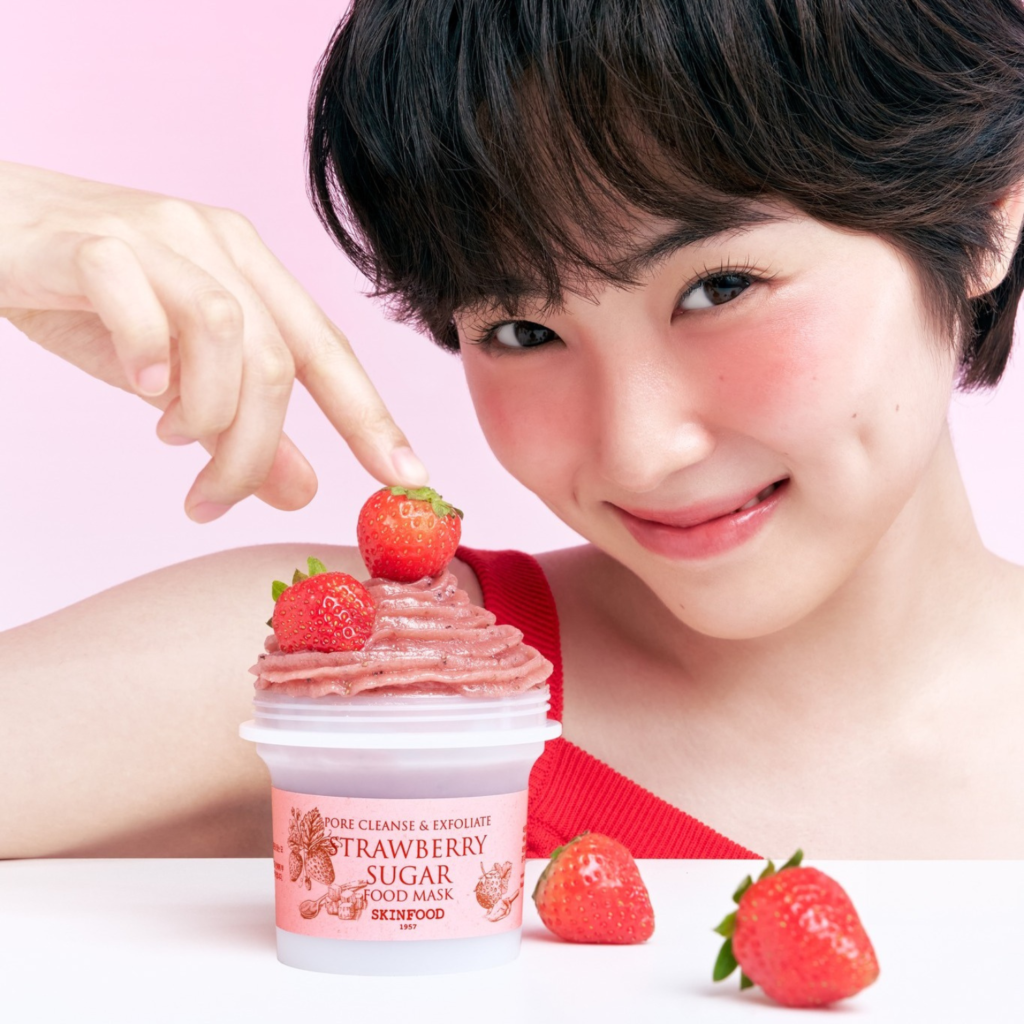
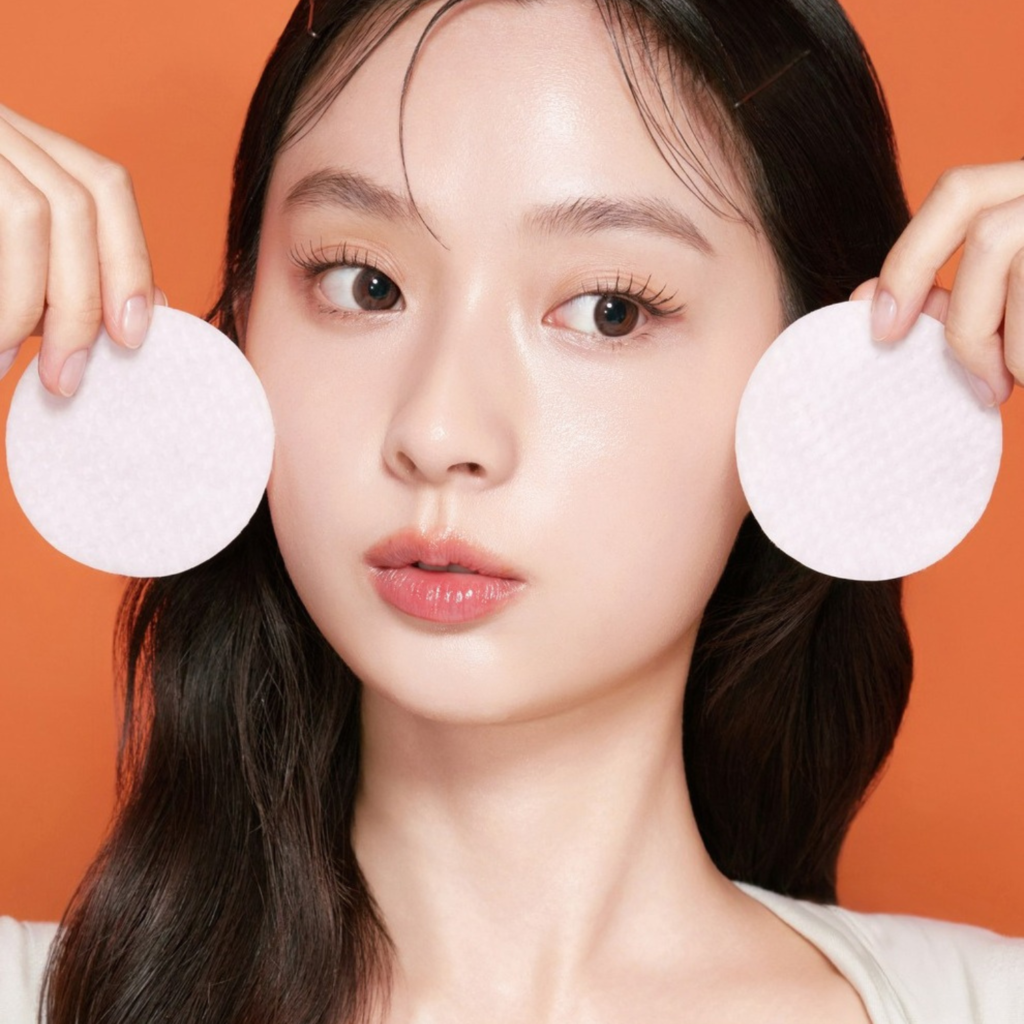
The modern mega-hit and the obvious starting point. Ultra-thick, waffle-textured 100% cotton pads soaked in carotene from pesticide-free organic carrots grown in Gujwa, Jeju — extracted by a chemical-free steam method that preserves the nutrients.
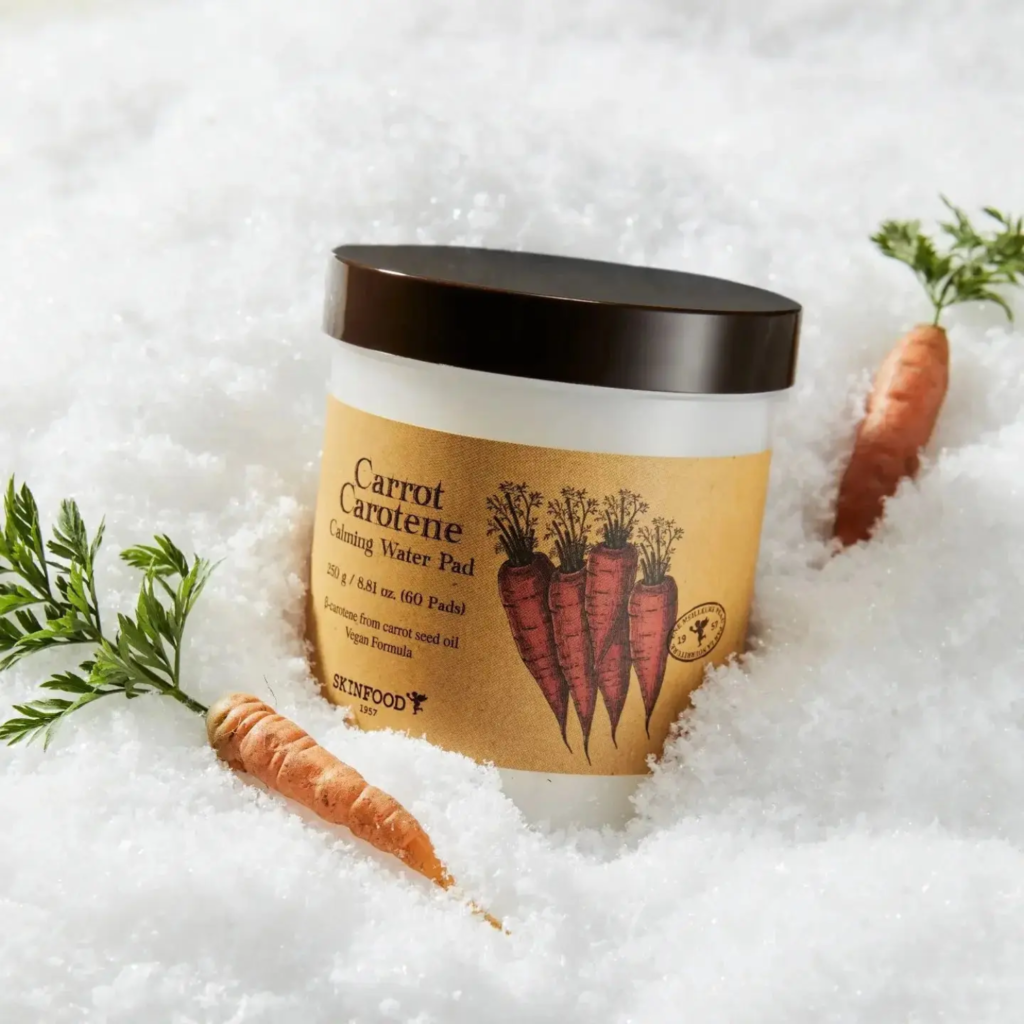
Vegan-certified in both Korea and the UK, and gentle enough that sensitive and redness-prone skin treats it as a holy grail. Ten million units and three major Korean beauty awards agree.
2. Black Sugar Mask Wash Off
The legend that built the brand — a million units sold before Instagram existed. Organic black sugar granules melt slightly against damp skin, exfoliating away dead cells and unclogging pores while sugars’ natural humectants keep it from stripping.
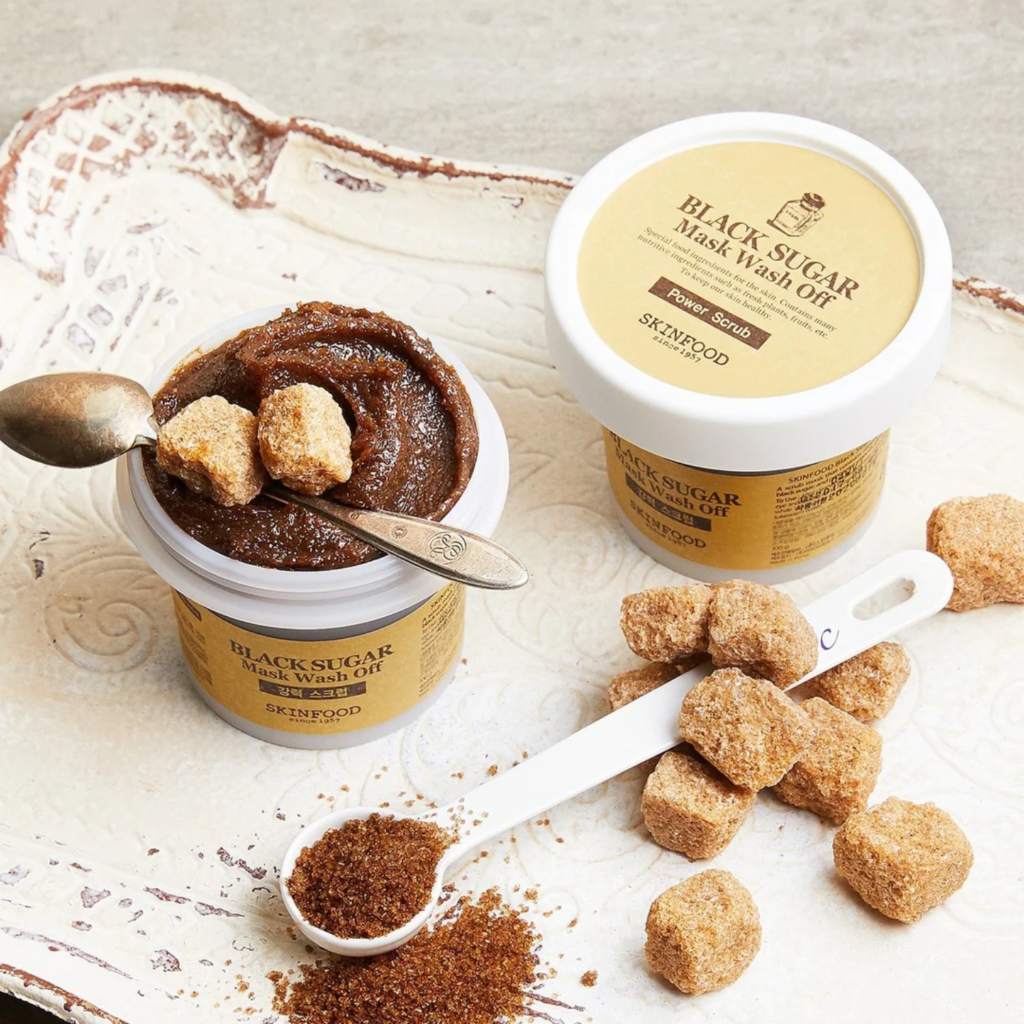
It’s a physical scrub, so keep it to once or twice a week — but as far as 20-year-old formulas go, this one aged like honey.
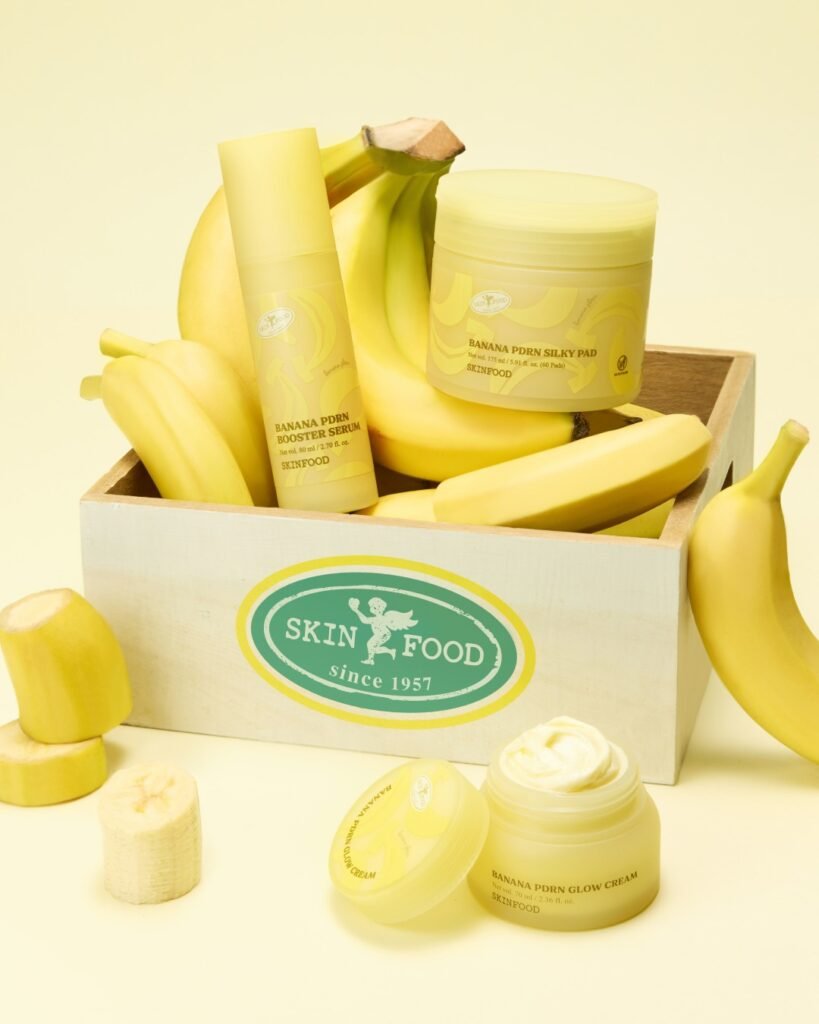
3. Banana PDRN Glow Cream
The newest hero, and proof the new SKINFOOD can ride a trend without losing its food identity. A lightweight, custard-textured moisturizer (the banana pun writes itself) that pairs vegan plant-derived PDRN with banana extract for hydration, bounce, and a glassy makeup-prep glow.
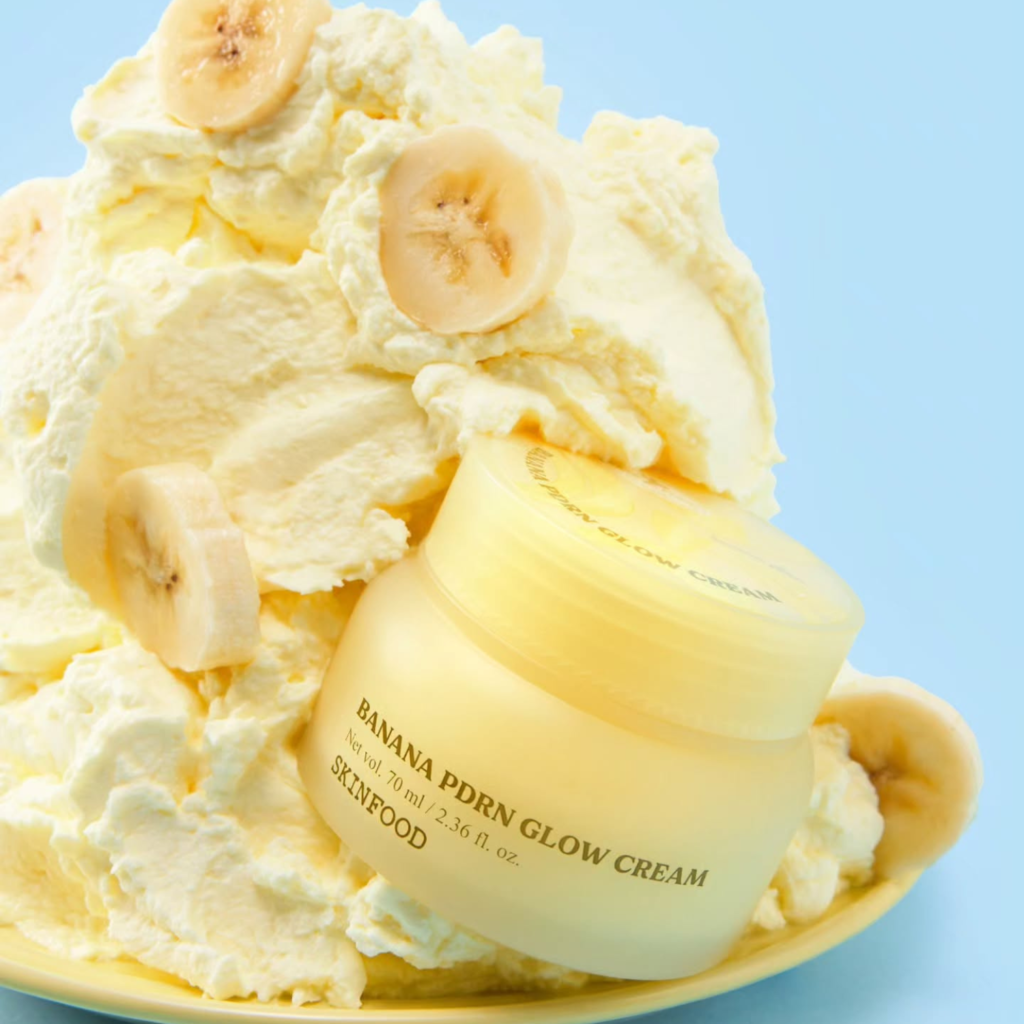
It’s the brand’s food-flavored answer to the PDRN wave — and at drugstore pricing, one of the cheapest ways to try the ingredient. There’s a matching booster serum and silky pad if the cream wins you over.
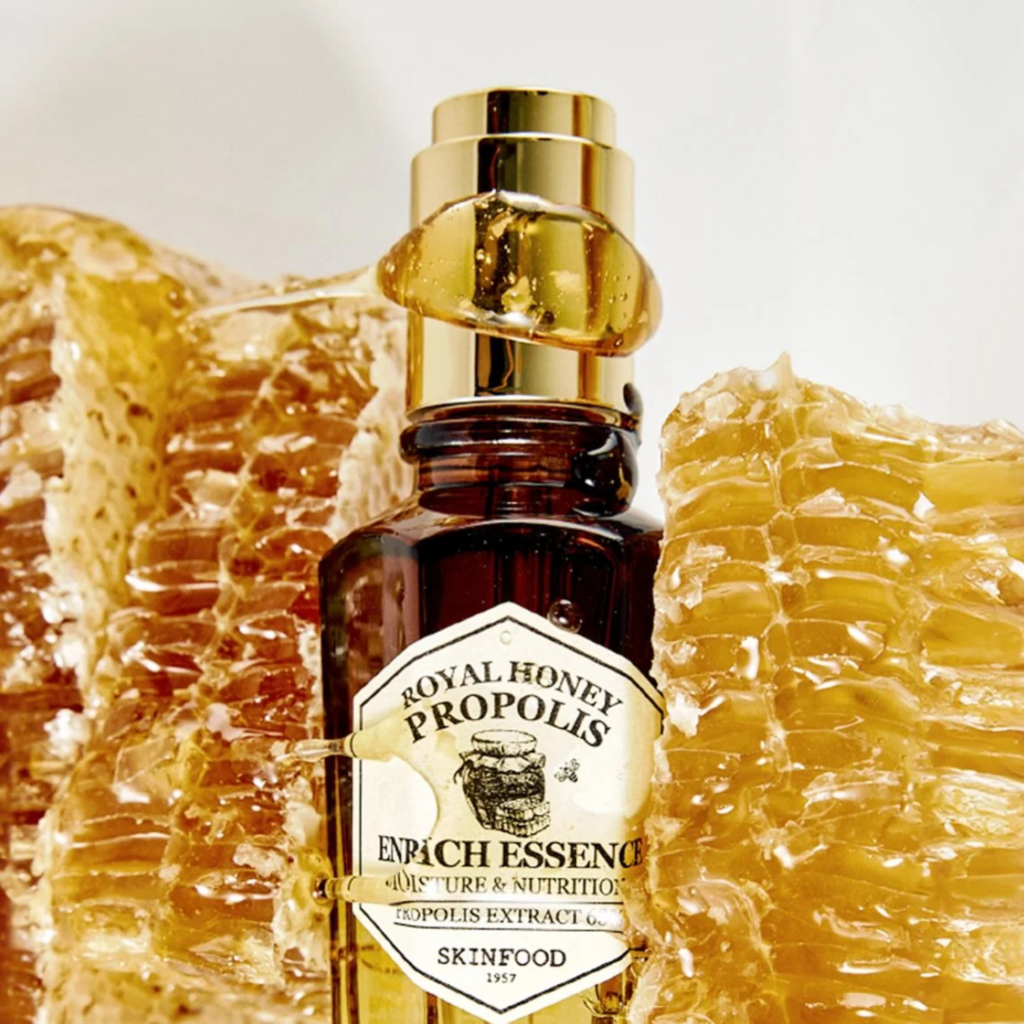
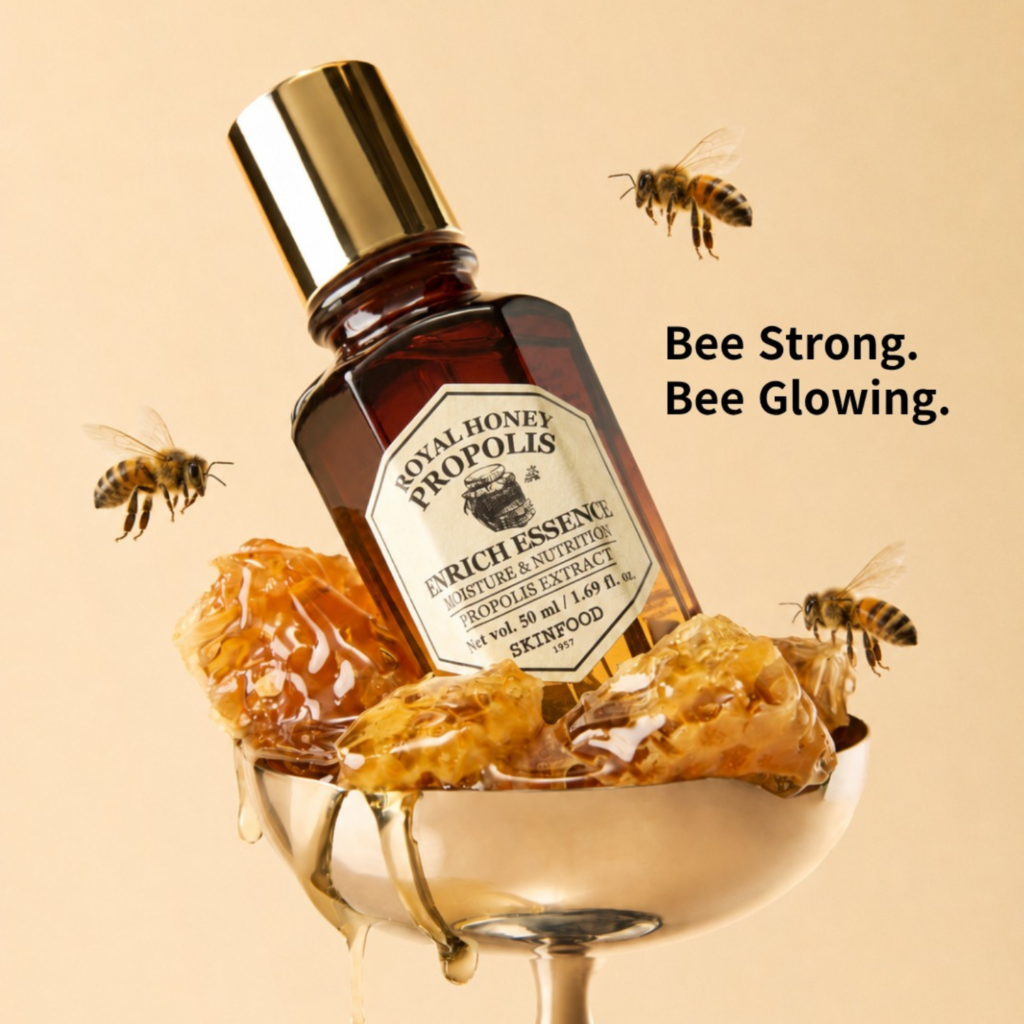
4. Royal Honey Propolis Enrich Essence
The richest thing SKINFOOD makes that international fans actually rebuy. A honeyed first-essence built on propolis and royal honey for barrier-feeding, glow-giving hydration — the K-beauty “honey glow” category staple at a fraction of luxury propolis prices. Dry, dull, or winter-wrecked skin, this is your pick.
5. Carrot Carotene Daily Mask
The carrot, in daily-mask form. A 30-sheet bulk tub of the same Jeju carrot carotene goodness, designed for the Korean “5-minute morning mask” habit — quick hydration and calming before makeup, at a per-sheet price that makes daily use guilt-free.
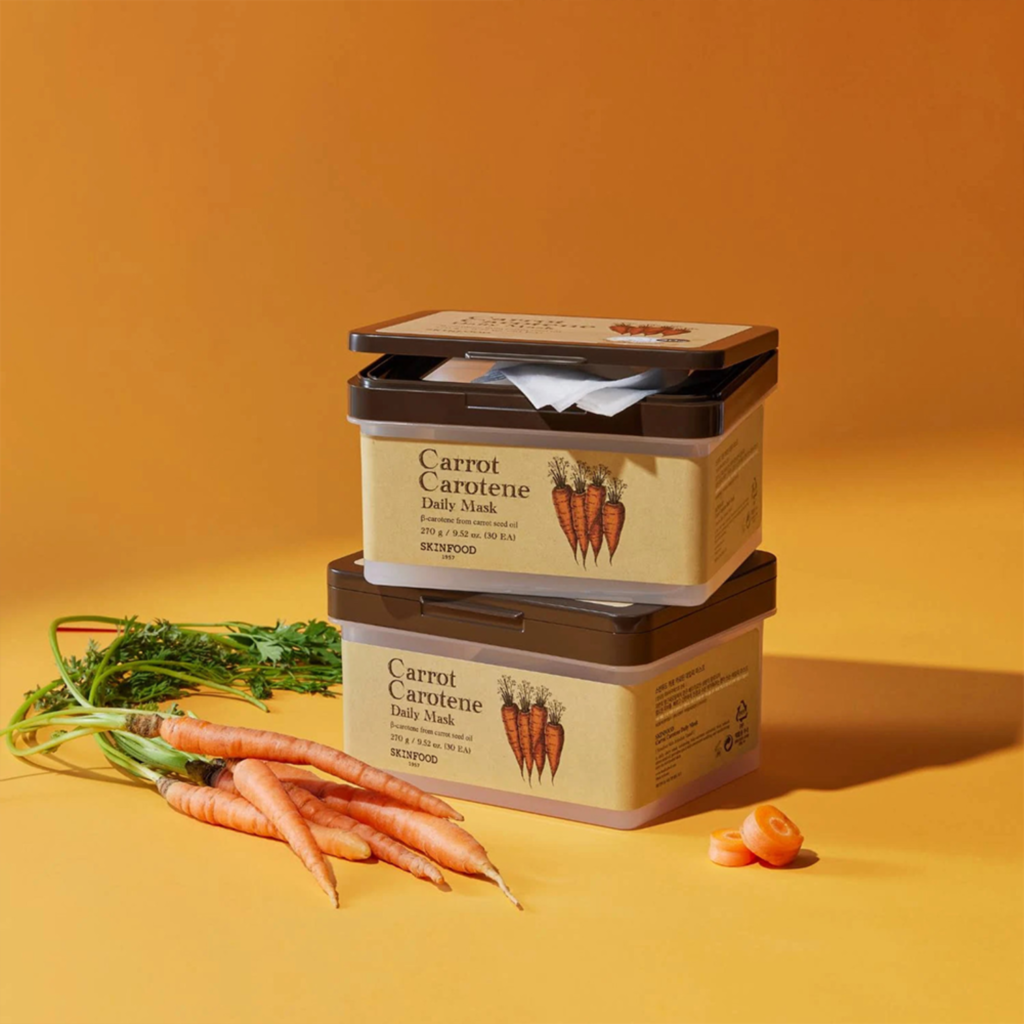
If you love the pad but want the sheet-mask ritual (or your redness flares up in the morning), this is the easiest add-on in the lineup.
Honest Limitations
A few things worth saying plainly. The financial turnaround numbers come from company disclosures and Korean business press — impressive, but 2025’s operating profit actually dipped slightly even as sales grew, which is part of why fresh ownership and rebranding arrived when they did.
“Food ingredients” is a concept, not a safety guarantee — food-derived extracts can still irritate sensitive skin, and a patch test matters as much here as with any brand. And SKINFOOD is mid-transition: with new owners and a rebranding underway, expect packaging, formulas, and lineup to keep shifting over the next year or two.
What you repurchase in 2027 may not look like what you bought today — though if the Beauty of Joseon playbook is any guide, it’ll likely be better.
Verdict: Who Should Try SKINFOOD?
If you want trend-chasing actives and clinical percentages, this isn’t that brand — our Mary&May review covers that end of the spectrum. SKINFOOD is for people who want gentle, pleasant, affordable skincare with a story: sensitive skin that needs the carrot pad’s calm, oily skin that needs minari’s balance, dry skin that wants honey and propolis, and anyone who misses when K-beauty was a little more fun.
You’re also buying into a comeback with real momentum behind it — heritage formulas, upcycled vegetables, and now the distribution muscle of K-beauty’s hottest parent company.Twenty years on, the slogan still holds. Don’t eat it — give it to your skin.
FAQ
Is SKINFOOD still in business?
Very much so. After entering court rehabilitation in 2018, SKINFOOD returned to profit in 2022 and grew to 80.9 billion KRW in revenue by 2025. In 2025 it was acquired by a consortium led by Goodai Global, the parent company of Beauty of Joseon.
What is SKINFOOD’s most popular product?
The Carrot Carotene Calming Water Pad — over 10 million units sold as of August 2025, with top awards from Olive Young, Hwahae, and Glowpick. Its vegan formula uses pesticide-free organic carrots from Jeju.
Is SKINFOOD vegan?
Not entirely, but key heroes are: the Carrot Pad is vegan-certified in Korea and the UK, and the Water Parsley Clear Pad line is vegan trouble care. Honey-based lines (Royal Honey, propolis) are by nature not vegan.
What does “Don’t eat it, give it to your skin” mean?
It’s SKINFOOD’s famous Korean slogan (먹지 마세요, 피부에 양보하세요) — a playful way of saying its cosmetics are made from food ingredients good enough to eat, from black sugar to Jeju carrots.
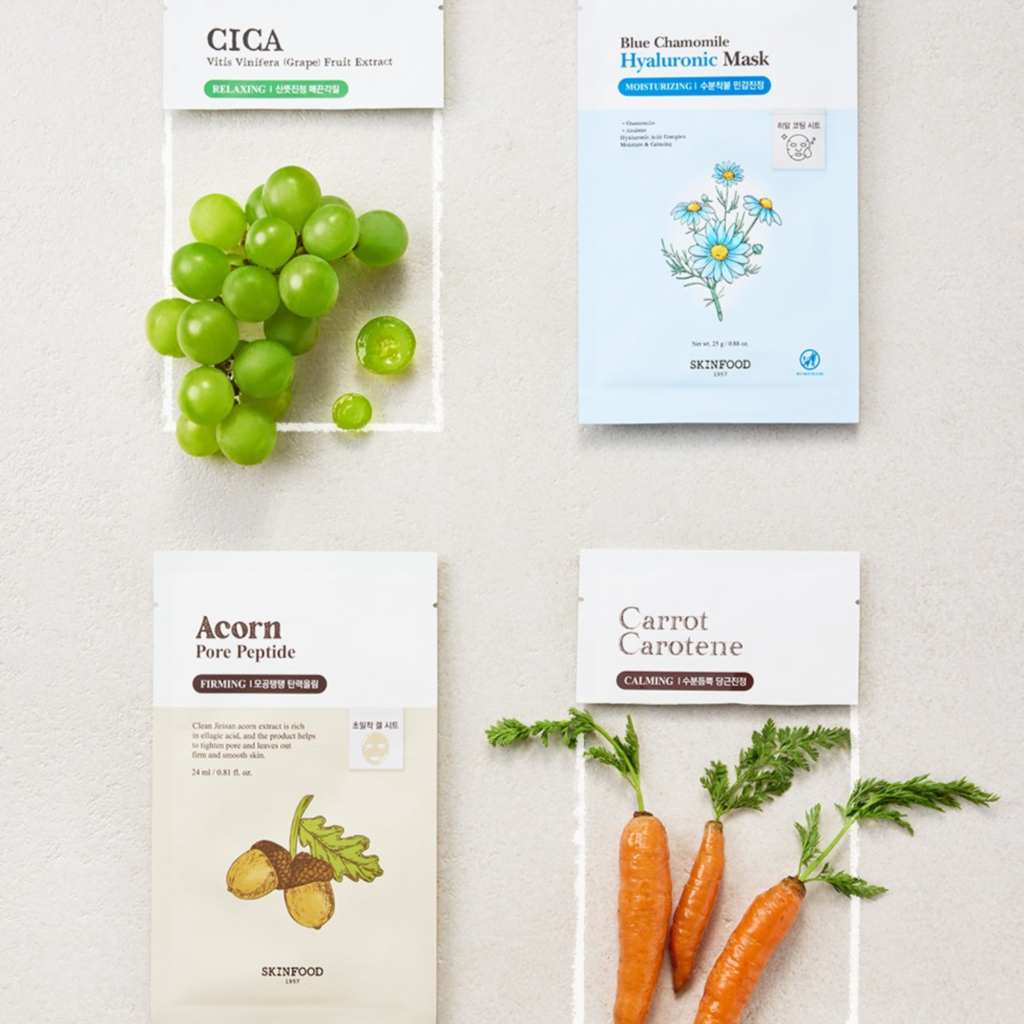
What are Sous Vide Mask Sheets?
A SKINFOOD sheet-mask line whose ingredients are vacuum-sealed and slow-cooked at low heat for up to 72 hours — a culinary sous-vide technique that preserves heat-sensitive vitamins and antioxidants. Toner, essence, and emulsion types come on different sheet materials.
Related Reading
If SKINFOOD’s comeback story pulled you in, these will keep you going:
- Olive Young 101: A Foreigner’s Guide to Korea’s Biggest Beauty Store — where the Carrot Pad won its awards, and the first place to hunt SKINFOOD’s Olive Young-exclusive launches in person.
- What PDRN Actually Does in K-Beauty — the ingredient behind SKINFOOD’s new Carrot PDRN pad, explained without the marketing fog.
- mixsoon Review — another brand betting everything on simple, honest ingredients; the minimalist cousin to SKINFOOD’s food-first philosophy.
- Daiso K-Beauty: The New Treasure Hunt — what happened to Korea’s beauty retail after the road-shop era SKINFOOD once ruled.
- numbuzin Review — a modern K-beauty brand that, like SKINFOOD, wins by making skincare easy to understand.
Final Word
K-beauty doesn’t hand out second acts often. Trends here move fast enough that most brands get one moment, and the graveyard of first-generation road shops is proof. SKINFOOD earned its second act the unglamorous way — better formulas, honest communication, one very good carrot — and now walks into its third with the company that took Beauty of Joseon global standing behind it.
For you, the reader, the timing is the opportunity: you get the heritage-brand prices and beloved formulas before the global relaunch machine fully spins up. Start with the Carrot Pad, keep the Black Sugar Mask for Sunday nights, and watch what Goodai Global does next.
Twenty years on, the slogan still holds. Don’t eat it. Give it to your skin.