If you’ve ever scrolled through a marketplace listing, a social media shop, or an overseas reseller site and wondered “is this actually real Medicube?”
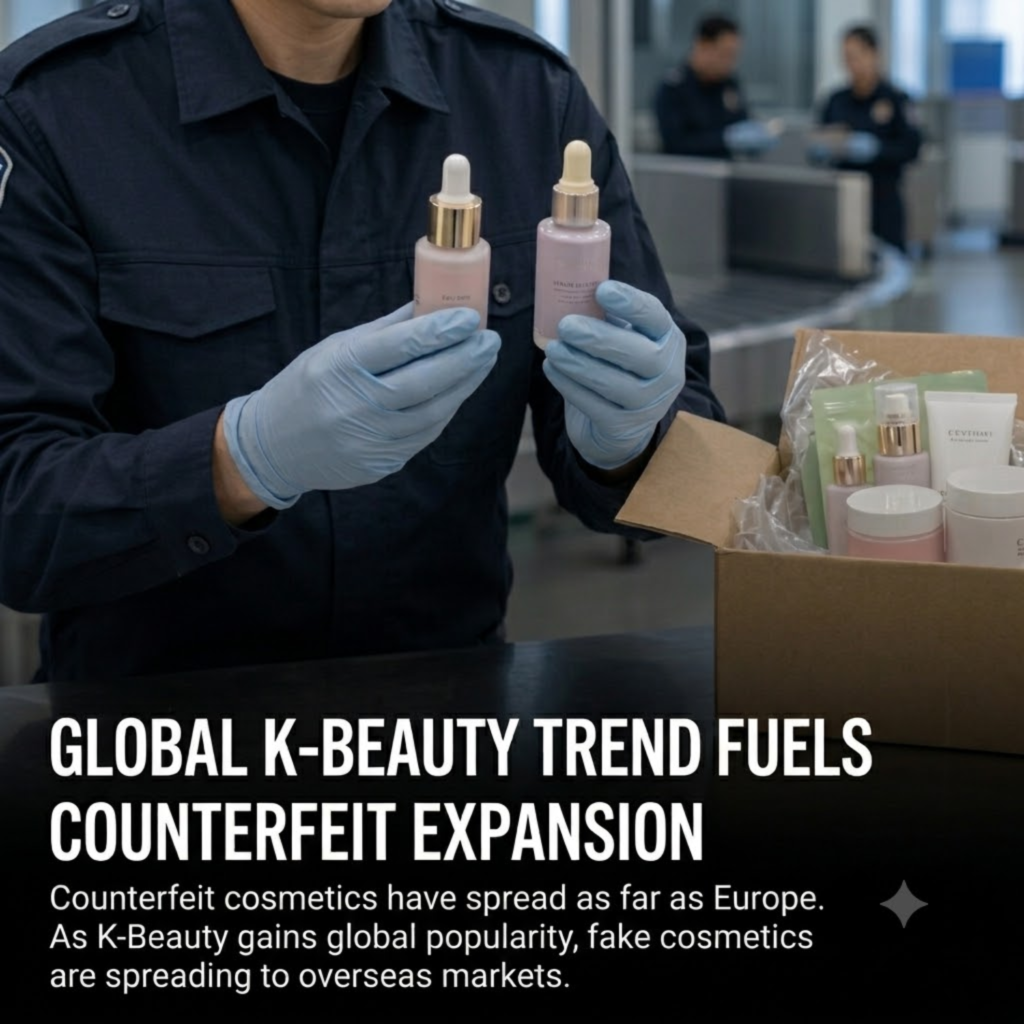
As Korean skincare and cosmetics have exploded in popularity around the world, counterfeit K-beauty products have exploded right along with them. Fake sheet masks, knockoff serums, and imitation creams are showing up in online carts everywhere, often packaged well enough to fool a careful shopper.
This guide breaks down why fake K-beauty products are becoming a bigger problem, what the real risks are, how Korean brands and government agencies are fighting back, and most importantly how to spot counterfeit Korean skincare and cosmetics before you hit “buy now.”
Why Fake K-Beauty Is Becoming a Bigger Problem
Korean beauty brands didn’t become global icons overnight. Years of viral skincare routines, glass-skin trends, and cult-favorite ingredients like snail mucin, centella asiatica, and PDRN turned Korean cosmetics into some of the most sought-after beauty products on the planet. That popularity is exactly what makes K-beauty such an attractive target for counterfeiters.
When a brand becomes a household name, counterfeit operations follow the demand. It’s simple economics: the more people search for a product, the more profitable it becomes to produce a convincing fake. And because a huge share of K-beauty sales now happen online through marketplaces, direct-to-consumer social media shops, and cross-border resellers. Buyers often can’t inspect a product in person before purchasing. That gap between “what the listing shows” and “what actually arrives” is where counterfeit Korean skincare thrives.
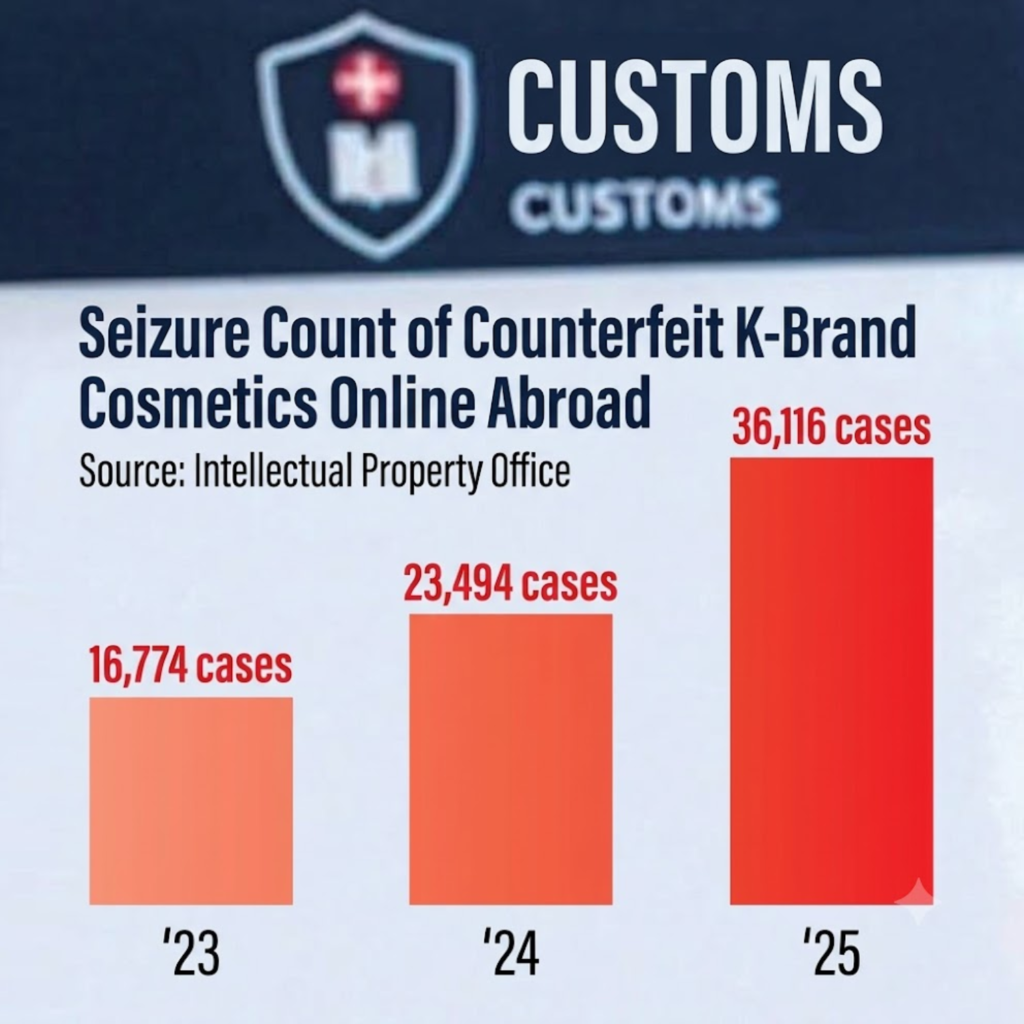
The scale of the problem is no longer anecdotal. According to Korea JoongAng Daily, Korean beauty brand IP infringement reached roughly 22 billion won (about $15.1 million) in losses between January and September 2025 alone, based on data compiled from customs seizures and reports. That’s not a handful of knockoff lipsticks seized at an airport; that’s an organized, high-volume counterfeit market operating in parallel with legitimate K-beauty exports.
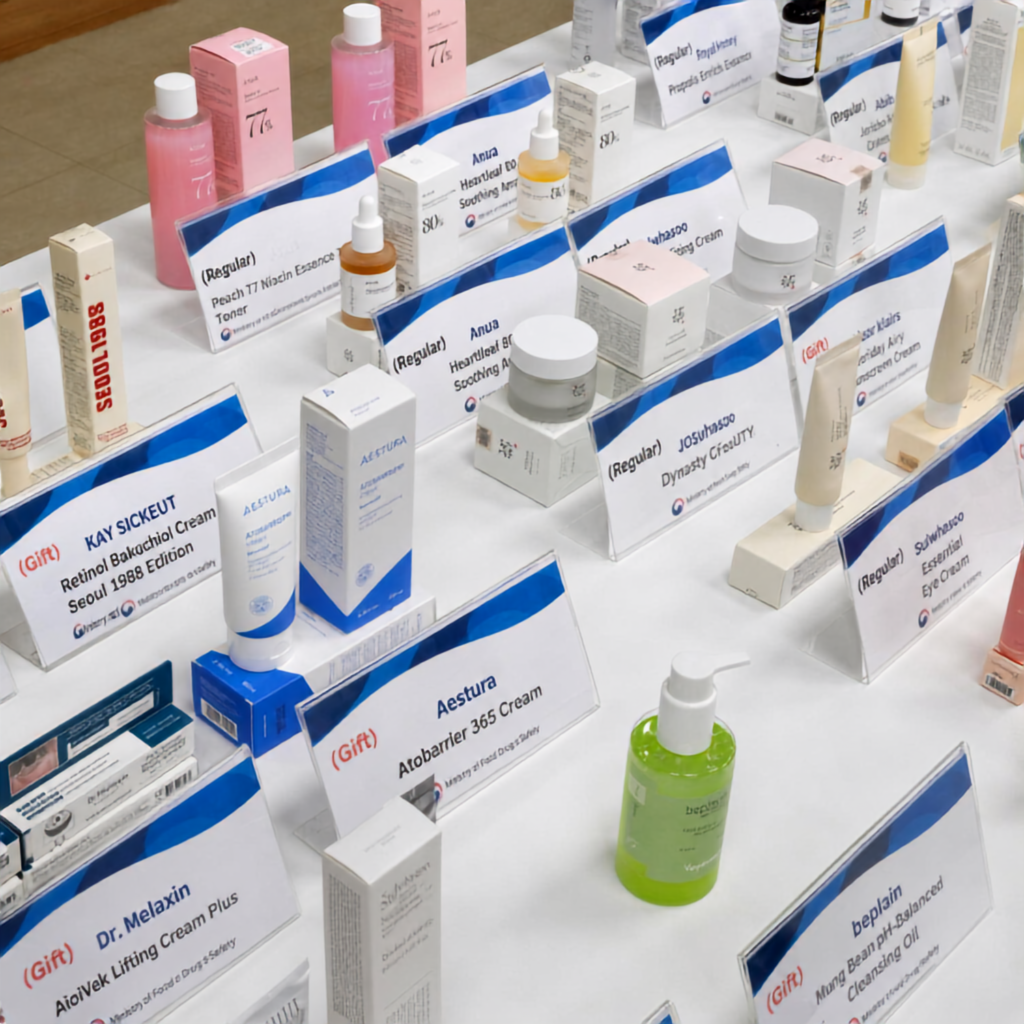
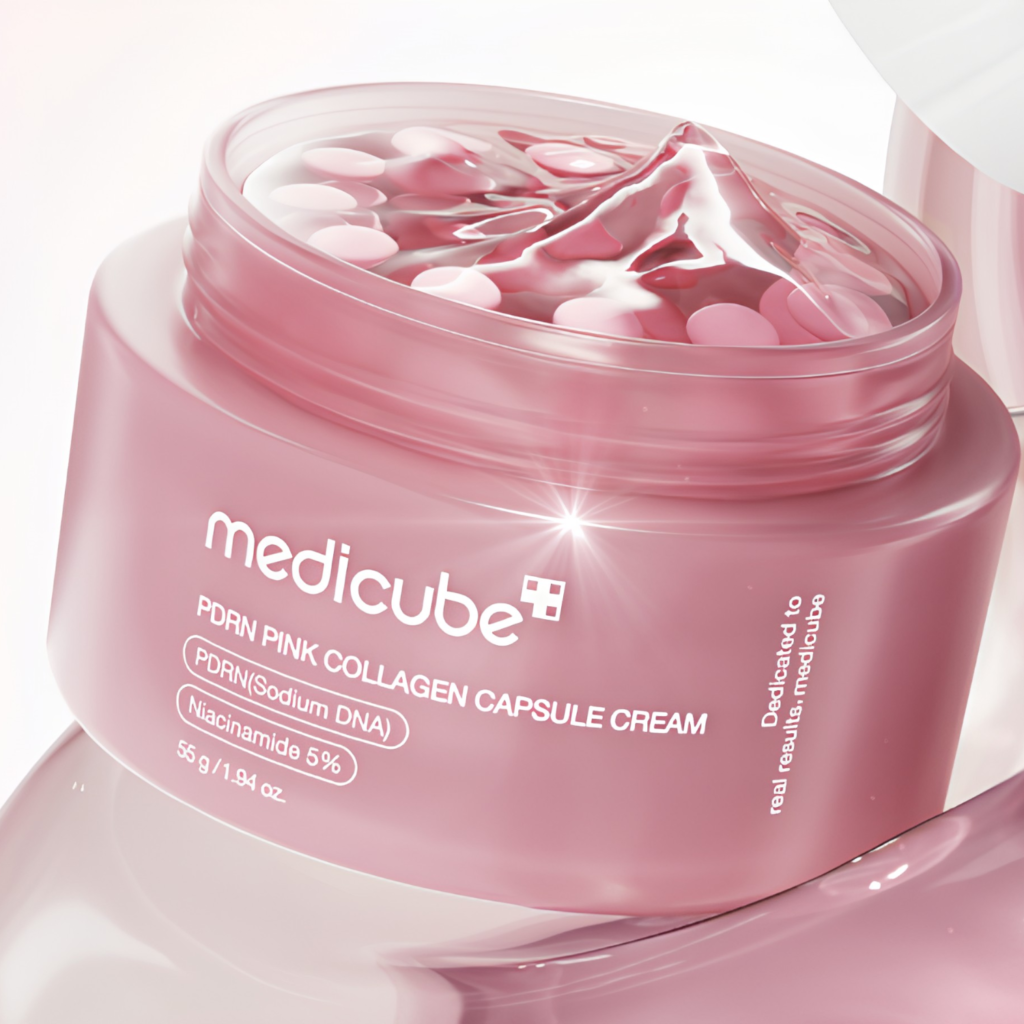
Reports have identified fake products imitating well-known and trusted names, including Manyo Factory, Sulwhasoo, Mediheal, Round Lab, Anua Aestura, Medicube.. you name it. These aren’t obscure or niche labels. They’re some of the most recognizable brands in Korean skincare, which is precisely why they’ve become popular counterfeit targets. If a brand is trending, there’s a good chance someone, somewhere, is trying to profit off a fake version of it.
Why Counterfeit Cosmetics Are Risky
It’s tempting to think of a fake beauty product as “basically the same thing, just cheaper.” That assumption can be genuinely dangerous, and it’s worth taking seriously before you apply anything to your skin.
Unknown ingredients. Counterfeit cosmetics are not manufactured under the same regulatory oversight as authentic products. There’s no guarantee about what’s actually inside the bottle, jar, or tube. Ingredient lists on fake packaging may not reflect what was actually used in production.
Possible contamination. Legitimate K-beauty manufacturers follow hygiene and safety standards during production, packaging, and storage. Counterfeit operations typically don’t. Products may be manufactured or stored in unsanitary conditions, increasing the risk of bacterial or chemical contamination.
Skin irritation or allergic reaction. Because the actual formulation of a fake product is unverified, it may contain irritants, incorrect concentrations of active ingredients, or substances your skin simply isn’t prepared for. This is especially concerning for actives like retinol, exfoliating acids, or high-percentage vitamin C. Ingredients where formulation and purity genuinely matter.
Loss of trust in Korean beauty brands. Beyond the individual risk, widespread counterfeiting damages consumer confidence in K-beauty as a category. When shoppers get burned by a fake product, they don’t always blame the counterfeiter. Sometimes they blame the brand itself, even though the brand had nothing to do with the fake.
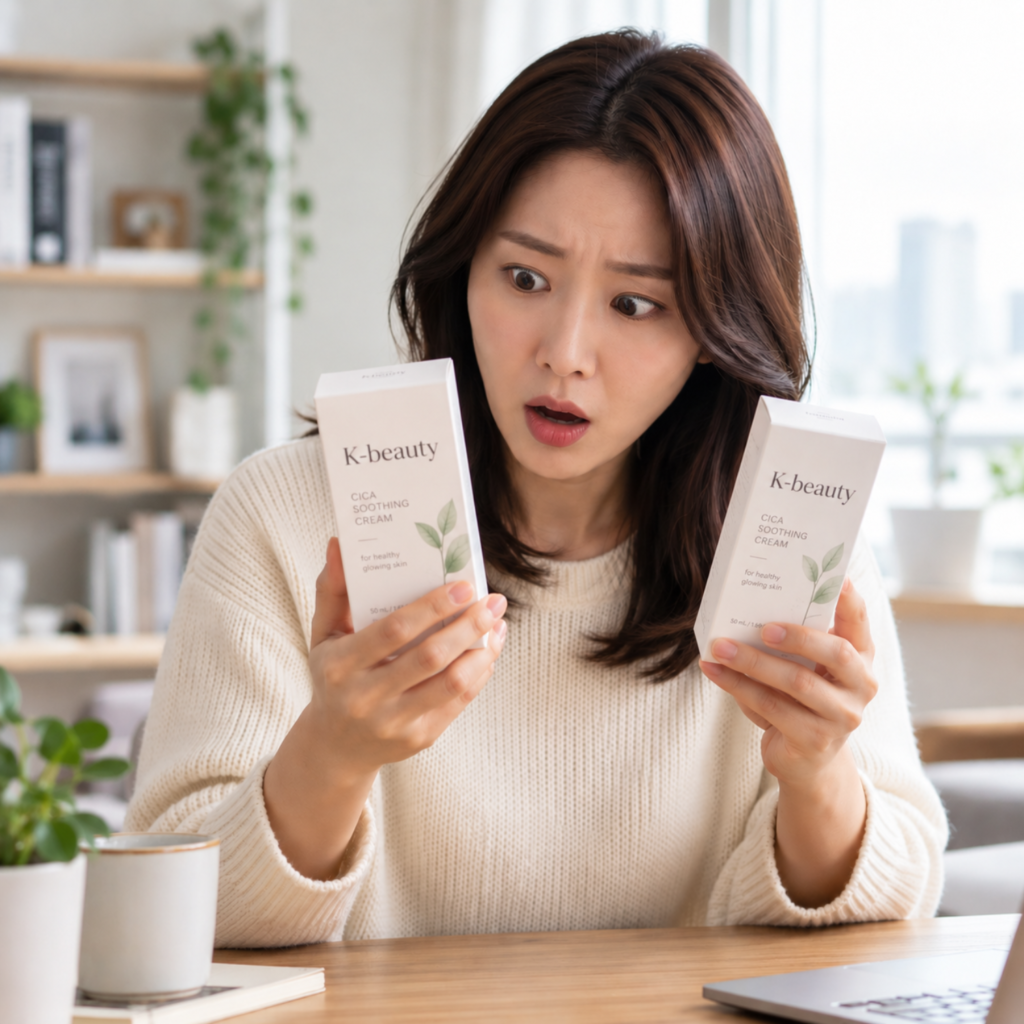
Difficulty distinguishing fakes by appearance alone. Perhaps the most frustrating part: many counterfeit K-beauty products today are made with surprisingly high production quality. Packaging, box printing, and even some tamper-evident seals can look convincingly close to the real thing at a quick glance. That’s exactly why a systematic set of checks, not just a visual gut-check, matters so much.
It’s also worth remembering that counterfeit cosmetics aren’t a “one and done” problem. A single bad batch of fake sunscreen or fake exfoliating toner purchased from an unfamiliar reseller can affect multiple uses over weeks, since most skincare products aren’t discarded after a single application.
That extended exposure window is part of what makes counterfeit cosmetics a different category of risk compared with, say, a counterfeit accessory or piece of clothing. You’re not just wearing something fake, you’re applying an unverified substance to your skin repeatedly over time.
How K-Beauty Brands Are Fighting Back
The good news is that Korean brands, industry groups, and government agencies aren’t standing still. A growing set of coordinated efforts is being used to identify, seize, and prevent the spread of counterfeit Korean skincare and cosmetics.
Customs cooperation. The Korea Customs Service has stepped up inspection and interdiction efforts, including cooperative agreements aimed at intercepting counterfeit K-beauty shipments before they reach consumers, both domestically and for cross-border e-commerce shipments.
Legal action. Brands are increasingly pursuing intellectual property enforcement against counterfeit sellers and manufacturers, working with Korean authorities such as the Ministry of Patent and Trademark (MOIP) and the Ministry of Food and Drug Safety (MFDS) to pursue takedowns and legal remedies.
AI-based marketplace monitoring. Automated tools are now used to scan online marketplaces at scale, flagging suspicious listings based on pricing anomalies, seller patterns, and image matching against known counterfeit product photos — something that would be nearly impossible to do manually given the volume of global e-commerce.
Product authentication labels, such as HiddenTag. Some brands have adopted third-party authentication technology like HiddenTag, which uses unique, hard-to-replicate markers on packaging that consumers can verify to confirm a product’s authenticity.
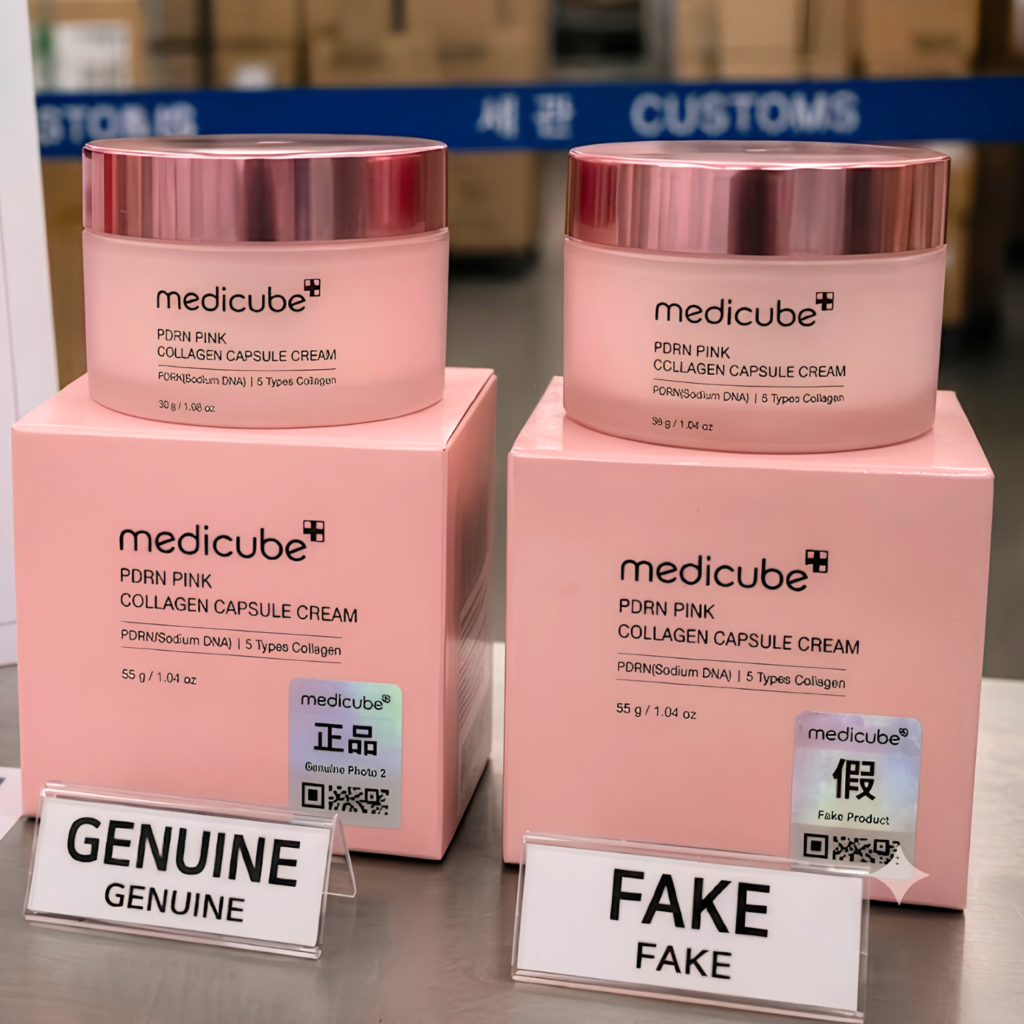
QR codes, holograms, batch codes, and official retailer lists. Many brands now include verifiable QR codes linking to official brand pages, holographic security labels, and traceable batch codes on their packaging. Brands also maintain lists of authorized retailers, making it easier for shoppers to confirm whether a seller is legitimate.
Consumer reporting systems. Government-run reporting centers, including MOIP’s Fake K-Brand Reporting Center, allow consumers and businesses to report suspected counterfeit products, feeding into broader enforcement efforts.
These measures are meaningful, but they aren’t a complete shield. Counterfeiters adapt quickly, and enforcement can’t catch every fake before it reaches a shopping cart — which is why knowing how to inspect a product yourself is still the most reliable first line of defense.
How to Spot Fake Korean Skincare and Cosmetics
Counterfeit K-beauty products are getting better at mimicking the real thing, but they almost always slip up somewhere. Here’s what to actually look for.
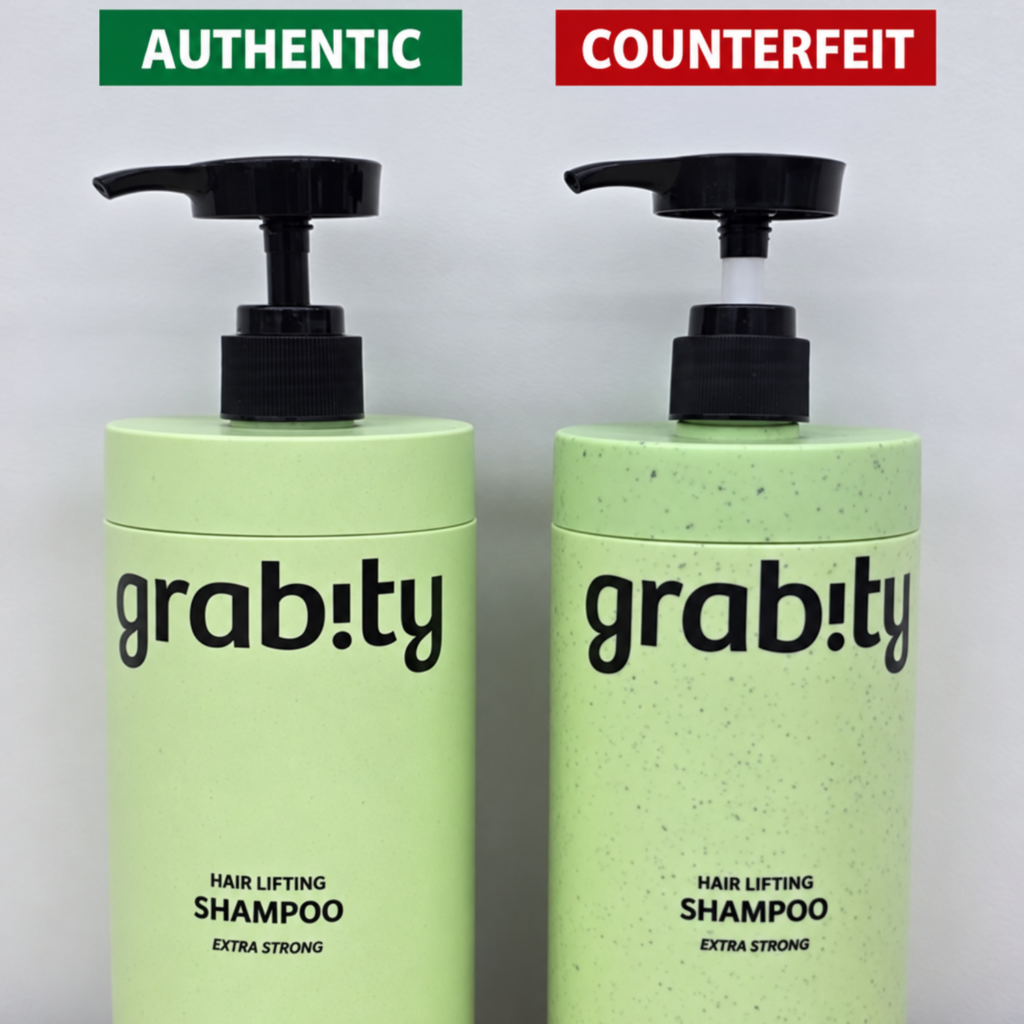
Spelling and printing errors
This is one of the most common — and easiest to catch — giveaways. Counterfeit packaging is often produced quickly and cheaply, and quality control on text is frequently sloppy. There have been documented cases of fake Mediheal-style packaging misspelling “collagen” as “gollagen.” Look closely at ingredient lists, brand taglines, and instructional text on the box and the product itself. Blurry printing, inconsistent fonts within the same label, or awkward English translations are all red flags.
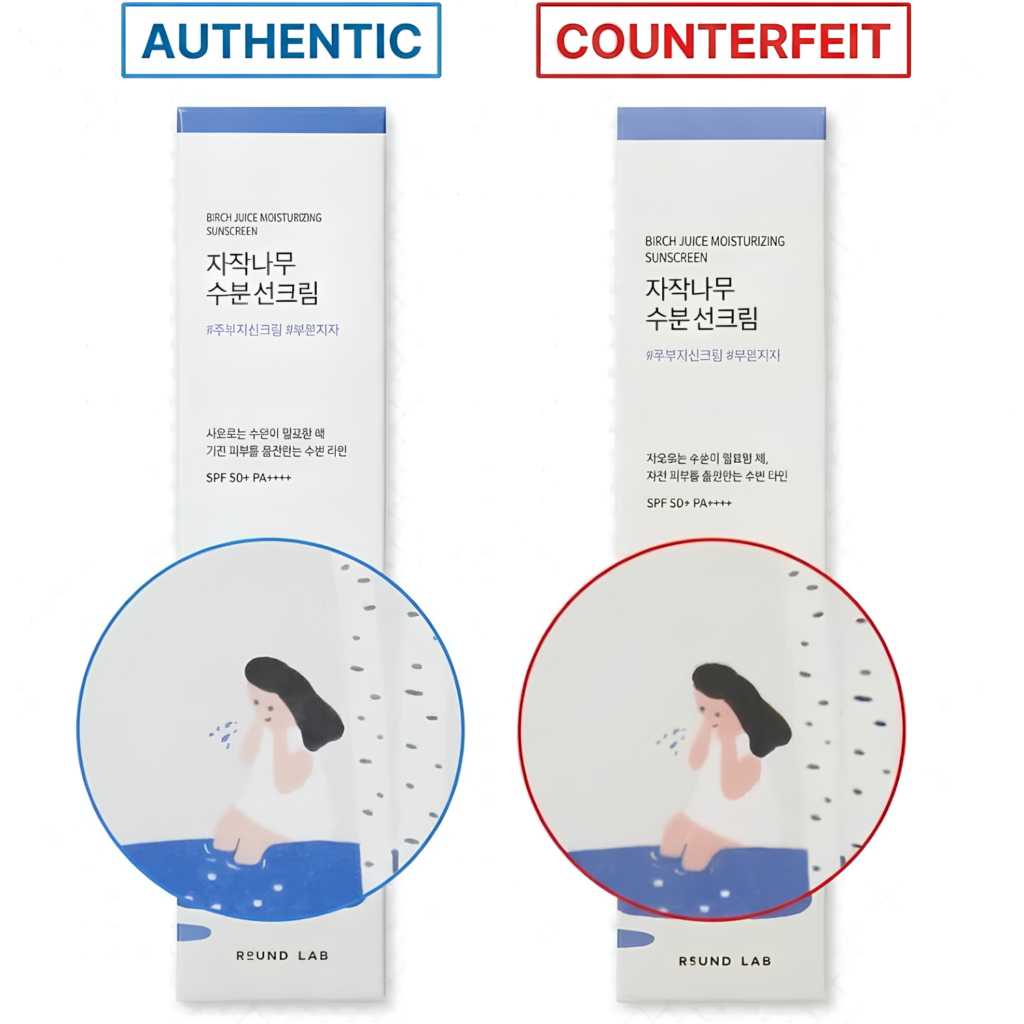
Packaging color, font, or back-label differences
Authentic K-beauty packaging follows a consistent visual identity across a brand’s product line — specific shades of color, consistent typography, and standardized layout. Counterfeiters often get close but not exact. A reported case involving Aestura’s soothing cream illustrated this well: subtle differences in packaging color and back-label details distinguished the counterfeit from the genuine product. If something about the color saturation, font weight, or label layout feels slightly “off” compared to photos of the authentic product, trust that instinct and investigate further.
Suspiciously low prices
If a product is listed well below the typical retail price — especially from an unfamiliar seller — treat it as a warning sign rather than a bargain. Legitimate K-beauty retailers rarely discount premium or in-demand products dramatically, particularly for newly released items. A price that seems too good to be true usually is.
Missing or fake-looking hologram labels
Many Korean cosmetic brands use holographic security stickers as an anti-counterfeiting measure. On a genuine product, the hologram should shift color and pattern naturally as you tilt it, with crisp, clean printing. On fakes, holograms may be missing entirely, printed flat with no shifting effect, or visibly low-resolution.
QR codes that don’t lead to an official brand page
If a product includes a QR code for authentication, scan it. A legitimate QR code should lead to the brand’s official verification page or website — not a generic landing page, a broken link, or a suspicious third-party site. Some counterfeiters include QR codes purely for visual credibility without any functional verification behind them, so actually testing the link matters.
Batch codes and expiration dates that look altered
Genuine products have clearly printed, consistent batch codes and expiration dates, usually embossed, laser-etched, or cleanly printed. Be cautious of codes that appear smudged, crooked, printed at an odd angle, scratched off, or inconsistent with the rest of the packaging’s print quality. Sellers sometimes remove or alter these details specifically to prevent buyers from verifying a product’s origin.
Texture, scent, pump function, and product color
Even when packaging looks convincing, the product inside often gives it away. Compare the texture (a serum that feels noticeably thinner or thicker than expected), scent (missing, overly strong, or “off” fragrance), pump mechanism (short, stiff, or poorly dispensing pumps), cap quality (flimsy or poorly fitted caps), and product color (a shade that doesn’t match reviews or official product photos) against what’s described in genuine reviews or official brand imagery. These sensory details are harder for counterfeiters to replicate consistently than the packaging itself.
Before You Buy: 10 Quick Checks
Keep this checklist handy the next time you’re shopping for Korean skincare or cosmetics online or in person:
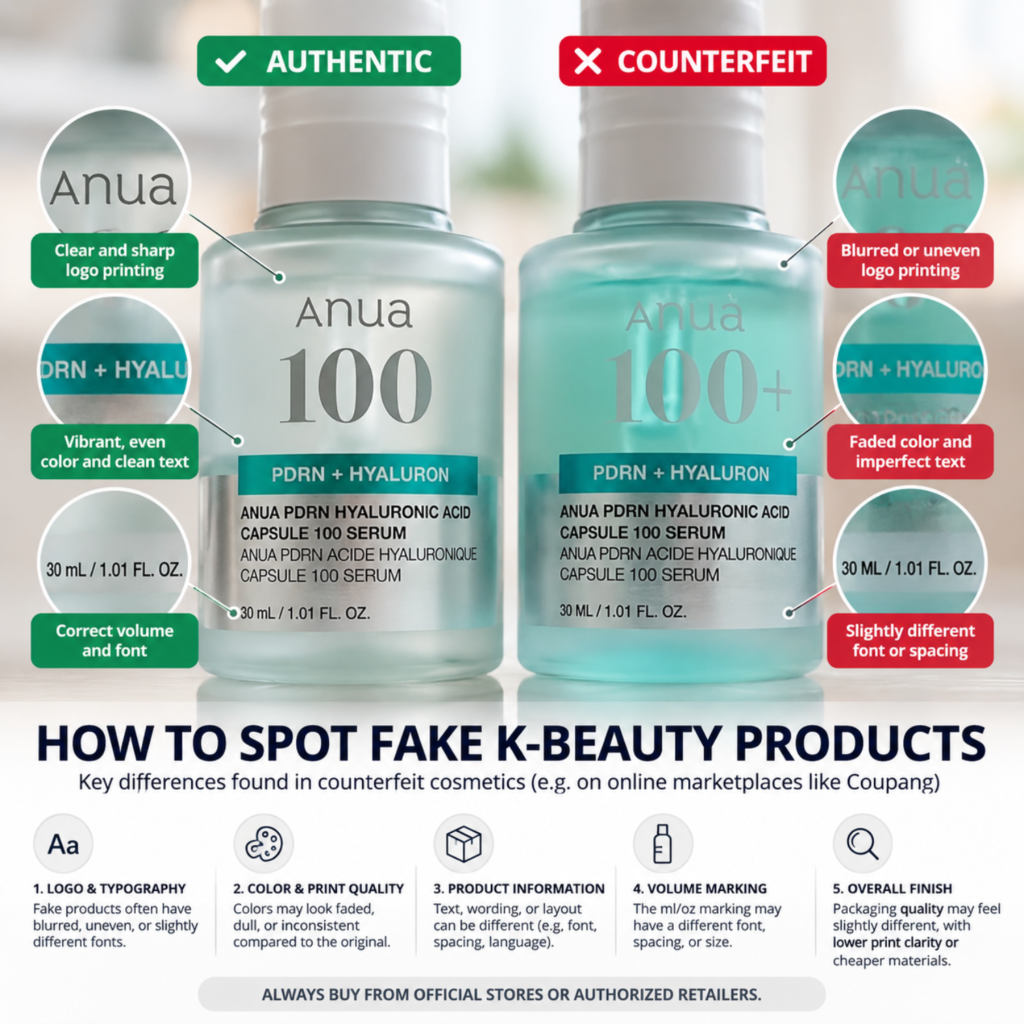
- Buy from official or authorized sellers — check the brand’s official retailer list when available.
- Compare the price to typical retail pricing — be wary of steep, unexplained discounts.
- Check the QR code — scan it and confirm it leads to an official brand page.
- Inspect the hologram label — look for a natural color shift, not a flat print.
- Read every word on the packaging — look for spelling errors or awkward translations.
- Compare fonts and colors to official product photos from the brand’s website.
- Check the batch code and expiration date — they should be crisp, consistent, and unaltered.
- Look at the back label — language, formatting, and manufacturer details should match the genuine product.
- Check the seller’s reviews and ratings — new sellers with no history warrant extra caution.
- Trust your senses once opened — unusual texture, scent, or pump function are red flags even after purchase.
What To Do If You Bought a Fake K-Beauty Product
If you suspect a product you purchased is counterfeit, don’t panic — but do act promptly.
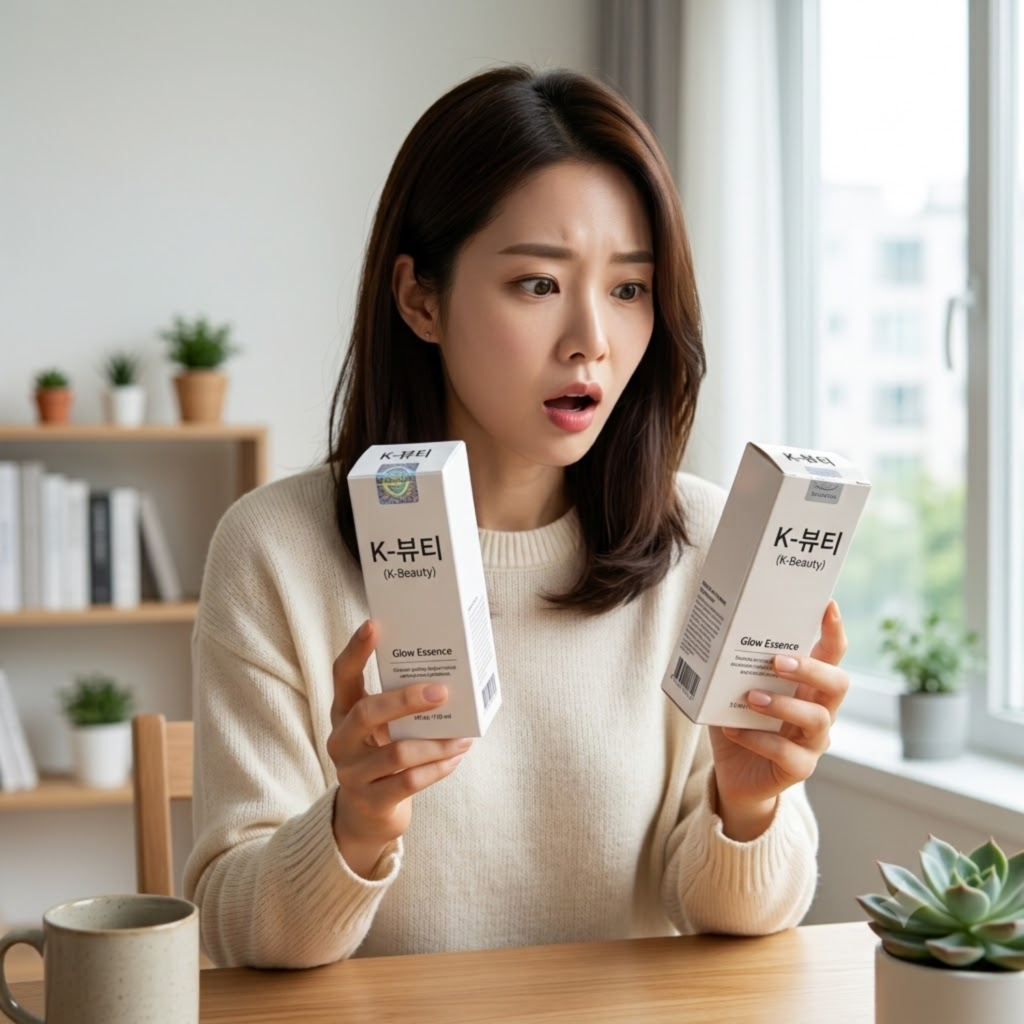
- Stop using it immediately. Discontinue use right away, even if you haven’t noticed irritation yet.
- Take photos of everything. Document the packaging, receipt or order confirmation, the seller’s product page or listing, the batch code, and the texture or color of the product itself. This evidence is useful for reporting and for any refund or dispute process.
- Contact the brand’s official customer service. Most K-beauty brands have a process for verifying product authenticity and can confirm whether what you received matches their genuine product line.
- Report it to the marketplace. Most major platforms have counterfeit reporting tools, and flagging a listing helps prevent other shoppers from purchasing the same fake product.
- Report through official channels if you’re overseas. Depending on your location, you may be able to report the product through your local customs authority or, where available, Korean government reporting channels such as MOIP’s Fake K-Brand Reporting Center.
If you experience any skin irritation or an allergic reaction after using a suspected counterfeit product, stop using it right away and consult a medical professional.
Frequently Asked Questions
Is it safe to buy K-beauty products from marketplaces like general e-commerce platforms? It can be, but it depends entirely on the seller. Many marketplace sellers are legitimate authorized retailers, while others are unverified third parties reselling unknown-origin stock. Always check the seller’s official retailer status, reviews, and history rather than assuming the platform itself guarantees authenticity.
Are all cheap K-beauty products fake? Not necessarily — Korean skincare does include genuinely affordable, mass-market brands. The concern is specifically when a price is unusually low relative to a product’s typical retail cost, especially for premium or trending items, which is a stronger signal than price alone.
Can I tell a fake product just by scanning the barcode? A standard barcode alone usually isn’t enough to verify authenticity, since barcodes can be copied. Brand-specific authentication tools, such as unique QR codes linked to an official verification page or technology like HiddenTag, are designed specifically to solve this gap and are more reliable than a generic barcode scan.
What should I do if a Korean brand doesn’t sell directly in my country? Look for the brand’s officially listed international distributors or authorized retail partners, which most established K-beauty brands publish on their official websites. Buying through travel shopping at authorized Korean retailers, such as duty-free stores or flagship locations, is another reliable option if you’re visiting Korea.
Does buying in person in Korea guarantee an authentic product? Shopping in person significantly reduces risk compared with buying from an unverified online reseller, but it isn’t an automatic guarantee. Sticking to official brand flagship stores, well-known pharmacy chains, and department store beauty counters remains the safest approach even while traveling in Korea.
Final Thoughts
Counterfeit K-beauty is a genuinely growing issue, but it doesn’t mean you need to be afraid of buying Korean skincare online — it just means being a slightly more careful shopper. The combination of brand-level authentication technology, government enforcement, and a few minutes of your own inspection before purchase goes a long way toward keeping the products you use safe and effective.
The most reliable strategy is still the simplest one: buy from official brand stores, authorized retailers, and sellers with a verifiable, trustworthy track record. When in doubt, slow down, check the details, and don’t let a tempting price talk you into skipping the basics. Authentic K-beauty earned its global reputation for a reason — make sure what’s actually landing on your skin lives up to it.
This article is for consumer education only and does not constitute legal or medical advice. If a product causes irritation or an allergic reaction, stop using it and consult a medical professional.
Sources:
- Korea JoongAng Daily — K-beauty counterfeits cause $15 million in damage this year, customs reports
- Korea JoongAng Daily — What’s in a name? Less than shoppers might think, as counterfeiters cash in on Korean brand popularity
- Korea Customs Service — Customs cooperation MOU
- MOIP — Fake K-Brand Reporting Center
- HiddenTag — Product authentication