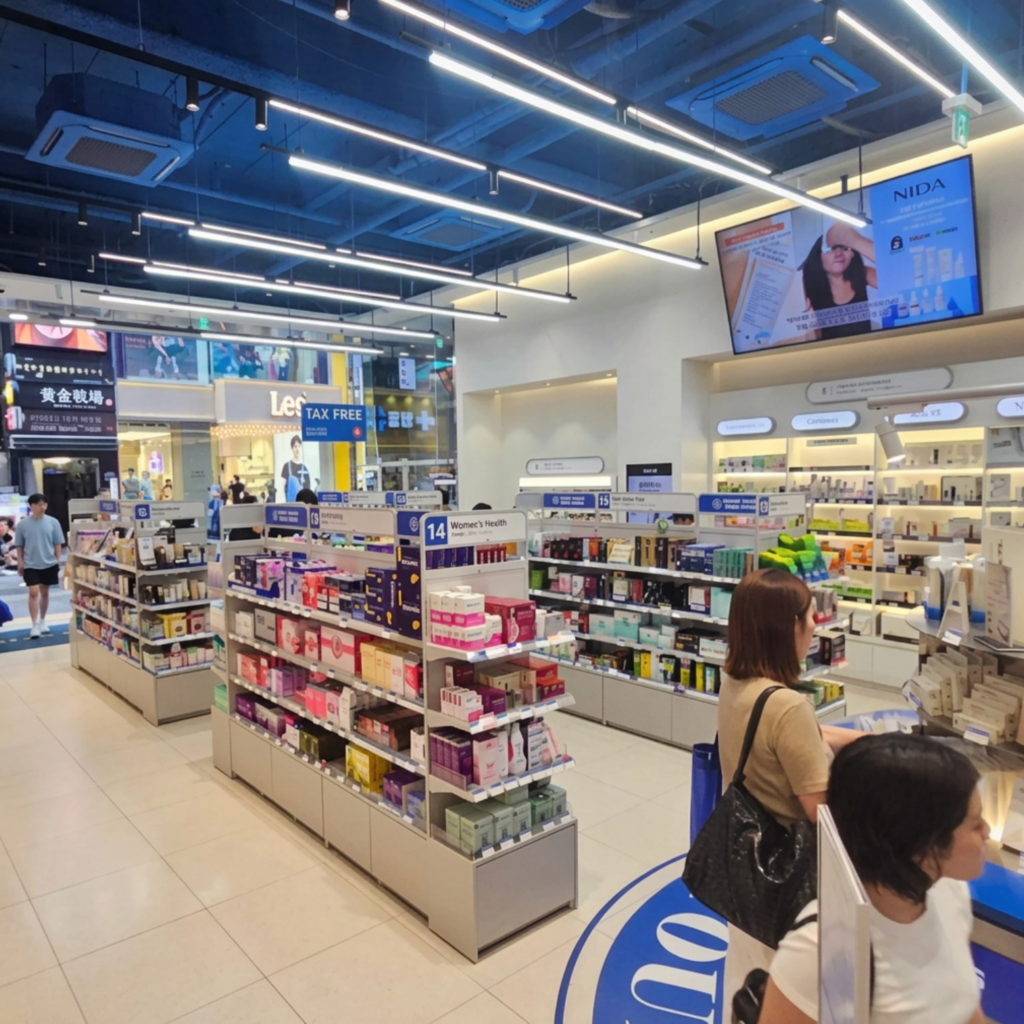
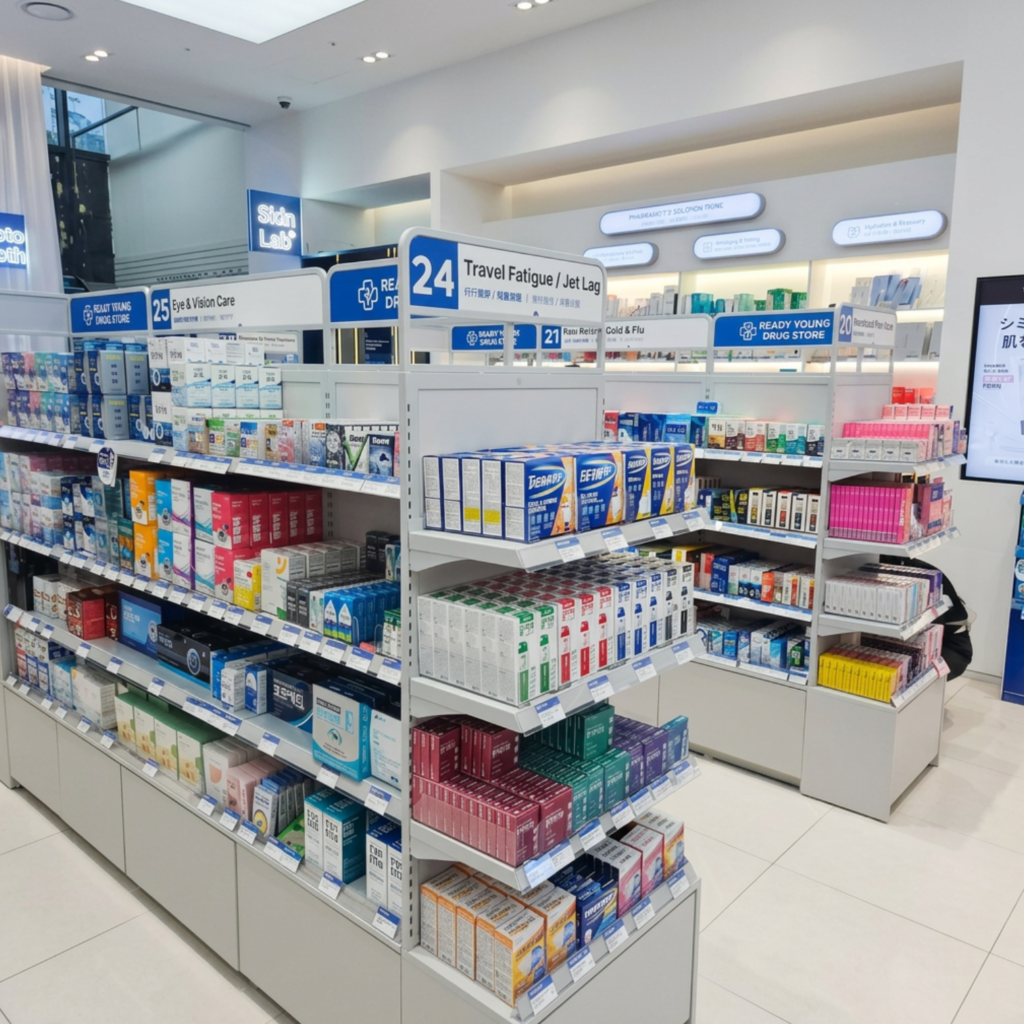
The first time I walked into Ready Young pharmacy in Seongsu, I stood in the doorway for about thirty seconds. It looked part beauty lounge, part wellness clinic—which is exactly what it is.
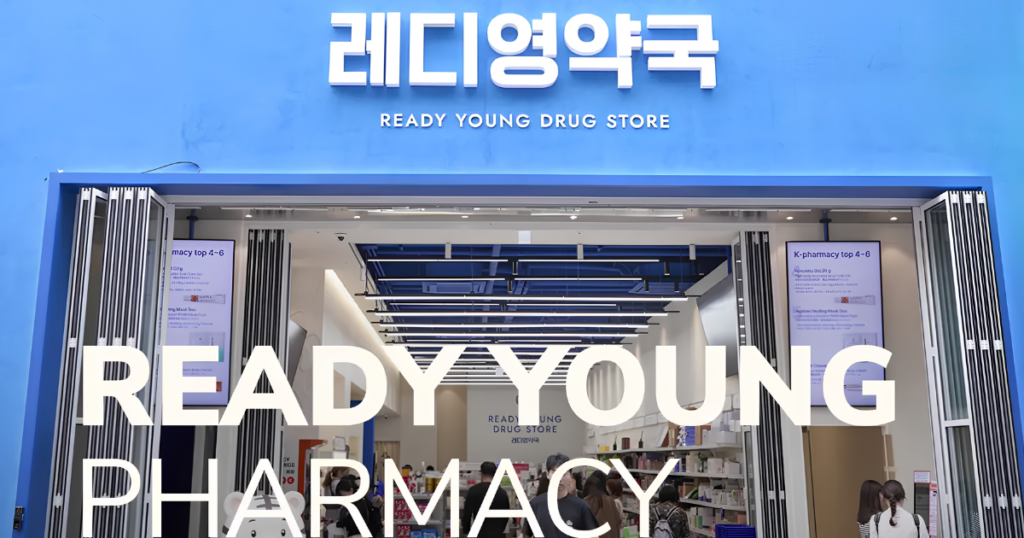
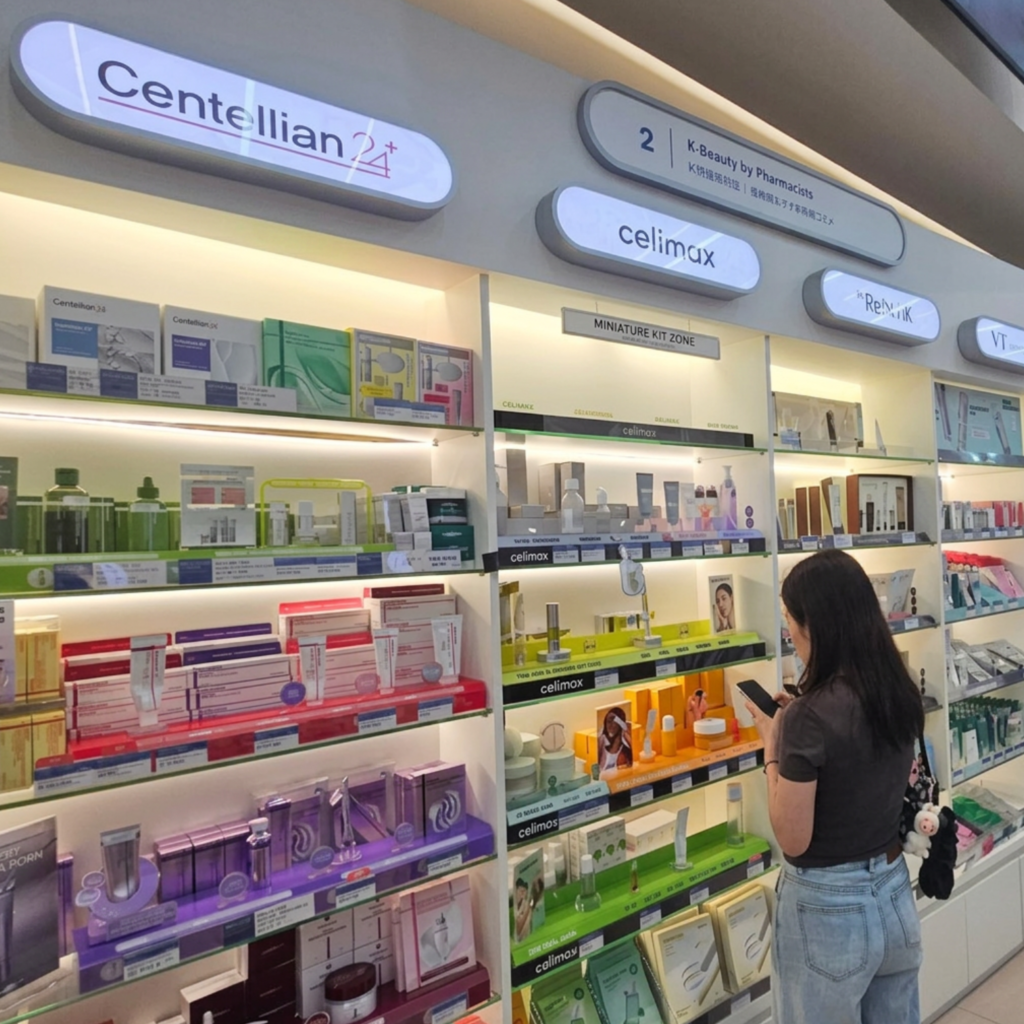
Soft blues and whites, shelves lined with products I’d never seen in Olive Young, a real pharmacist in a white coat at the counter, and a line of tourists with phones out, filming everything.
“Is this even a pharmacy?” one girl behind me whispered to her friend.
Quick Answer: What Is Ready Young Pharmacy?
Ready Young is a pharmacy, but not like any you’ve probably visited before. It’s part of a new wave of Korean medical retail—the kind that treats skincare like what it actually is: medicine for your face. And if you’re visiting Seoul or buying K-beauty online, you need to know about it.
In a nutshell, Ready Young Pharmacy is a fast-growing K-beauty pharmacy-style store in Seoul that combines dermatologist-style product curation, tourist-friendly service, and popular Korean skincare brands. It sits between Olive Young’s mass retail model and pharmacy-style product recommendation.
What Makes Ready Young Different?
Over the past year, Ready Young has expanded from Hongdae and Gangnam into tourist hotspots like Myeongdong and Seongsu, and the store’s model is breaking the mold of what a pharmacy can be.
The Core Difference: It’s Not Olive Young (And That’s the Point)
Olive Young is Korea’s Sephora. It has everything, it’s democratized beauty, and for 95% of K-beauty shoppers, it’s the perfect destination.
Ready Young is something else entirely. It’s where you go when a dermatologist just treated your skin and you need the exact recovery products they’d prescribe. Think of it as the difference between a supermarket and a specialty apothecary. Both sell you products—but one comes with expertise baked in.
Here’s how Ready Young stacks up against the other major K-beauty channels. (See the visual comparison below for a quick reference.)
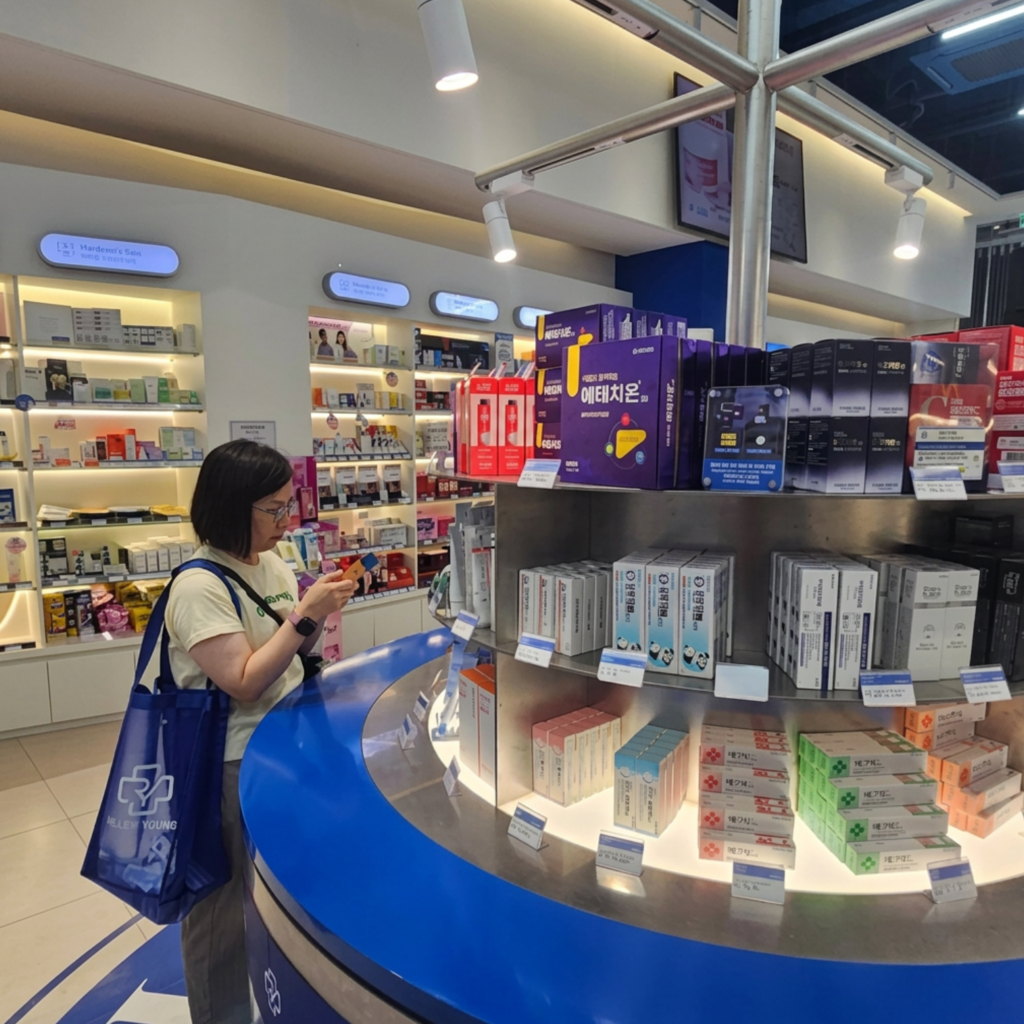
Ready Young — Medical-grade specialist
- What you get: Dermatology- and clinic-partnered products, prescription-strength actives, post-procedure recovery lines
- Pharmacist consultation: Standard on every purchase
- Price range: $15–$110 per item
- Best for: Post-treatment recovery, sensitive/reactive skin, serious skincare
- The catch: Fewer brands, slightly higher prices
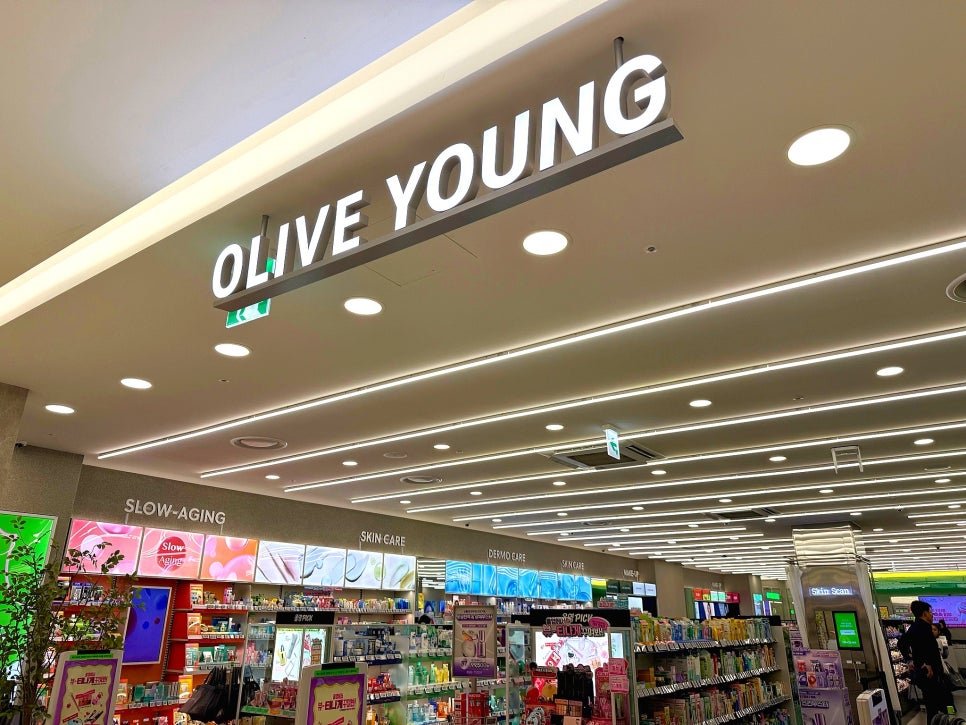
Olive Young — The all-rounder
- What you get: 1,000+ brands, from prestige to indie, plus vitamins and lifestyle goods
- Pharmacist consultation: Rare
- Price range: $6–$75 per item
- Best for: First-timers, broad selection, best prices
- The catch: No specialist guidance; you’re on your own
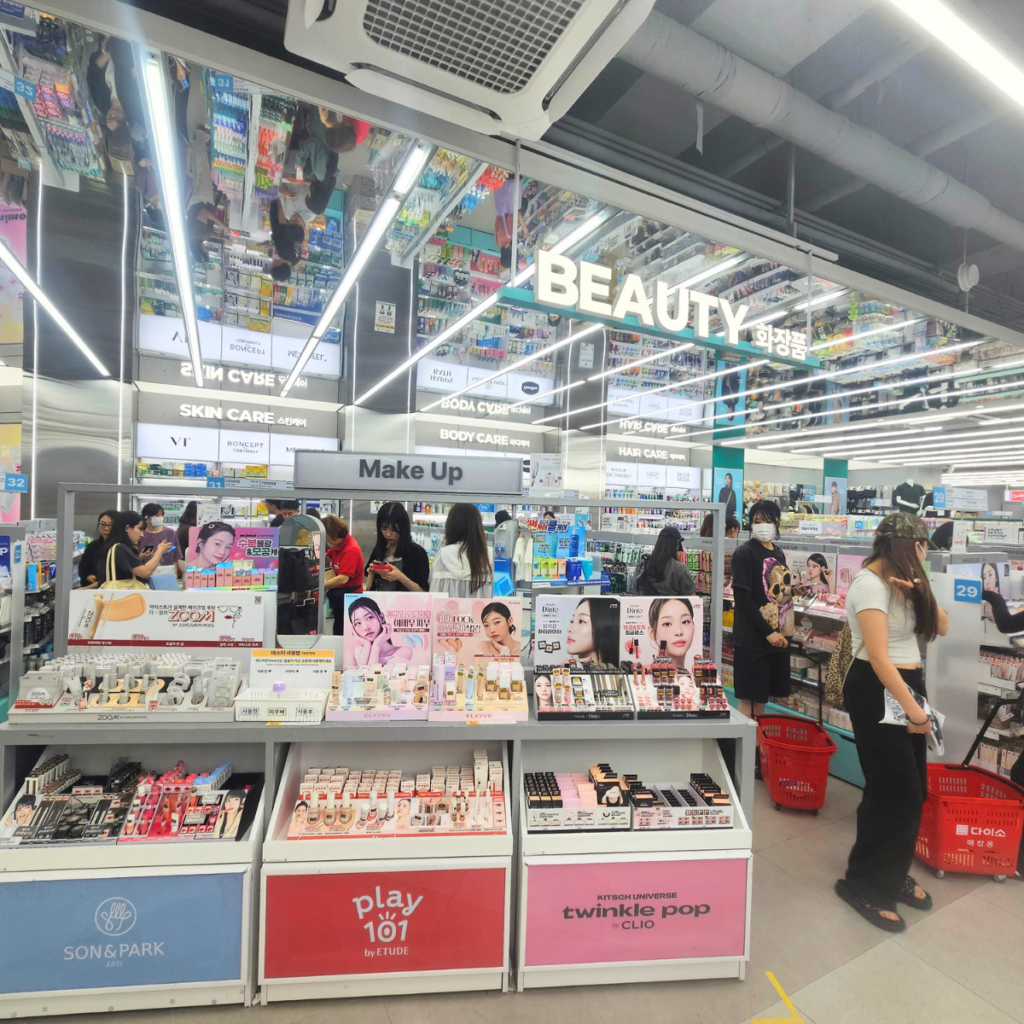
Daiso — The budget option
- What you get: Basic skincare and beauty tools at rock-bottom prices
- Pharmacist consultation: None
- Price range: $1–$15 per item
- Best for: Travel-size buys, testing before committing, gifts
- The catch: Basic formulations, no actives worth mentioning
Musinsa Beauty — The trend hunter
- What you get: Indie and emerging Korean brands, new launches
- Pharmacist consultation: None
- Price range: $11–$150 per item
- Best for: K-beauty enthusiasts chasing what’s next
- The catch: Trend-first, not medical; online-focused
The bottom line: If you want breadth, go to Olive Young. If you want the products a Seoul dermatologist would actually hand you, go to Ready Young.
The Ready Young Experience (What Actually Happens Inside)
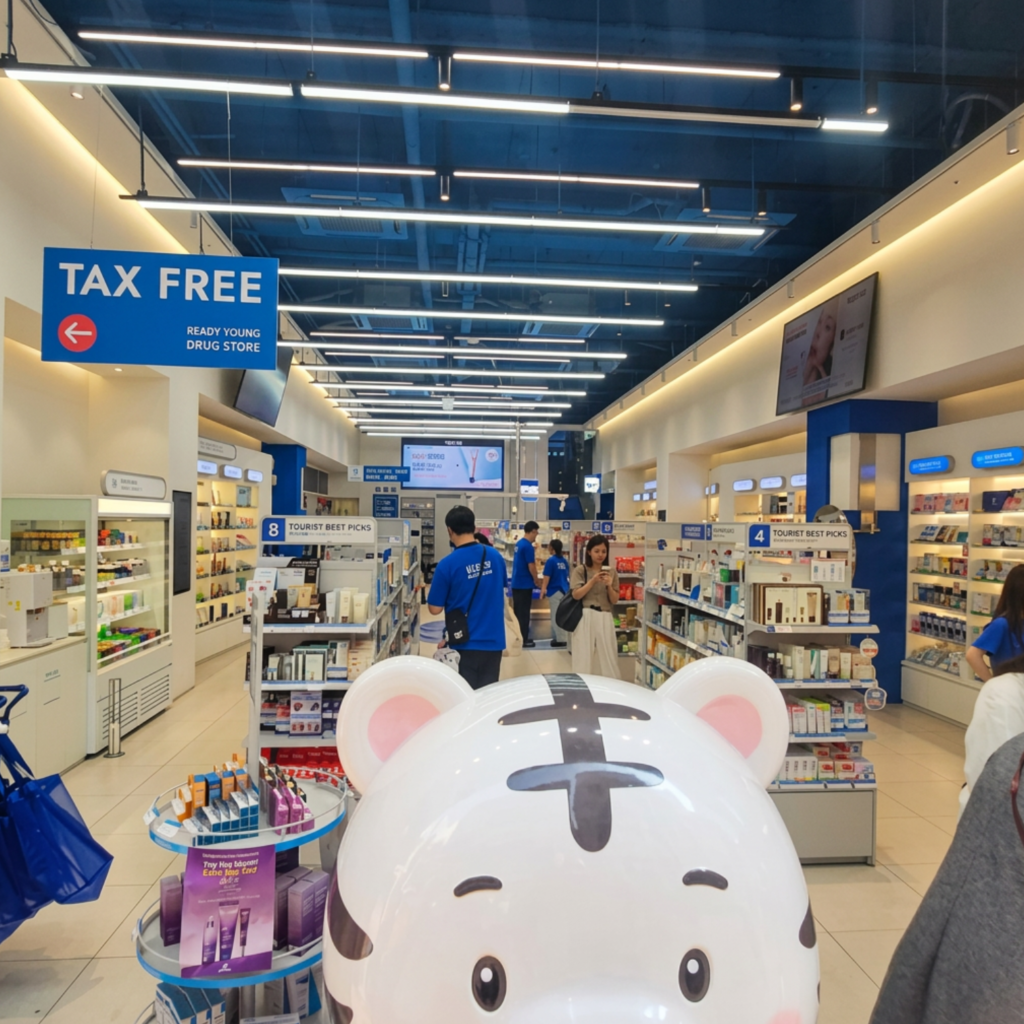
Ready Young’s Myeongdong and Seongsu stores each pack a lot into around 50 pyeong (roughly 1,750 sq ft) of retail space—and on any given day, foreigners make up about 80% of the shoppers inside.
When You Walk In
1. Multilingual staff. Employees wear badges showing which languages they speak—you’ll see “日本語” (Japanese), “中國語” (Chinese), sometimes “English.” This isn’t ornamental. Staff actually speak these languages and will walk you through products.
2. The “K-Pharmacy Best” section. This is the front-and-center display of bestsellers—the products tourists are flying home with. Centella asiatica serums, PDRN ampoules, snail essence, and the creams dermatologists recommend after procedures.
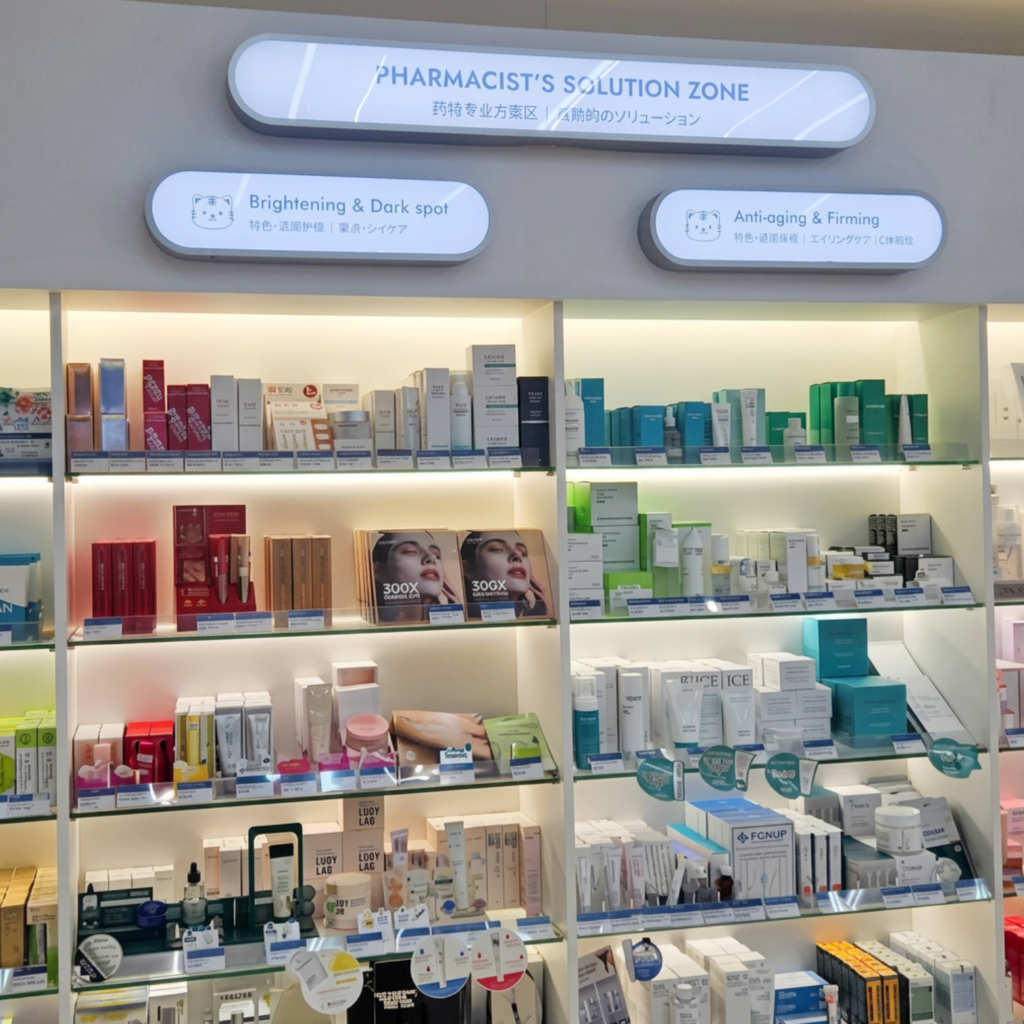
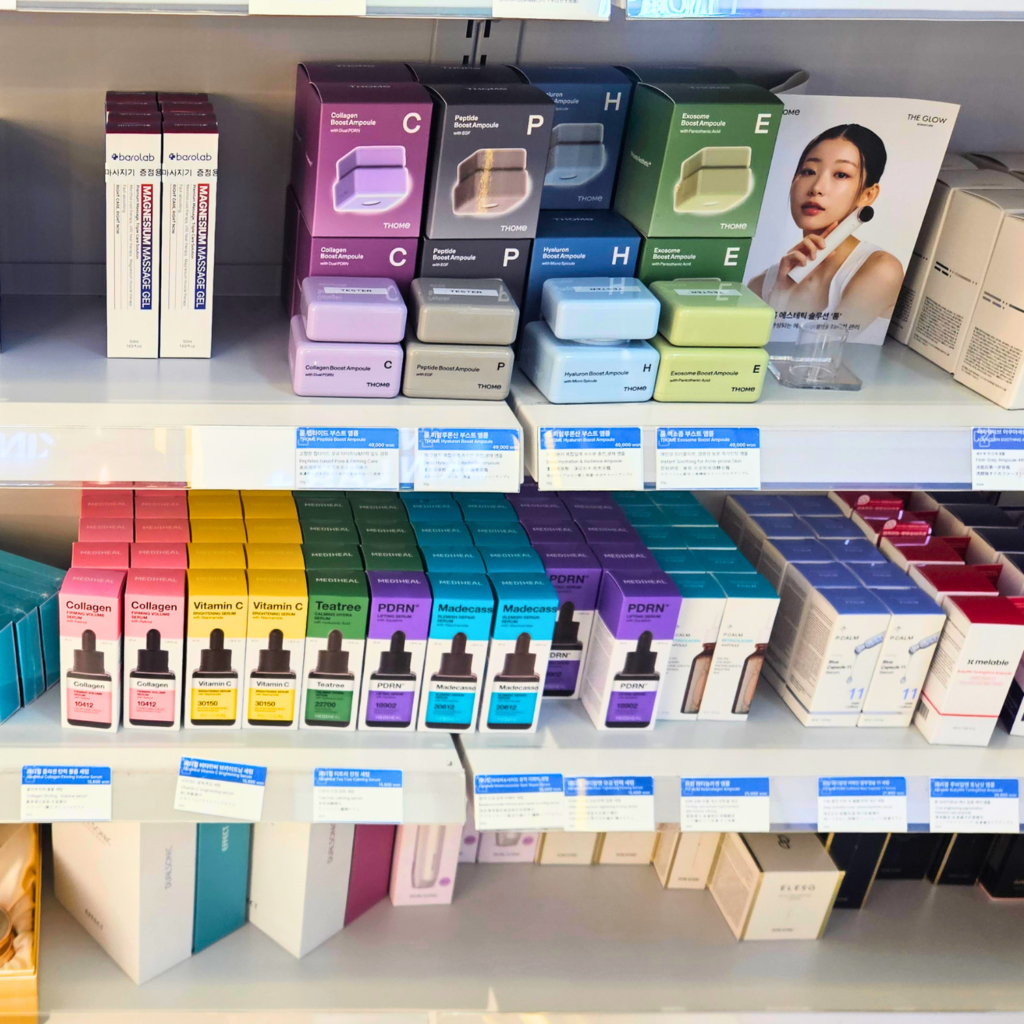
3. Skincare is the star. Most of your time will be in the skincare section. This is where Ready Young separates itself: the store pushes products you won’t find in Olive Young, including anti-aging and brightening ampoules that well-known Seoul dermatology and plastic-surgery clinics release under their own brands.
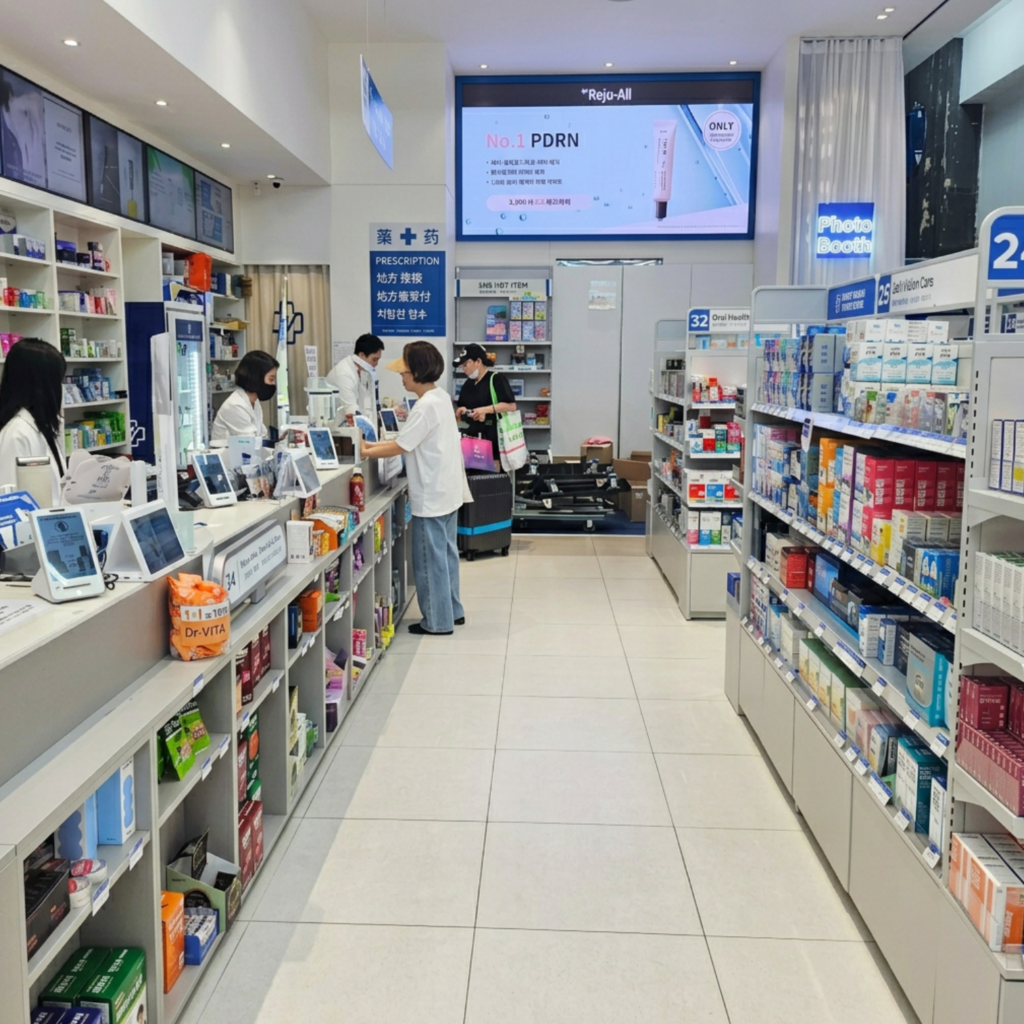
4. The pharmacist actually talks to you. This is the key difference from Olive Young. At checkout, a pharmacist reviews your purchases with the staff. If you’re buying a strong actives product, they’ll check it’s compatible with your skin type and anything else you mention—and give you usage guidance on the spot.
The Tourist Draw
A 19-year-old visitor from Fukuoka, Japan, put it simply: she came for skincare, and loved that Ready Young stocked specialized, functional products she couldn’t find in other stores.
Why are tourists lining up? Three reasons:
1. Post-procedure products. Seoul’s dermatology tourism is booming. Many shoppers arrive holding a prescription from a nearby skin or plastic-surgery clinic, then do their beauty shopping in the same trip. Ready Young positioned itself as the recovery-care stop.
2. Legitimacy. It’s a pharmacy. There’s a real pharmacist. You’re not guessing whether a cheap serum is watered down or counterfeit—you’re buying what Korean dermatologists actually prescribe.
3. Content. Korean pharmacy hauls have exploded on TikTok, YouTube Shorts, and Instagram Reels. The trend even spawned a Korean buzzword—”pharmacy tour” (약국 투어)—for foreign visitors who make pharmacy shopping a planned part of their trip. Ready Young got the memo and leaned into it hard.
The Numbers: Why This Matters
In 2025, foreign visitors spent 141.4 billion won (roughly $105 million) in Korean pharmacies—a staggering 142% jump from the year before.
Think about that. In a single year, foreign visitors more than doubled their pharmacy spending in Korea. And it’s part of a bigger wave: total spending by foreign medical tourists jumped from around 400 billion won in 2019 to 1.24 trillion won by 2024, with dermatology-related spending leading the surge.
The trend is undeniable: K-beauty retail is shifting from online stores and department counters to pharmacies.
Must-Buy K-Beauty Products at Ready Young
Based on what’s consistently flying off the shelves and what the pharmacists themselves recommend. (See the age-by-age product stack visual below for a quick guide.)
Tier 1: The Essentials (Everyone Buys These)
1. PDRN Ampoule ($30–$60) Salmon DNA extract—stimulates collagen, reduces redness. Every cosmetic dermatologist in Seoul recommends this post-procedure. Look for: Rejuran, Protina, and clinic house brands.
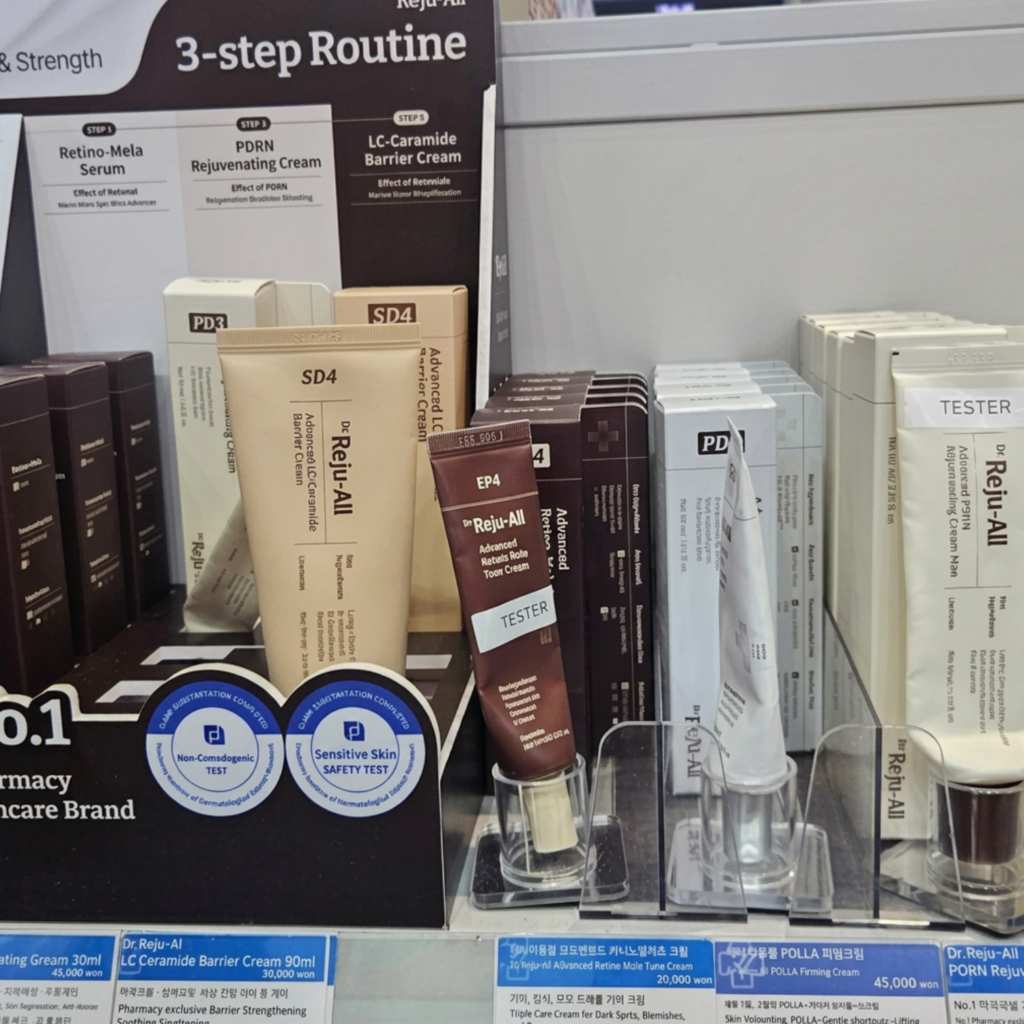
2. Snail Secretion Filtrate (Mucin) Serum ($11–$37) Heals, hydrates, anti-inflammatory. Especially popular after laser treatments. Try: Cosrx, Purito, or the pharmacy’s own brand.
3. Centella Asiatica Extract ($15–$45) The calming hero. Good for sensitive skin, rosacea, and any kind of irritation. It’s in half the products here.
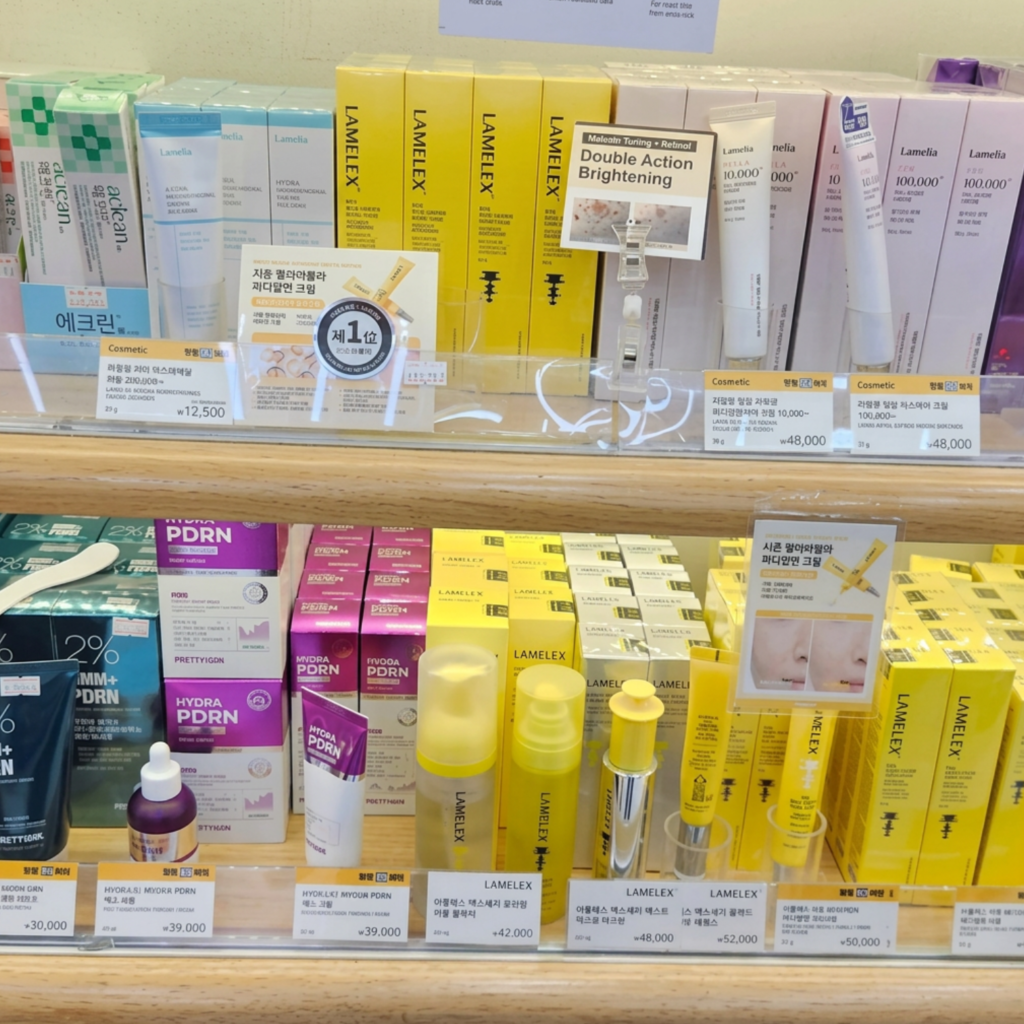
4. Retinol or Retinoid (Prescription-Strength) ($22–$110) This is where Ready Young pulls ahead of Olive Young. You’ll find prescription-level retinoids that aren’t available online. Dermatologist consultation included in the sale.
Tier 2: The Professional Picks (For Specific Concerns)
- Peptide Serum — collagen building, fine lines
- Niacinamide 10%+ — pore minimizing, oil control
- Azelaic Acid — acne, rosacea, discoloration
- Hyaluronic Acid + Peptides — hydration and firmness
- Vitamin C Stabilized Serum — brightening, antioxidant (must be kept cold—ask staff)
Tier 3: The Discoveries (What Makes Ready Young Unique)
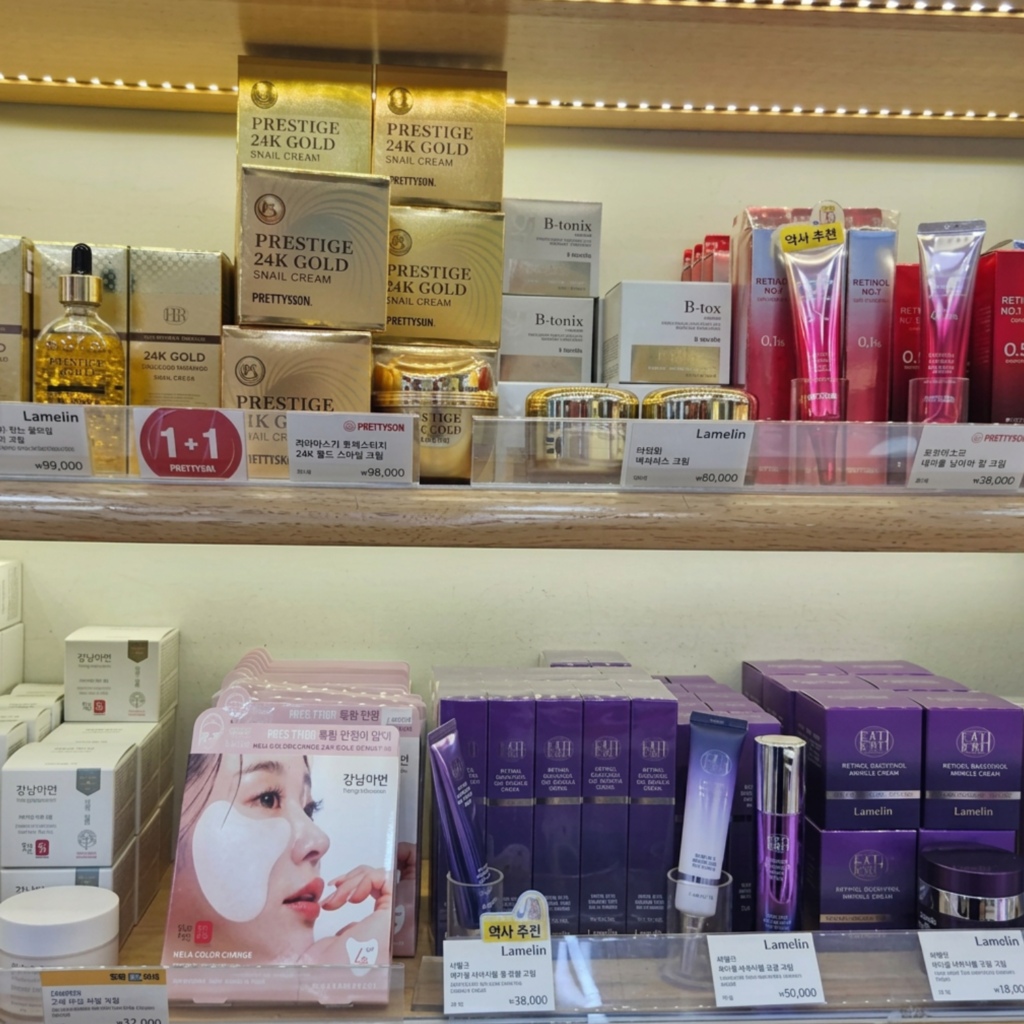
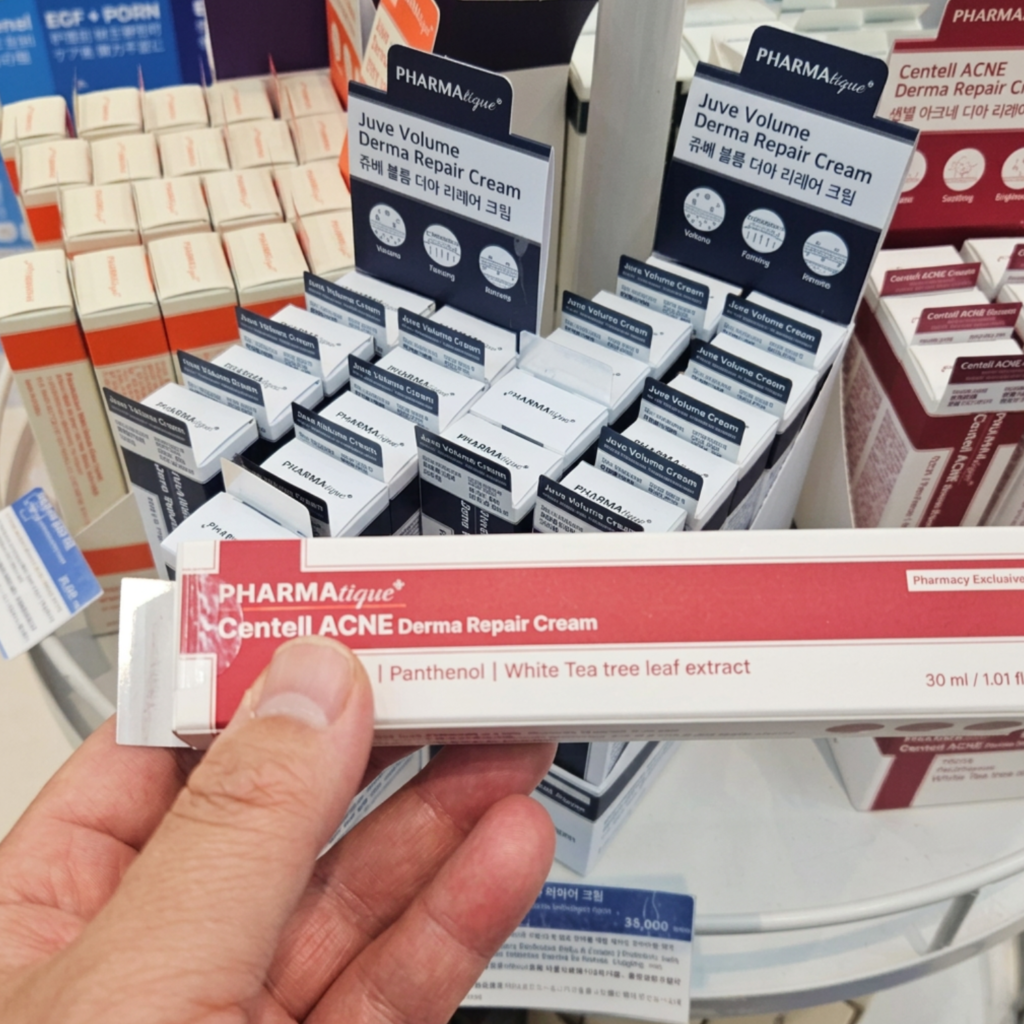
Dermatology Clinic House-Brand Recovery Lines — Not sold anywhere else. Formulations specific to post-laser, post-RF, and post-microneedling recovery.
Medical-Grade Sheet Masks — Higher active concentrations than typical K-beauty masks. $6–$18 per box.
Prescription Creams (with a consultation or valid Korean ID) — Things like hydrocortisone for eczema, tretinoin for fine lines and acne scars, and prescription-strength azelaic acid.
How to Shop at Ready Young (Practical Tips)
Do:
- Go during off-peak hours (weekday mornings, not Saturday evenings when the tourist crowds peak).
- Bring your passport if you’re a tourist, and ask about tax-refund status—policies vary by store.
- Have a specific concern in mind (“I just had laser treatment” or “I have reactive, sensitive skin”). The pharmacist’s recommendation will be far better with context.
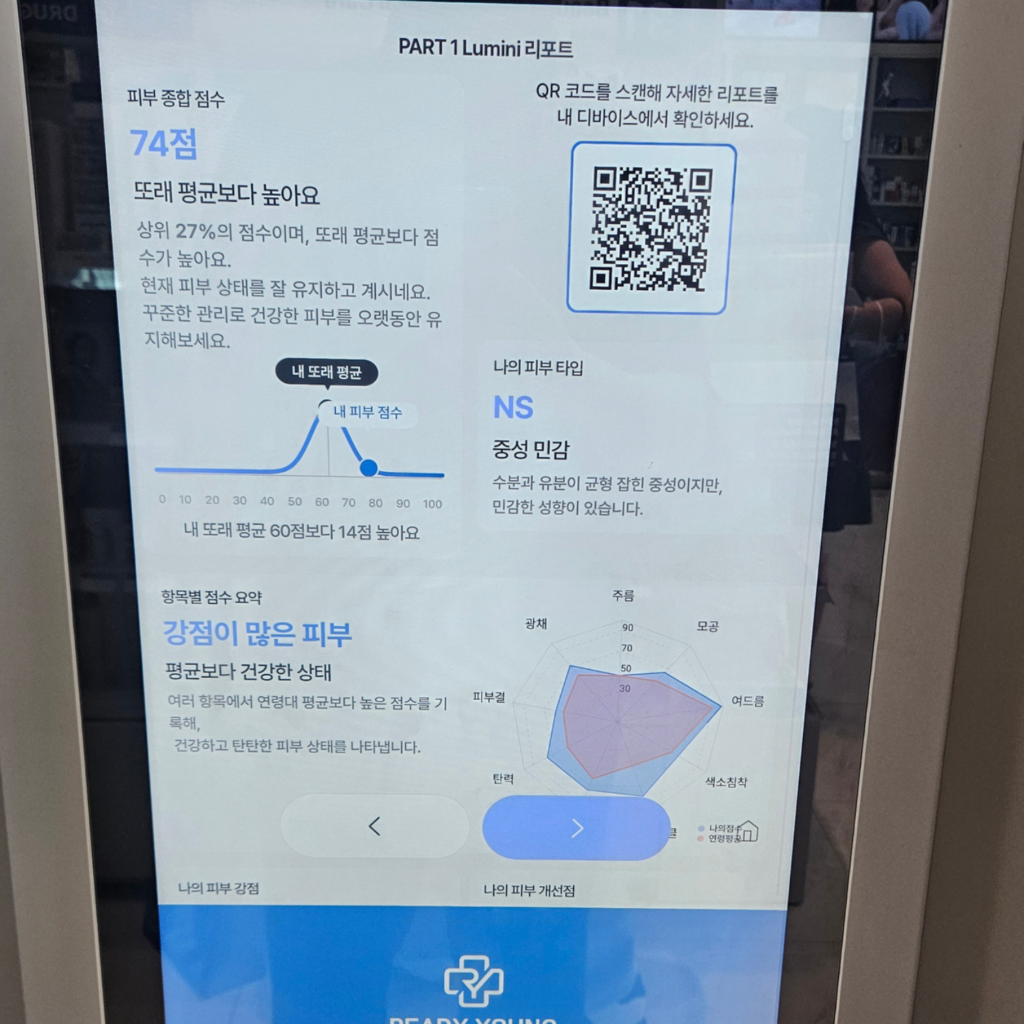
- Try the skin-diagnosis machine if available. It reads hydration, oiliness, and sensitivity—free, and useful as a baseline.
- Ask for sample sachets. Staff are generous with multi-step routine samples.
Don’t:
- Assume the English signage is complete. Many products have Korean-only instructions—staff will translate if you ask.
- Overload on actives your first visit. One strong product plus a good cleanser and sunscreen is wiser than five ampoules at once.
- Expect to negotiate. Prices are fixed—no haggling in Korean pharmacies.
Ready Young vs. The Competition (A Real Breakdown)
Ready Young vs. Olive Young
Olive Young wins on selection breadth (1,000+ brands vs. a few hundred) and price (usually 10–20% cheaper). It’s also less intimidating and more self-service, which makes it the better pick for beginners. Ready Young wins on dermatology-backed products, pharmacist expertise, and anything procedure-recovery related. If you’ve just had a treatment, Ready Young is purpose-built for you.
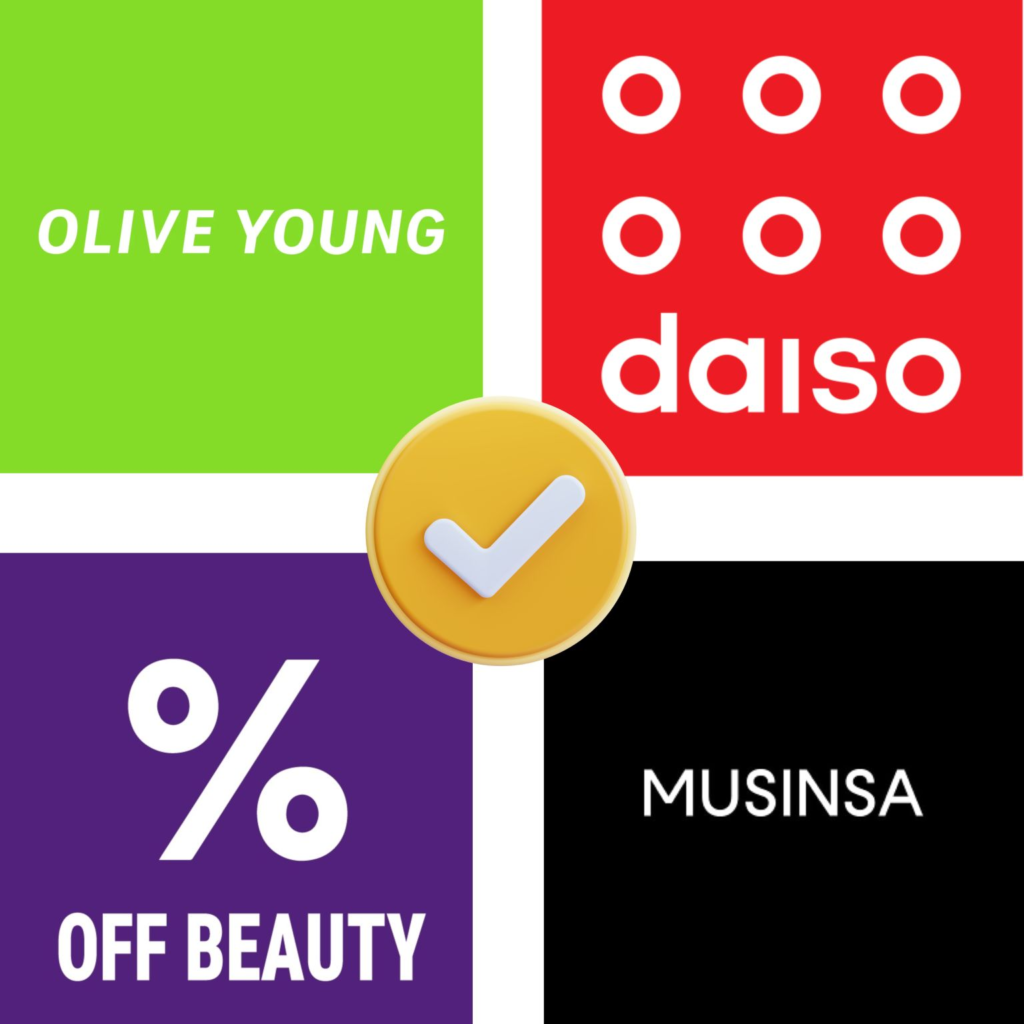
Ready Young vs. Off Beauty
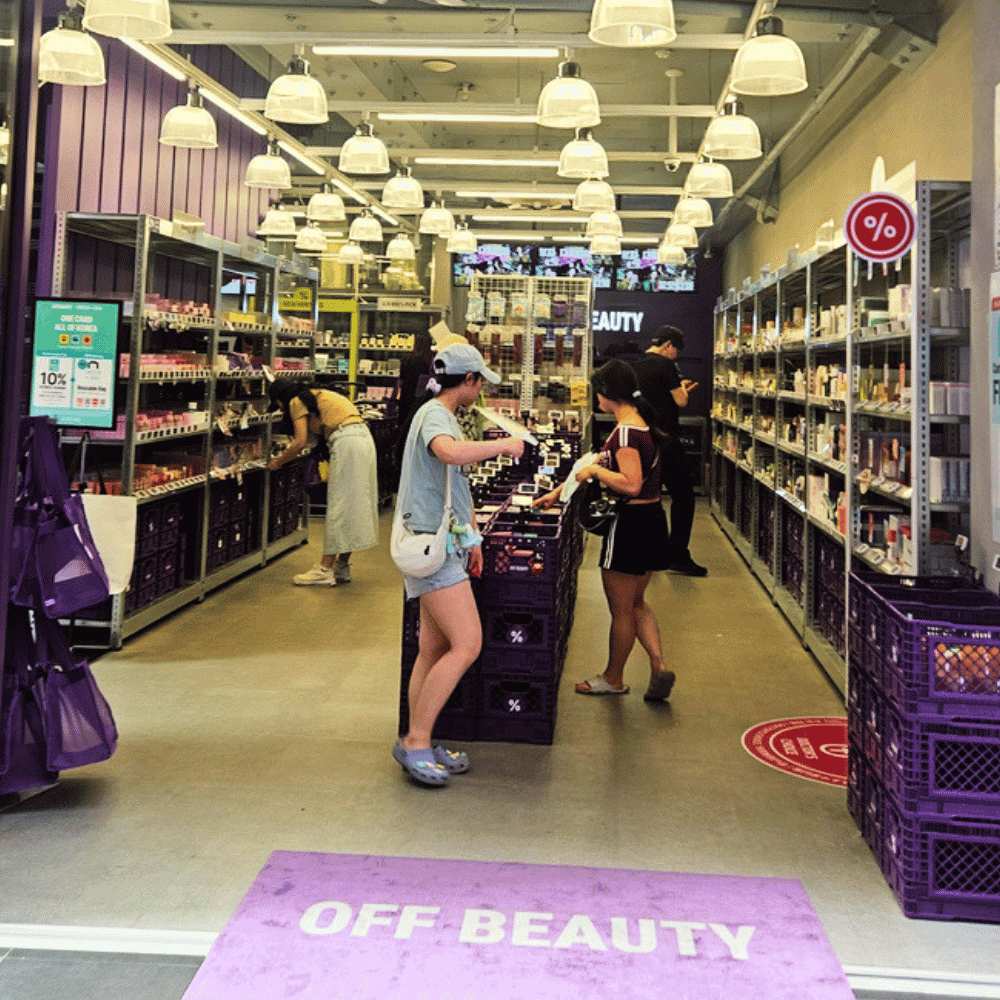
Off Beauty is the outlet store—closeouts, returns, discontinued stock. Prices are rock-bottom, but you’re shopping luck-based. Ready Young is curated first, functional second.
Ready Young vs. Musinsa Beauty
Musinsa Beauty is for indie K-beauty brands and trends—it’s where new launches live. Ready Young is medical-first, indie-rarely.
Ready Young vs. Daiso
Daiso is budget ($1–$15 items). Ready Young is clinical ($15–$110 items). Different planets entirely.
FAQ: What Every First-Time Visitor Asks
Do I need a prescription to shop at Ready Young?
No. Most products are over-the-counter. A few prescription-strength actives require a consultation or a valid Korean ID, but 95% of what’s on the shelves you can just buy.
Is Ready Young only for tourists?
No. It’s around 80% tourists, but the local shoppers tend to be dermatology and aesthetics professionals and highly skincare-educated Seoul residents. You don’t have to be visiting to benefit.
Is Ready Young cheaper or more expensive than Olive Young?
Usually slightly more expensive—dermatologist curation costs. But you’re paying for pharmacist consultation and exclusive products, not bulk-stocked bestsellers.
Can I return products?
Ready Young’s return policy isn’t fully standardized yet (it’s a newer chain). Ask in-store. Most Korean pharmacies allow returns within about 7 days for unopened products, and defective items no-questions-asked. Opened skincare is case-by-case.
What’s the best product to start with if I have no idea what I’m doing?
Tell the pharmacist: “I just arrived from [country], and I have [your skin type] skin. What’s one thing I should try?” They’ll usually hand you a PDRN ampoule or a snail mucin serum. You can’t go wrong.
Is the skin-diagnosis machine accurate?
It’s a useful baseline, not clinical-grade. Treat it as a fun reference point, not a diagnosis. The pharmacist’s trained eye is better.
Which cards work? Do I need cash?
Cards (Visa, Mastercard, JCB, Apple Pay, and local Korean pay apps) all work and auto-convert at a fair rate. Cash is fine but rarely needed.
What three products should I buy?
- Retinol or Retinoid (prescription strength if possible)
- PDRN Ampoule (collagen stimulation)
- Hydrating Cream with Peptides (barrier support)
Ask the pharmacist to build a stack around these. Budget: $110–$185.
The Bigger Picture: Why Ready Young Matters
Korean beauty retail is changing. For decades, the pipeline was simple: you get a procedure (laser, RF, injectables), you go home, and you guess what to use for recovery.
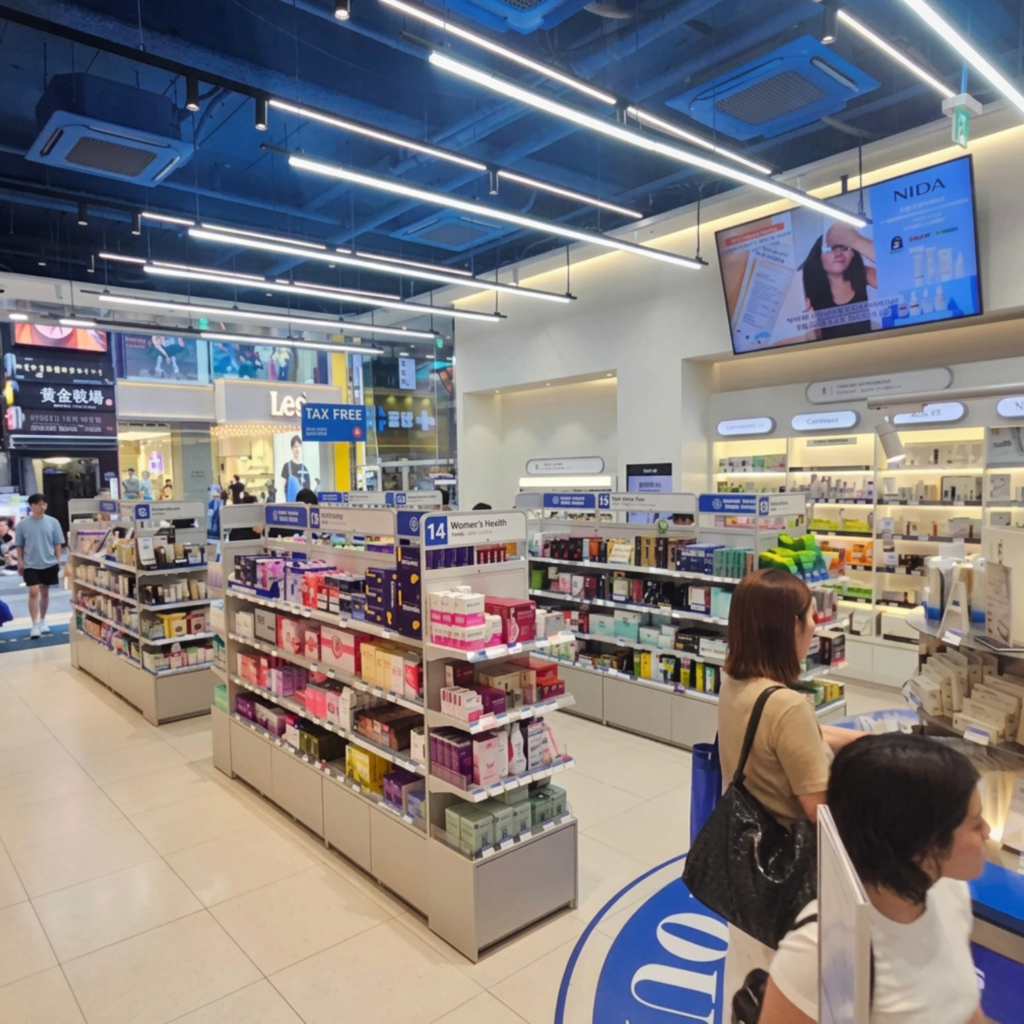
Now? Pharmacies are evolving from places that simply hand you recommended products into active retail spaces where shoppers explore and choose for themselves—blending medical expertise with consumer choice.
Ready Young is leading that shift. It’s not Sephora with a pharmacist vibe. It’s a dermatology clinic with a retail component. The difference matters—especially if you’re one of the 11+ million foreign visitors Korea welcomes annually.
Where to Find Ready Young (Seoul)
Currently open locations (2026):
- Myeongdong — 2 stores; busiest, most tourists
- Hongdae — Original flagship; excellent stock
- Gangnam — Surgical district; high-end product focus
- Seongsu — Newest; trendy retail-focused area
Expansion planned: Busan and Incheon by late 2026.
Hours: Typically 11am–10pm daily. Verify before visiting.
The Bottom Line
If you’re visiting Seoul and you’ve had any kind of aesthetic procedure—or you’re thinking about one—Ready Young is a must-stop. If you’re a skincare obsessive anywhere in the world and you can source products via a Korean forwarding service, it’s worth exploring.
And if you’re already shopping K-beauty online? This is the signal that the next wave isn’t about democratization—it’s about personalization. The pharmacist consultation, the dermatologist partnerships, the post-procedure recovery focus. It’s retail getting smarter, not just bigger.
Final Thoughts
The first girl who asked, “Is this a pharmacy or a Sephora?” had it exactly right. It’s both, and that’s the point. It’s a pharmacy that respects beauty as medicine, and medicine as a beauty tool.
That’s the Ready Young difference.
Have you visited Ready Young? What’s your must-buy product? Share in the comments—I’m always looking to update this guide with real experiences.
Related Reads
- Olive Young 101: A Foreigner’s Guide to Korea’s Biggest Beauty Store
- Daiso Beauty Korea: Best K-Beauty Products Under 5,000 Won
- Off Beauty 101: A Foreigner’s Guide to Korea’s Beauty Outlet
- MUSINSA Beauty Guide: Korea’s Indie K-Beauty Platform
Last updated: July 2026. Ready Young locations and policies change—verify hours and return policies on arrival.